

In The Media
Michele Dunne, Robert Kagan
{
  "authors": [
    "Robert Kagan"
  ],
  "type": "legacyinthemedia",
  "centerAffiliationAll": "dc",
  "centers": [
    "Carnegie Endowment for International Peace"
  ],
  "collections": [],
  "englishNewsletterAll": "democracy",
  "nonEnglishNewsletterAll": "",
  "primaryCenter": "Carnegie Endowment for International Peace",
  "programAffiliation": "DCG",
  "programs": [
    "Democracy, Conflict, and Governance",
    "Middle East"
  ],
  "projects": [],
  "regions": [
    "Middle East",
    "Egypt"
  ],
  "topics": [
    "Political Reform"
  ]
}
REQUIRED IMAGE
Source: Washington Post
Secretary of State Condoleezza Rice gave a big speech in Cairo in June in which she set down some criteria by which to judge the fairness and openness of the upcoming elections in Egypt. The speech seemed to augur a tough approach by the administration, a determination to press hard for real reforms in the Egyptian political system. That would be in keeping with President Bush's repeated declaration of his support for democracy worldwide, and especially in the Middle East.
Rice's speech gave reasons for hoping that something really had changed and that it was not all rhetoric. After all, it would have been easy enough for her to make some vague call for democracy and leave it at that. But, surprisingly, she got down to specifics. President Hosni Mubarak had "unlocked the door for change," she said, but now he had to put his faith in his own people and give Egyptians "the freedom to choose." Egypt's two sets of elections -- the presidential contest on Sept. 7 and the parliamentary elections in October and November -- "must meet objective standards that define every free election."
She went on to spell out some of those standards. Opposition groups "must be free to assemble, and to participate, and to speak to the media. Voting should occur without violence or intimidation. And international election monitors and observers must have unrestricted access to do their jobs."
Most important, Rice took aim at the emergency laws under which Mubarak has ruled since 1981 and which he has used to harass, lock up and otherwise silence all opponents. "The day must come when the rule of law replaces emergency decrees -- and when the independent judiciary replaces arbitrary justice."
Perhaps Rice did not mean that the day must come in time for the approaching Egyptian elections.
For as it happens, Mubarak has not suspended the emergency decrees. The "rule of law," therefore, will not be in place as Egyptian opposition figures attempt to compete in an electoral system that remains entirely stacked against them. As for Rice's explicit demand for election monitors and observers, Mubarak has rejected that, too. At the moment it appears that there will be no independent monitors of any kind, foreign or Egyptian. Nor is there a free media for opposition groups to speak to. As the Saban Center's Tamara Cofman Wittes noted in a recent report, "Despite Egyptian government promises, a new law this spring confirmed that prison sentences can still be imposed for defamation, and other speech 'offenses', committed while covering a political campaign."
So do Egypt's citizens really have what Rice called "the freedom to choose" their rulers in this election? By her own "objective standards," the answer is no. Meanwhile, Mubarak has permitted a mere three-week campaign, which began Aug. 17 and ends Sept. 4. The opposition will be at a monumental disadvantage in terms of resources. Most American grants to Egyptian nongovernmental organizations have apparently been either delayed in Washington or blocked by the Egyptian government.
How to explain U.S. policy these past few months? Of course, it's always easier to give strong speeches than to implement them. Mubarak is a tough customer, maybe too tough for his American counterparts. But it's not as if the United States lacks leverage -- to the tune of more than a billion dollars a year in aid. If the administration wasn't prepared to play hardball with the Egyptian dictator, why lay down specific conditions for him to flout?
It's not as if Americans don't know how to put pressure on dictatorships to hold fair elections when they really put their minds to it. During the Reagan years, U.S. officials badgered a longtime ally, Ferdinand Marcos, into holding elections that he thought he could win but lost. When the Nicaraguan Sandinistas held elections in 1990, they were forced by U.S. and international pressure to allow several months of open campaigning, with international observers in place throughout to monitor the opposition's access to media, including television. They also had to allow unprecedented levels of outside funding, from largely American sources, to go to the opposition. U.S. officials insisted on these extraordinary measures because the Sandinista government held control of almost all the major media outlets and had the entire government treasury from which to draw for its campaign -- just as Mubarak does today.
Could the United States demand of Mubarak even half of what it demanded of the Sandinistas or, more recently, of Ukraine's Leonid Kuchma, who also permitted foreign assistance to opposition parties? Apparently not.
It may be that despite all this, Egyptians will come out to vote and give Mubarak a scare. More likely, he will win in a walk, just as he always has. If he perpetrates the same kind of sham for the parliamentary elections, then the game is over for five more years. Parliamentary elections won't be held again until 2010. The 77-year-old Mubarak doesn't have to run for president again until 2011. This was the moment to deal a decisive blow against the Egyptian autocracy. The Bush administration's apparent failure or reluctance to do so raises questions.
Perhaps there is concern that too much pressure on Mubarak might produce a victory by the Muslim Brotherhood, the most popular Egyptian opposition party that has been outlawed by the government. That's a risk, of course, but if the Bush administration isn't willing to let Islamists, even radical Islamists, win votes in a fair election, then Bush officials should stop talking so much about democracy and go back to supporting the old dictatorships. It was precisely that kind of logic -- that friendly dictators are preferable to potentially radical alternatives -- that helped produce so much radicalism during the Cold War and, more recently, a healthy movement of Middle East terrorists. Bush supposedly has rejected that kind of logic. But if the decisive moment in Egypt passes without change, many will ask what, exactly, is new about the administration's approach. Arab peoples watching carefully to see whether Bush is serious about his commitment to democracy will have reason to doubt that he is.
Robert Kagan, a senior associate at the Carnegie Endowment for International Peace, writes a monthly column for The Post.
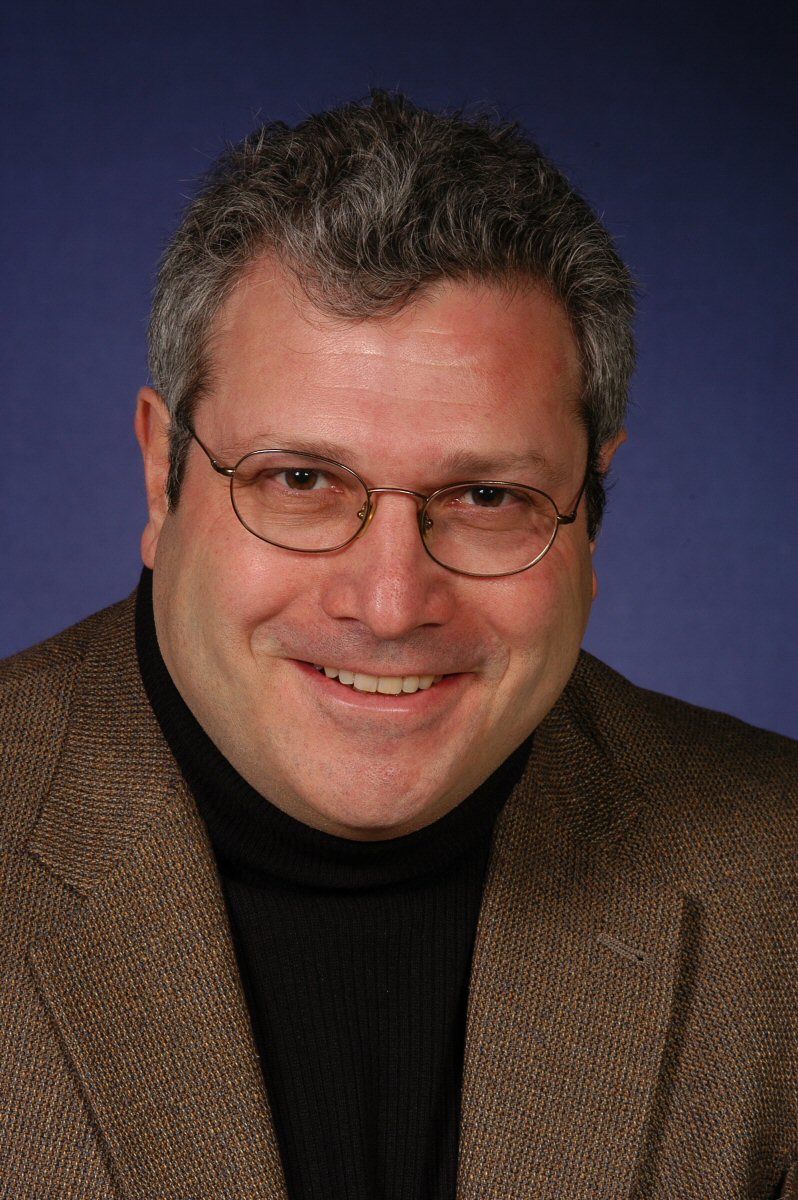
Former Senior Associate
Kagan, author of the recent book, The Return of History and the End of Dreams (Knopf 2008), writes a monthly column on world affairs for the Washington Post and is a contributing editor at both the Weekly Standard and the New Republic.
Recent Work

Michele Dunne, Robert Kagan
Robert Kagan, Michele Dunne
Carnegie does not take institutional positions on public policy issues; the views represented herein are those of the author(s) and do not necessarily reflect the views of Carnegie, its staff, or its trustees.

Putin’s conservative staffing policies and search for ever greater control have cemented parliament’s transformation into a bureaucratic appendage of the executive branch.

Andrey Pertsev

Ex-president Gurbanguly Berdimuhamedov remains interested in politics, but his son Serdar, Turkmenistan’s current president, is becoming increasingly independent and willing to break with his father’s legacy. If their covert rivalry goes too far, both risk losing power.

Galiya Ibragimova

Sergei Kiriyenko used Russia’s parliamentary vote to further hone his strategy of corporate mobilization that is designed to maximize votes for United Russia.
Andrey Pertsev

The European far right might fail to steer EU policy in the direction Russia wants, but they will create enough chaos inside Europe to benefit the Kremlin.

Dimitar Bechev

If the Russian-speaking community in Latvia cannot articulate their interests without being seen as disloyal, they could end up embracing a pro-Kremlin agenda.

Sergejs Potapkins