

Commentary
If the Russian-speaking community in Latvia cannot articulate their interests without being seen as disloyal, they could end up embracing a pro-Kremlin agenda.
Sergejs Potapkins
{
  "authors": [],
  "type": "pressRelease",
  "centerAffiliationAll": "dc",
  "centers": [
    "Carnegie Endowment for International Peace"
  ],
  "collections": [],
  "englishNewsletterAll": "menaTransitions",
  "nonEnglishNewsletterAll": "",
  "primaryCenter": "Carnegie Endowment for International Peace",
  "programAffiliation": "MEP",
  "programs": [
    "Middle East"
  ],
  "projects": [],
  "regions": [
    "North Africa",
    "Egypt"
  ],
  "topics": [
    "Political Reform",
    "Foreign Policy"
  ]
}
REQUIRED IMAGE
Michele Dunne outlines the major implications of Egypt’s current political climate and presents four key issues on which the U.S. should focus its attention: presidential term limits, greater freedom for political parties and movements, independent election oversight, and limiting executive branch powers under a new counter-terrorism law.
FOR IMMEDIATE RELEASE: January 4, 2006
Egypt is in the early stages of a leadership succession that could swing the country toward greater openness and political competition or toward consolidated authoritarianism. President Mubarak has proposed extensive constitutional amendments that would shift some powers from the presidency to the legislative branch and revise rules for presidential and parliamentary elections, but observers are concerned that many of the changes may prove to be cosmetic. Crises in Iraq, Palestine, and Lebanon have hindered the United States from pursuing its stated goal of Middle East democracy promotion, yet these developments present a unique opportunity to urge meaningful reform in Egypt without endangering stability or key regional relationships.
In a new Carnegie Policy Outlook, Time to Pursue Democracy in Egypt, Michele Dunne outlines the major implications of Egypt’s current political climate and presents four key issues on which the U.S. should focus its attention: presidential term limits, greater freedom for political parties and movements, independent election oversight, and limiting executive branch powers under a new counter-terrorism law.
“The challenge for the United States is to capitalize on the current situation of flux to encourage further opening of the political space, with an eye toward the emergence of broader and fairer competition in the new political era that is unfolding,” Dunne said.
To read this Policy Outlook, go to: www.CarnegieEndowment.org/MiddleEast
Direct link to PDF: http://www.carnegieendowment.org/files/Dunne_Egypt_FINAL2.pdf
Michele Dunne is a senior associate at the Carnegie Endowment and editor of the Arab Reform Bulletin. A specialist on Middle East affairs, formerly at the State Department and White House, Dunne is author of Evaluating Egyptian Reform, Integrating Democracy Promotion into U.S. Middle East Policy, and Libya: Security Is Not Enough, all available at www.CarnegieEndowment.org/pubs.
To request an interview with Dunne on Egyptian Politics or U.S.-Egypt relations, contact:
Trent Perrotto, (tel) 202/939-2372, tperrotto@CarnegieEndowment.org
The Carnegie Endowment for International Peace is a private, nonprofit organization dedicated to advancing cooperation between nations and promoting active international engagement by the United States. Founded in 1910, its work is nonpartisan and dedicated to achieving practical results.
###
Carnegie does not take institutional positions on public policy issues; the views represented herein are those of the author(s) and do not necessarily reflect the views of Carnegie, its staff, or its trustees.

If the Russian-speaking community in Latvia cannot articulate their interests without being seen as disloyal, they could end up embracing a pro-Kremlin agenda.

Sergejs Potapkins

Russia’s ruling party would have benefited from Putin appearing as its distant patron, but as an active frontman imposing his views on the public, he has done nothing but harm both the party’s election campaign and the ruling system overall.

Andrey Pertsev

In the tenth year of his presidency, President Mirziyoyev’s system is becoming even more personalized than that of his predecessor Karimov.

Galiya Ibragimova

With the growth in points of friction between the great powers, organizations like the SCO will continue to play a role in the strategic adaptation of the smaller powers caught between them.

Temur Umarov
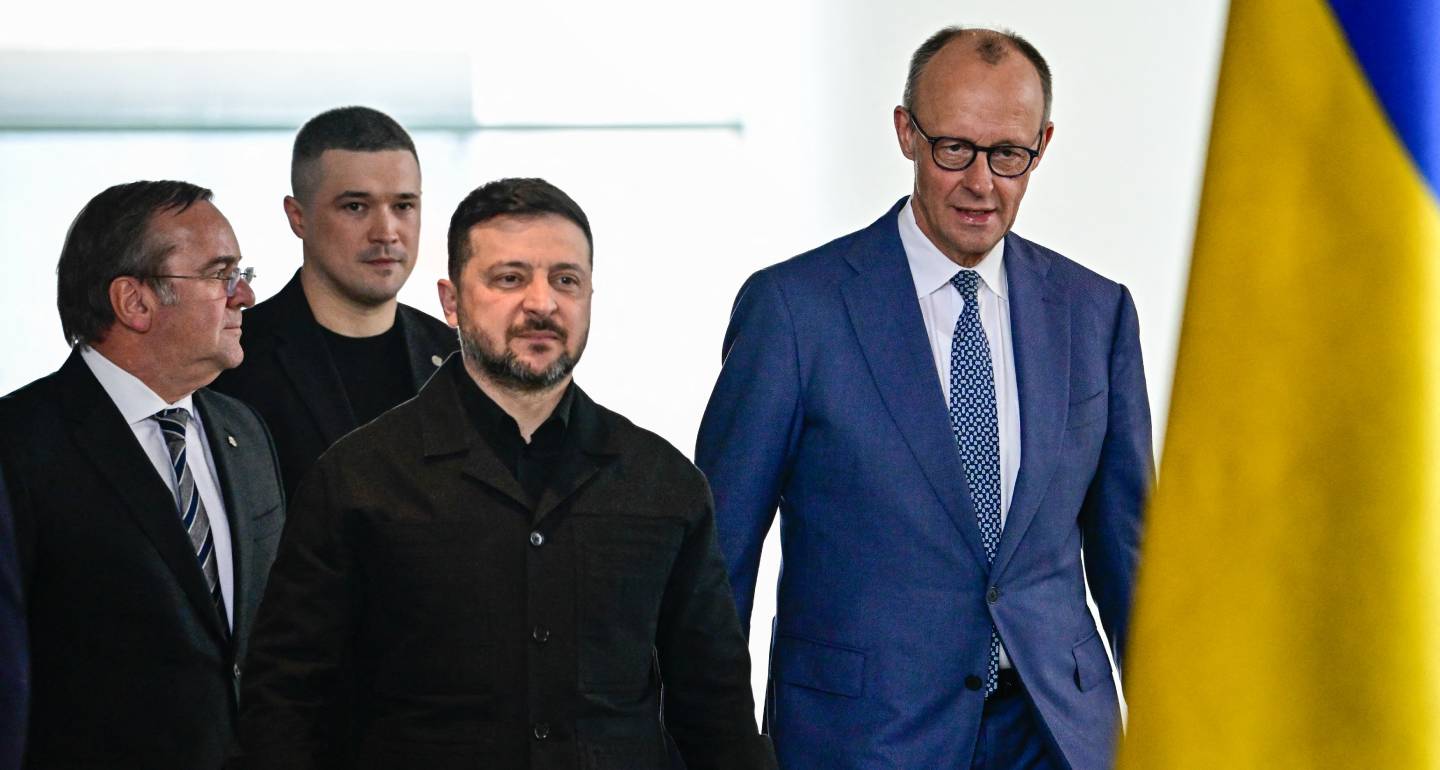
The greater threat to Zelensky comes not from Fedorov alone, but from the convergence between the former defense minister’s political campaign and the anti-corruption investigations moving ever closer to the presidential administration.

Balázs Jarábik