

Commentary
In the tenth year of his presidency, President Mirziyoyev’s system is becoming even more personalized than that of his predecessor Karimov.
Galiya Ibragimova
{
  "authors": [],
  "type": "pressRelease",
  "centerAffiliationAll": "dc",
  "centers": [
    "Carnegie Endowment for International Peace"
  ],
  "collections": [],
  "englishNewsletterAll": "democracy",
  "nonEnglishNewsletterAll": "",
  "primaryCenter": "Carnegie Endowment for International Peace",
  "programAffiliation": "DCG",
  "programs": [
    "Democracy, Conflict, and Governance",
    "Middle East"
  ],
  "projects": [],
  "regions": [
    "Middle East"
  ],
  "topics": [
    "Political Reform",
    "Democracy"
  ]
}
REQUIRED IMAGE
FOR IMMEDIATE RELEASE: February 22, 2007
- News Release -
In March 2006, Carnegie senior associates Amr Hamzawy, Marina Ottaway, and Nathan Brown explored the ambiguous position of moderate Islamist movements on crucial political issues—what the authors referred to as “gray zones”. The paper elicited many responses, positive and negative, by representatives of Islamist movements.
In a new Carnegie Policy Outlook, What Islamists Need to Be Clear About: The Case of the Egyptian Muslim Brotherhood, Hamzawy, Ottaway, and Brown respond to the reactions and critiques by Islamists and seek to explain the issues on which Islamist movements need to achieve greater clarity in order to gain credibility in the West. Using the case of the Egyptian Muslim Brotherhood, the authors address Western concerns over the Islamist political vision and provide new analysis into the complexity of the Brotherhood’s position on key issues such as Sharia law, religious identity, organization and leadership, universal citizenship, and women’s rights.
“We believe that this attempt to explain Western views of a problem to an audience in the Middle East typifies the Carnegie Endowment’s New Vision of what a twenty-first century think tank should do, namely not only provide policy makers and analysts with information and insights about other regions of the world, but also provide policy makers and analysts in other parts of the world with a better understanding of the United States and the West,” said the authors.
Notes:
The Carnegie Endowment for International Peace is a private, nonprofit organization dedicated to advancing cooperation between nations and promoting active international engagement by the United States. Founded in 1910, its work is nonpartisan and dedicated to achieving practical results.
###
Carnegie does not take institutional positions on public policy issues; the views represented herein are those of the author(s) and do not necessarily reflect the views of Carnegie, its staff, or its trustees.

In the tenth year of his presidency, President Mirziyoyev’s system is becoming even more personalized than that of his predecessor Karimov.

Galiya Ibragimova

The greater threat to Zelensky comes not from Fedorov alone, but from the convergence between the former defense minister’s political campaign and the anti-corruption investigations moving ever closer to the presidential administration.

Balázs Jarábik
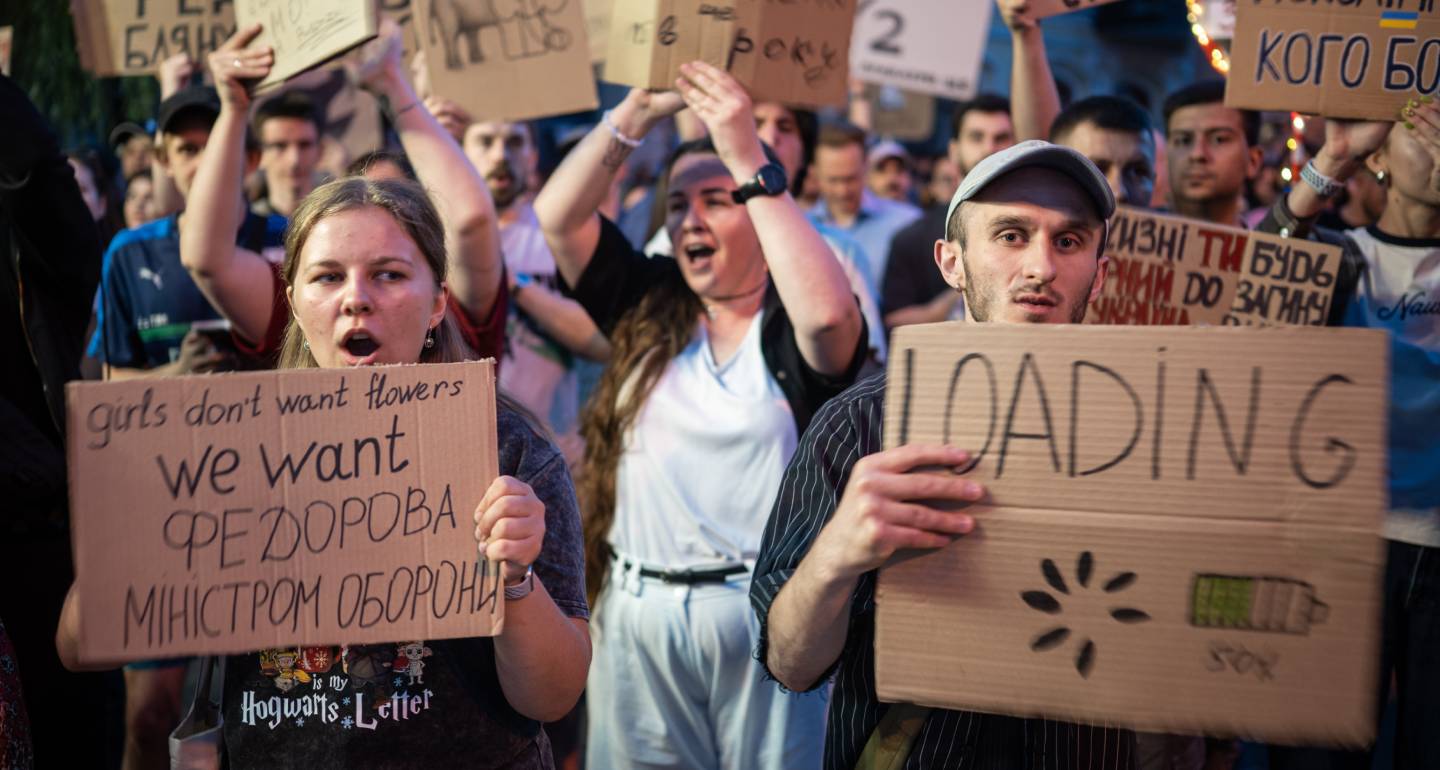
With his public call for new elections in Ukraine, ex-defense minister Mykhailo Fedorov has opened Pandora’s box.

Konstantin Skorkin

In the discussions made possible by the State Duma election campaign, one question is being asked more and more loudly. “What next?”

Andrey Pertsev

Two divergent trends—Putin’s hardline vision of how to prosecute the war in Ukraine, and a growing desire for change in Russia—could tear the regime apart.

Tatiana Stanovaya