

In The Media
Minxin Pei
{
  "authors": [
    "Minxin Pei"
  ],
  "type": "other",
  "centerAffiliationAll": "dc",
  "centers": [
    "Carnegie Endowment for International Peace"
  ],
  "collections": [],
  "englishNewsletterAll": "asia",
  "nonEnglishNewsletterAll": "",
  "primaryCenter": "Carnegie Endowment for International Peace",
  "programAffiliation": "AP",
  "programs": [
    "Asia"
  ],
  "projects": [],
  "regions": [
    "China"
  ],
  "topics": [
    "Political Reform",
    "Democracy",
    "Economy",
    "Military"
  ]
}
REQUIRED IMAGE
Failure to contain endemic corruption among Chinese officials poses one of the most serious threats to the nation’s future economic and political stability. Minxin Pei argues that corruption not only fuels social unrest and contributes to the rise in socioeconomic inequality, but holds major implications beyond its borders for foreign investment, international law, and environmental protection.
Source: Carnegie Endowment
Failure to contain endemic corruption among Chinese officials poses one of the most serious threats to the nation’s future economic and political stability, says a new report from the Carnegie Endowment. Minxin Pei, an expert on economic reform and governance in China, argues that corruption not only fuels social unrest and contributes to the rise in socioeconomic inequality, but holds major implications beyond its borders for foreign investment, international law, and environmental protection.
In Corruption Threatens China’s Future, Pei paints a sobering picture of corruption in China, where roughly 10 percent of government spending, contracts, and transactions is estimated to be used as kickbacks and bribes, or simply stolen. He examines the root causes for China’s rampant corruption—partial economic reforms, lax enforcement efforts, and reluctance by the Communist Party to adopt political reforms—and the ensuing economic losses and jeopardized financial stability.
Key Findings:
• Though the Chinese government has more than 1,200 laws, rules, and directives against corruption, implementation is spotty and ineffective. The odds of a corrupt official going to jail are less than three percent, making corruption a high-return, low-risk activity. Even low-level officials have the opportunity to amass an illicit fortune of tens of millions of yuan.
• The amount of money stolen through corruption scandals has risen exponentially since the 1980s. Corruption in China is concentrated in sectors with extensive state involvement, such as infrastructure projects, real estate, government procurement, and financial services. The absence of competitive political process and free press make these high-risk sectors susceptible to fraud, theft, kickbacks, and bribery. The direct costs of corruption could be as much as $86 billion each year.
• The indirect costs of corruption (efficiency losses; waste; and damage to the environment, public health, education, credibility and morale) are incalculable. Corruption both undermines social stability (sparking tens of thousands of protests each year), and contributes to China’s environmental degradation, deterioration of social services, and the rising cost of health care, housing, and education.
• China’s corruption also harms Western economic interests, particularly foreign investors who risk environmental, human rights, and financial liabilities, and must compete against rivals who engage in illegal practices to win business in China.
• The U.S. government should devote resources to tracking reported cases of corruption in China, increase legal cooperation with China (to prevent illegal immigration by corrupt officials and money laundering), and insist on reforms to China’s law-enforcement practices and legal procedures before tracking Chinese fugitives in the United States and recovering assets they have looted.
“Corruption has not yet derailed China’s economic rise, sparked a social revolution, or deterred Western investors. But it would be foolish to conclude that the Chinese system has an infinite capacity to absorb the mounting costs of corruption,” writes Pei. “Eventually, growth will falter.”
Click on the link above for the full text of this Carnegie publication.
About the Author
Minxin Pei is director of the China Program at the Carnegie Endowment, where his research focuses on democratization in developing countries, economic reform and governance in China, and U.S.-China relations. He is the author of From Reform to Revolution: The Demise of Communism in China and the Soviet Union (Harvard University Press, 1994) and China’s Trapped Transition: The Limits of Developmental Autocracy (Harvard University Press, 2006).
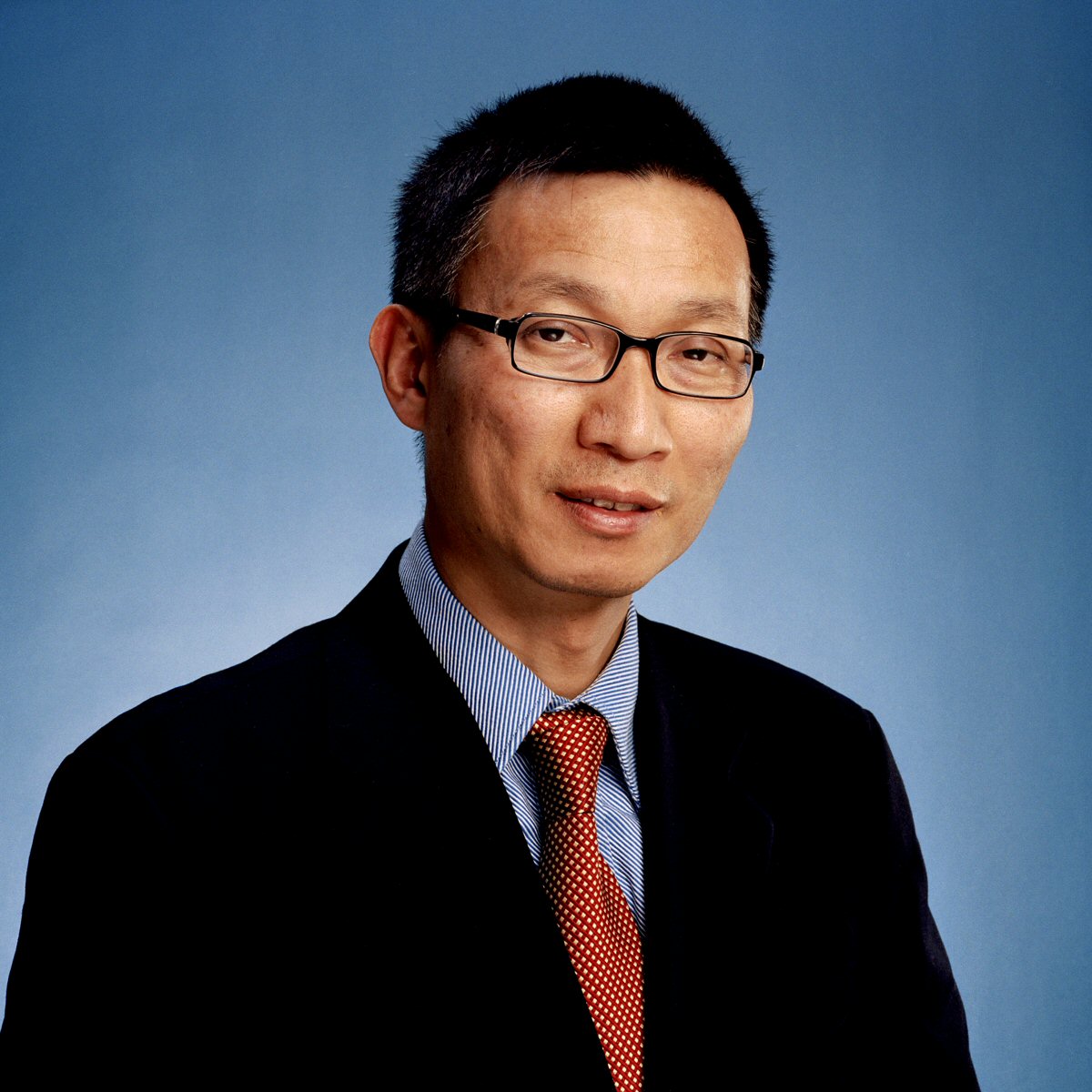
Former Adjunct Senior Associate, Asia Program
Pei is Tom and Margot Pritzker ‘72 Professor of Government and the director of the Keck Center for International and Strategic Studies at Claremont McKenna College.
Recent Work
Minxin Pei
Minxin Pei
Carnegie does not take institutional positions on public policy issues; the views represented herein are those of the author(s) and do not necessarily reflect the views of Carnegie, its staff, or its trustees.

Russian strikes are weakening the economy sustaining Ukraine’s war effort. Closing the growing funding gap will require more European support and politically contentious reforms in Kyiv.

Balázs Jarábik

Ex-president Gurbanguly Berdimuhamedov remains interested in politics, but his son Serdar, Turkmenistan’s current president, is becoming increasingly independent and willing to break with his father’s legacy. If their covert rivalry goes too far, both risk losing power.

Galiya Ibragimova

For every ruble allocated to social policy, health, and education in 2027, double that amount is earmarked for the army, the police, and the security services.

Alexandra Prokopenko

Sergei Kiriyenko used Russia’s parliamentary vote to further hone his strategy of corporate mobilization that is designed to maximize votes for United Russia.

Andrey Pertsev

The European far right might fail to steer EU policy in the direction Russia wants, but they will create enough chaos inside Europe to benefit the Kremlin.

Dimitar Bechev