

Article
Леонид Гозман, Michael McFaul
{
  "authors": [
    "Michael McFaul"
  ],
  "type": "legacyinthemedia",
  "centerAffiliationAll": "dc",
  "centers": [
    "Carnegie Endowment for International Peace"
  ],
  "collections": [],
  "englishNewsletterAll": "ctw",
  "nonEnglishNewsletterAll": "",
  "primaryCenter": "Carnegie Endowment for International Peace",
  "programAffiliation": "russia",
  "programs": [
    "Russia and Eurasia"
  ],
  "projects": [],
  "regions": [
    "Caucasus",
    "Russia"
  ],
  "topics": [
    "Political Reform",
    "Democracy",
    "Economy",
    "Foreign Policy"
  ]
}
Source: Getty
For the last eight years of Vladimir Putin's presidency, friends of mine who either worked for or were simply sympathetic to the Kremlin have argued at various times that Russia was a "managed" democracy, a "sovereign" democracy or an autocracy like China on the long road to democracy via the autocratic-modernizer path. Western observers of Russian internal developments, including the U.S. Secretary of State Condoleezza Rice, have echoed this third argument, emphasizing that Russia's transition from communism to democracy would be a long one but that it is nonetheless under way.
Source: The Moscow Times

My response has been twofold. First, these "special" forms of democracy are just camouflage for anti-democratic actions. To be sure, there are many forms of democratic rule around the world, and the U.S. system, incidentally, is by no means the most democratic form of government. But all democracies share a few fundamental features, including first and foremost competition in elections for national office and some institutional constraints on those in elected office. By these simple measures, Russia is clearly less democratic today than at the beginning of Putin's time in office.
Second, the long road to democracy is not some inevitable course of history that all countries follow. Rather, real human beings take actions to either impede or promote democratic practices. Democracy -- or its absence -- is not made by economic, cultural or historical determinants. Rather, democrats make democracy, and autocrats prevent it.
Motivated by the centrality of individual action, I have pushed back to my Putin supporters with the rhetorical question: Name me one Putin policy or decision over the last eight years that has made the political system more democratic? Some name the 13 percent flat tax, but this reform was about economic policy, not governance. Moreover, many might ask if it is democratic when billionaires pay the same tax rate as factory workers.
Others cite the reform of the electoral law for the State Duma, which theoretically could have been a democratic reform since we know that electoral systems based on proportional representation stimulate party development. In reality, however, the results of the last parliamentary elections demonstrated that an electoral mandate for Putin -- not the development of political parties -- was the goal of electoral law reform. Perhaps most absurd, earlier this month some tried to portray the arrest of opposition leader Garry Kasparov as an example of the rule of law, since he did "break the law." I was not convinced by these and other examples of Putin's supposed democratic reforms.
As of Monday, however, I now stand corrected. By committing to stepping down as president by naming a successor, Putin has taken a small but important step toward democratization. Since December 1993, political forces of all ideological persuasions have acquiesced to the political rules of the game spelled out in the Constitution. Putin's decision to continue to adhere to these rules will make it more costly for future leaders to transgress them.
Of course, the reason Putin can feel secure in anointing Dmitry Medvedev as his successor is that Putin and his team have so weakened all other centers of political power. Could Medvedev win a competitive election campaign against candidates with financial resources, access to national television and the ability to win support from regional leaders? We will never know. And this changing of the guard is more like the strange 1999-2000 transition from Yeltsin to Putin than a genuine change of government through the electoral process. U.S. political scientist Adam Przeworski once defined democracy as a system of government in which incumbents lose elections. That is unlikely to be the case in March. Finally, the fact that everyone is already convinced that Medvedev will be the next president -- four months before any votes have been cast -- underscores just how undemocratic the Russian political system has become.
Nonetheless, the process of changing leaders now under way in Russia is more democratic than many alternatives. Perhaps most important, this process leaves open the possibility of unintended consequences sometime in the future, including power struggles between the president and the government, or between the president and a new presidential team that has an appreciation for the positive consequences of competition, whether it is in the marketplace or the political arena. But let's not get too excited. A quarter century ago, Kremlin watchers all got worked up about the fact that the new general secretary, Yury Andropov, listened to jazz. Similarly, when Medvedev dons a black leather jacket or listens to Deep Purple, this hardly makes him democratic.
That being said, however, it is a positive sign that Russia will have two leaders instead of one and that the government will be guided by constitutional rules. So, congratulations President Putin for your democratic move! May it be the first of many -- intended or otherwise.
Michael McFaul is a Hoover fellow and professor of political science at Stanford University and a senior associate at the Carnegie Moscow Center.
This comment first appeared in The Moscow Times.
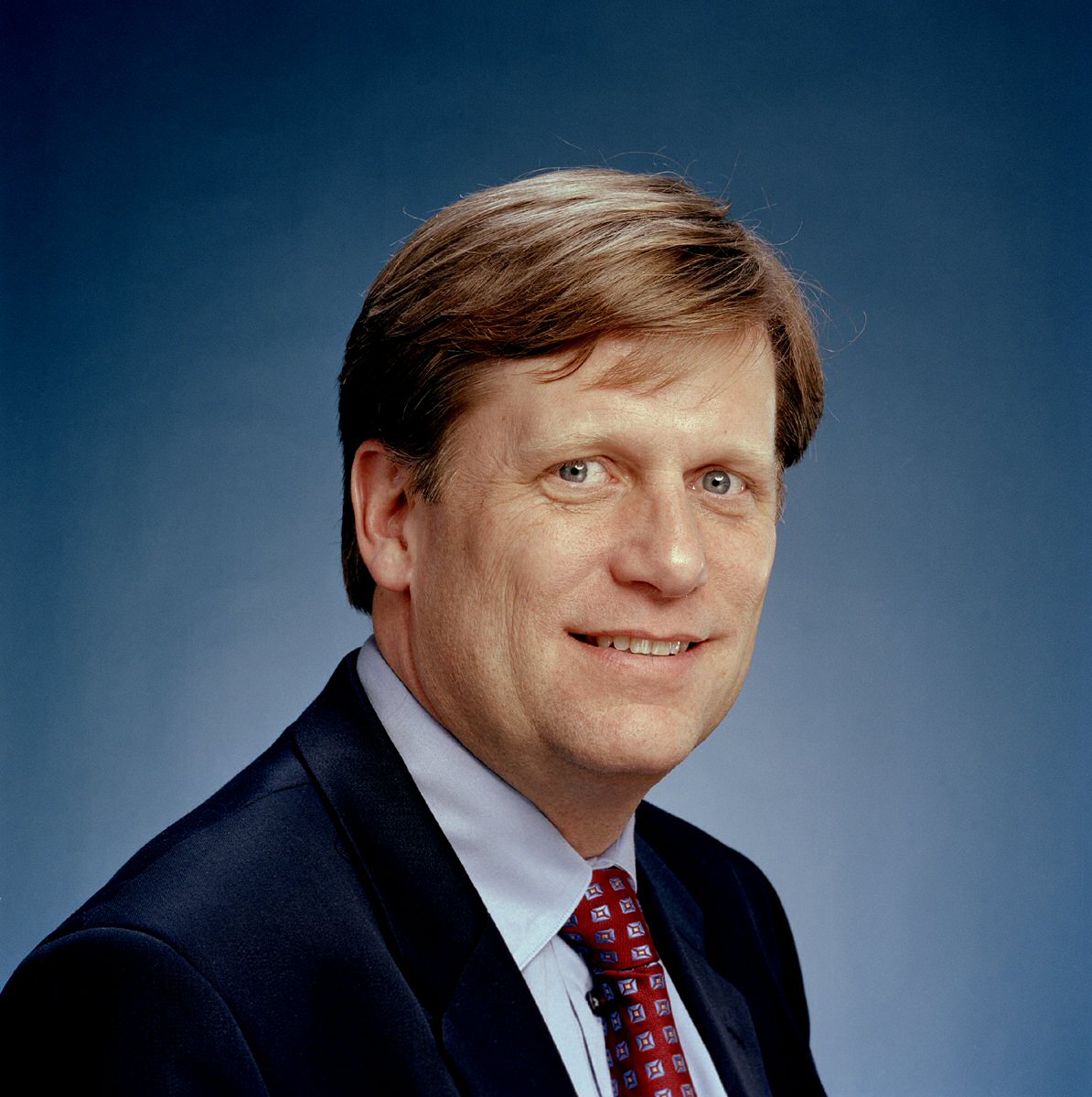
Former Senior Associate
In addition to his role at Carnegie, McFaul is Peter and Helen Bing Senior Fellow at the Hoover Institution and associate professor of political science at Stanford University.
Recent Work
Леонид Гозман, Michael McFaul
Michael McFaul, Sanja Tatic
Carnegie does not take institutional positions on public policy issues; the views represented herein are those of the author(s) and do not necessarily reflect the views of Carnegie, its staff, or its trustees.

If the Russian-speaking community in Latvia cannot articulate their interests without being seen as disloyal, they could end up embracing a pro-Kremlin agenda.

Sergejs Potapkins

Russia’s ruling party would have benefited from Putin appearing as its distant patron, but as an active frontman imposing his views on the public, he has done nothing but harm both the party’s election campaign and the ruling system overall.

Andrey Pertsev

Depleted financial reserves and a shrinking tax base mean it is no longer possible to simultaneously deliver high defense spending, price stability, and economic growth.

Alexandra Prokopenko
Blurring the line between humans and animals is a long-standing tradition in social utopian prose. In his latest novel, Leonid Bershidsky reminds us that in social experiments, people are often treated no differently than animals.

Alexander Baunov

In the tenth year of his presidency, President Mirziyoyev’s system is becoming even more personalized than that of his predecessor Karimov.

Galiya Ibragimova