

Commentary
A leak of Russian gas price data helps establish that China is paying Russia far less than Central Asian countries and Gazprom’s former European customers.
Sergey Vakulenko
{
  "authors": [
    "Michael McFaul",
    "Kathryn Stoner-Weiss"
  ],
  "type": "legacyinthemedia",
  "centerAffiliationAll": "dc",
  "centers": [
    "Carnegie Endowment for International Peace"
  ],
  "collections": [],
  "englishNewsletterAll": "ctw",
  "nonEnglishNewsletterAll": "",
  "primaryCenter": "Carnegie Endowment for International Peace",
  "programAffiliation": "russia",
  "programs": [
    "Russia and Eurasia"
  ],
  "projects": [],
  "regions": [
    "Caucasus",
    "Russia"
  ],
  "topics": [
    "Political Reform",
    "Democracy",
    "Economy",
    "Foreign Policy"
  ]
}
Source: Getty
Time Magazine named Russian President Vladimir Putin its "Person of the Year" last week. In announcing the magazine's choice for special recognition this year, Time's managing editor, Richard Stengel writes, "if Russia succeeds as a nation-state in the family of nations, it will owe much of that success to one man, Vladimir Vladimirovich Putin." Stengel is merely joining the chorus of voices in an increasingly conventional narrative praising Putin for Russia's apparent revival where it isn't clear at all that any praise is actually due him.
Source: San Francisco Chronicle

In the 1990s, according to the conventional narrative that Time is evidently repeating, under Boris Yeltsin, the Russian state did not govern, the economy shrank and the population suffered. Since 2000, under Putin, however, order has returned, the economy has flourished and the average Russian is living better than ever before. Putin may have rolled back democratic gains, the story goes, but these were necessary sacrifices on the altar of stability and growth.
But this conventional narrative is wrong, based almost entirely on a spurious correlation. The emergence of Russian democracy in the 1990s did indeed coincide with state breakdown and economic decline, but it did not cause either. The re-emergence of Russian autocracy under Putin, conversely, has coincided with tremendous economic growth but not caused it. If anything, Putin's autocratic turn over the last several years has reduced gains from what they would have been had democracy survived.
The Russian state under Putin is certainly bigger than it was before, and in some spheres, such as paying pensions and government salaries on time, road building or educational spending, it is doing better now than during the 1990s. Yet given the growth in its size and resources, what is striking is how poorly the Russian state still performs. In terms of public safety, health, corruption and the security of property rights, Russians are just as badly or actually worse off today than they were a decade ago.
The frequency of terrorist attacks in Russia has increased under Putin, as has the murder rate. Health spending averaged only 6 percent of GDP from 2000 to 2005, compared with 6.4 percent from 1996 to 1999. Russia's population has been shrinking since 1990, thanks to decreasing fertility and increasing mortality rates, but the decline has worsened since 1998. In short, the data simply do not support the popular notion that Putin's more autocratic state is also a more capable or effective state in addressing Russia's significant public policy challenges.
Nevertheless, supporters might respond, Putin's autocratic ways have at least paved the way for Russia's spectacular economic growth. Growth in Russia has indeed averaged an impressive 6.7 percent during Putin's tenure. Since 2000, real disposable income has increased by more than 10 percent a year, consumer spending has skyrocketed, unemployment has fallen and poverty has decreased.
But this economic recovery is actually unexceptional compared to the rest of the post-communist world. A period of rapid and deep economic decline followed communism's collapse in every country throughout the Eastern bloc. Given the dreadful starting economic conditions, every post-communist government was compelled to pursue some degree of price and trade liberalization, macroeconomic stabilization, and eventually privatization. The entire region experienced economic recession and then began to recover several years after the adoption of reforms. Russia's economy has merely followed this same general trajectory - and would have done so under dictatorship or democracy. Putin arrived on the scene at a good time in Russia's economic cycle, and then got even luckier as oil prices rose worldwide.
If there is any causal relationship between authoritarianism and economic growth in Russia, it is negative. Russia's more autocratic system in the last several years has produced more corruption and less secure property rights. Asset transfers have transformed a thriving private energy sector into one that is effectively state-dominated and less efficient.
Perhaps the most telling evidence that Putin's autocracy has hurt rather than helped Russia's economy is provided by regional comparisons. Between 1999 and 2006, Russia ranked ninth out of the 15 post-Soviet countries in terms of average growth.
One can only wonder how much faster Russia would have grown with a more democratic system, but we will certainly not find out any time soon. Time's "Person of the Year" has just elevated himself to "Russian Ruler for the Foreseeable Future" in designating his protégé, Dmitri Medvedev to succeed him as president next spring. Putin himself has indicated his willingness to stay on as Russia's new prime minister, and perhaps even president again after that.
The only thing Time magazine has right about Putin is this: "(H)e is not a boy scout. He is not a democrat in the way the West would define it. He is not a paragon of free speech." But Time should also have resisted swallowing the official party line and recognized Putin is most certainly not Russia's savior or guarantor of stability either.
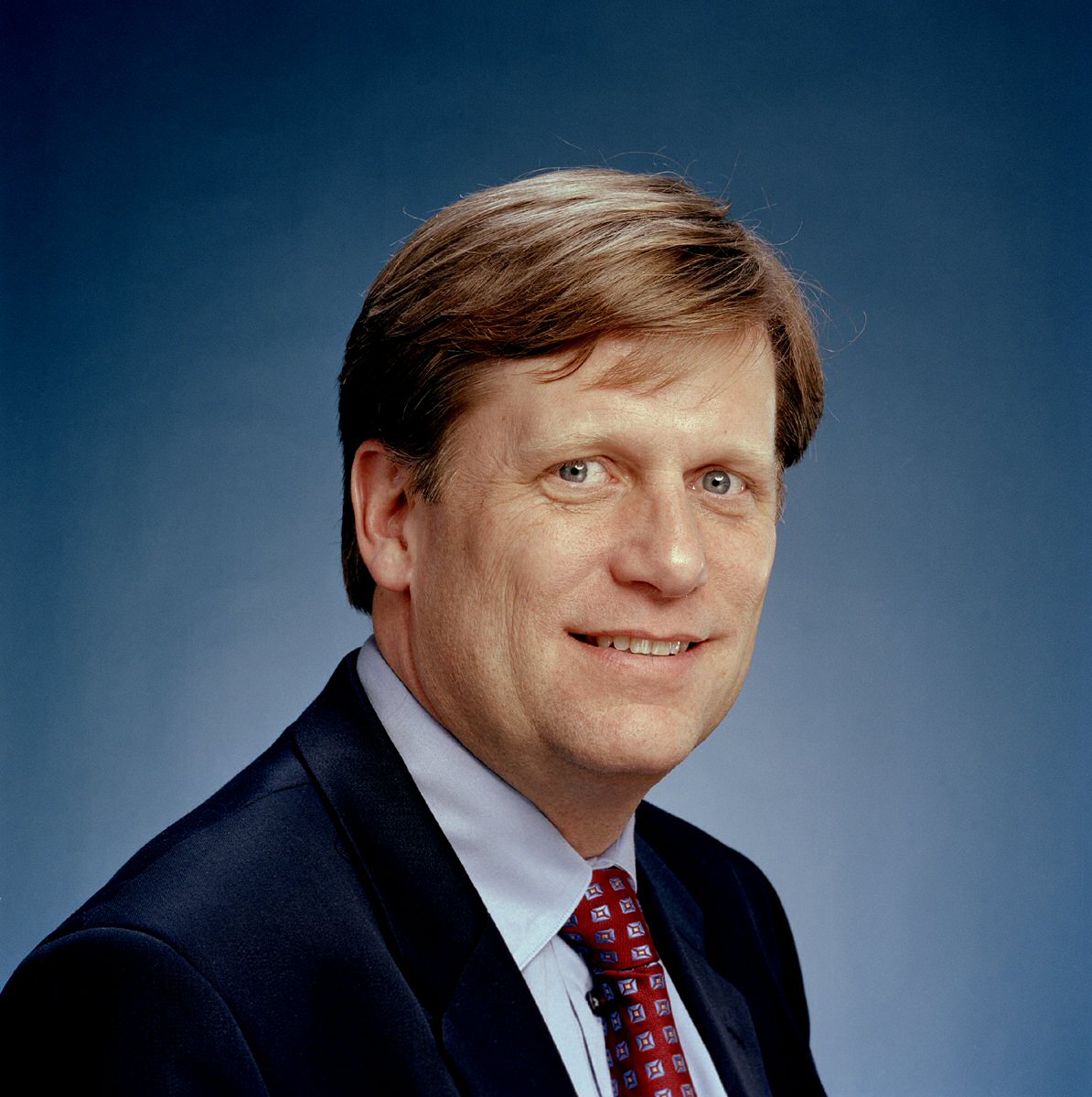
Michael McFaul and Kathryn Stoner-Weiss are Stanford University professors and McFaul is also the Peter and Helen Bing senior fellow at the Hoover Institution. This op-ed is based on a forthcoming article, "The Myth of the Authoritarian Model: How Putin's Crackdown Holds Russia Back," (Foreign Affairs, January/February 2008).
Former Senior Associate
In addition to his role at Carnegie, McFaul is Peter and Helen Bing Senior Fellow at the Hoover Institution and associate professor of political science at Stanford University.
Kathryn Stoner-Weiss
Carnegie does not take institutional positions on public policy issues; the views represented herein are those of the author(s) and do not necessarily reflect the views of Carnegie, its staff, or its trustees.
A leak of Russian gas price data helps establish that China is paying Russia far less than Central Asian countries and Gazprom’s former European customers.

Sergey Vakulenko

Japan’s long-term security policy is driven by concerns about China, and there is little appetite for (or interest in) pursuing a confrontation with Moscow.

James D.J. Brown

The truth of the strategic situation is that Europe and Russia are extremely unlikely to be able to “turn the page” on their confrontation within the next two decades.

Arkady Moshes
Russia spent years building a “sovereign internet,” concentrating web infrastructure exclusively within Russian territory. Ukrainian drone attacks have shown how vulnerable that approach has left the Russian internet.

Maria Kolomychenko

Putin’s conservative staffing policies and search for ever greater control have cemented parliament’s transformation into a bureaucratic appendage of the executive branch.

Andrey Pertsev