• Research
  • Politika
  • About
Carnegie Russia Eurasia center logoCarnegie lettermark logo
  • Donate
{
  "authors": [],
  "type": "pressRelease",
  "centerAffiliationAll": "dc",
  "centers": [
    "Carnegie Endowment for International Peace"
  ],
  "collections": [],
  "englishNewsletterAll": "",
  "nonEnglishNewsletterAll": "",
  "primaryCenter": "Carnegie Endowment for International Peace",
  "programAffiliation": "SCP",
  "programs": [
    "Sustainability, Climate, and Geopolitics"
  ],
  "projects": [],
  "regions": [
    "North America",
    "United States",
    "China"
  ],
  "topics": [
    "Climate Change"
  ]
}
REQUIRED IMAGE

REQUIRED IMAGE

Press Release

Carnegie Announces Leading Chinese Expert to Head Its Energy and Climate Program in Beijing

Zhou Dadi, former director general of the Energy and Research Institute of the National Development and Reform Commission (NDRC) in China, has joined the Carnegie Endowment for International Peace to run the Beijing arm of its Energy and Climate Program.

Link Copied
Published on May 5, 2008

WASHINGTON, May 5—Zhou Dadi, former director general of the Energy and Research Institute of the National Development and Reform Commission (NDRC) in China, has joined the Carnegie Endowment for International Peace to run the Beijing arm of its Energy and Climate Program.

Making the announcement, the president of the Carnegie Endowment, Jessica T. Mathews, said:

"We are incredibly lucky and extremely proud to add Zhou Dadi, one of China’s preeminent experts in the crucial fields of energy and climate, to our joint program in Washington and Beijing. Zhou’s vast experience, expertise, and deep knowledge of China will add enormous value to our efforts to improve mutual understanding between the United States and China of what each side needs to do to achieve energy security and a livable global climate, and how they can cooperate in doing so.”

Zhou Dadi said:

"I am delighted to join Carnegie to work on improving cooperation between the United States and China on energy and climate change issues. Further cooperation can only be incredibly beneficial for both countries.”

William Chandler, director of the Carnegie Energy and Climate Program, said:

"Dadi has devoted his career to technical excellence and international cooperation. His skills will help our nations reach practical climate solutions.”

###


bullet
NOTES
  • Zhou Dadi is director general (emeritus) of the Energy Research Institute (ERI) of the National Development and Reform Commission, where he served as director general for 8 years. Earlier, Dadi served in ERI for 22 years as research professor and vice director, focusing on energy economics and energy system analysis. Dadi has been a prominent intellectual leader in China’s energy import and export reform policies, energy price reform, energy efficiency policy, and climate change. He now serves as a member of the Expert Committee of the Energy Field of the 863 Program of China (which reports to the State Council). Zhou Dadi was educated in Beijing, earning his B.S. in 1970 in the Department of Engineering Physics, Tsinghua University, and his M.S. in 1976 in the Department of Environmental Engineering, also at Tsinghua University. He is a member of the Scientific and Technical Advisory Panel (STAP) of Global Environment Facility; deputy director, Executive Office of the China Green Lights Program; chief scientist for the Expert Team of China for Working Group III of the Intergovernmental Panel on Climate Change (IPCC); lead author of the Third Assessment Report, IPCC WG III (Mitigation); chairman of the Board of Directors of the Chinese Energy Economics Society; executive member of the Board of Directors of the Chinese Society of Energy Research; board member of the Chinese Society of Sustainable Development; and board member of the Chinese Society of Input/Output Research. Dadi has served as a consultant to the World Bank, Global Environmental Facility, and many other organizations around the world, and has been a visiting fellow at the Pacific Northwest National Laboratory (PNNL) and visiting scientist at the Lawrence Berkeley National Laboratory (LBNL) in the United States. Zhou co-founded the Energy Efficiency Center in Beijing in 1992 in cooperation with PNNL and LBNL. Zhou Dadi received the OECD Climate Technology Initiative (CTI) Global Climate Leadership Award in 2000. He has participated in more than 30 key research projects and published more than 50 papers and books. He speaks native Mandarin and is fluent in English.
  • The Carnegie Energy and Climate Program aims to provide leadership in global energy and climate policy. The program integrates thinking on energy technology, environmental science, and political economy to reduce risks stemming from global change and competition for scarce resources. It will create new products and collaborate with Carnegie experts around the world to provide information and change the way policy makers think about energy policy.
  • The Carnegie China Program in Beijing and Washington provides policy makers in both countries with a better understanding of the dynamics within China and between the United States and China. In addition to books, policy briefs, papers and other publications, the Program produces Carnegie China Insight Monthly, a Chinese-language e-newsletter, and the Hong Kong Journal, an online quarterly covering political, economic, and social issues on Hong Kong and its relations with mainland China, the United States, and other governments and international organizations.
  • Building on the successful establishment of the Carnegie Moscow Center fourteen years ago, and following its century-long practice of adapting to radically-changed global circumstances, the Endowment is undertaking a fundamental re-definition of its role and mission. In a two-day series of events to publicly launch the NEW VISION in February 2007, the Carnegie Endowment for International Peace announced that it has added operations in Beijing, Beirut, and Brussels to its existing offices in Washington and Moscow, pioneering the idea that a think tank whose mission is to contribute to global security, stability, and prosperity requires a permanent international presence and a multinational outlook at the core of its operations. For more information on the Carnegie Endowment’s NEW VISION or to watch the NEW VISION DVD online, please click here.
  • Press Contact: Trent Perrotto, 202/939-2372, tperrotto@ceip.org
Climate ChangeNorth AmericaUnited StatesChina

Carnegie does not take institutional positions on public policy issues; the views represented herein are those of the author(s) and do not necessarily reflect the views of Carnegie, its staff, or its trustees.

More Work from Carnegie Russia Eurasia Center

  • Commentary
    Carnegie Politika
    How Trump’s Wars Are Boosting Russian Oil Exports

    The interventions in Iran and Venezuela are in keeping with Trump’s strategy of containing China, but also strengthen Russia’s position.

      • Mikhail Korostikov

      Mikhail Korostikov

  • Commentary
    Carnegie Politika
    How Far Can Russian Arms Help Iran?

    Arms supplies from Russia to Iran will not only continue, but could grow significantly if Russia gets the opportunity.

      Nikita Smagin
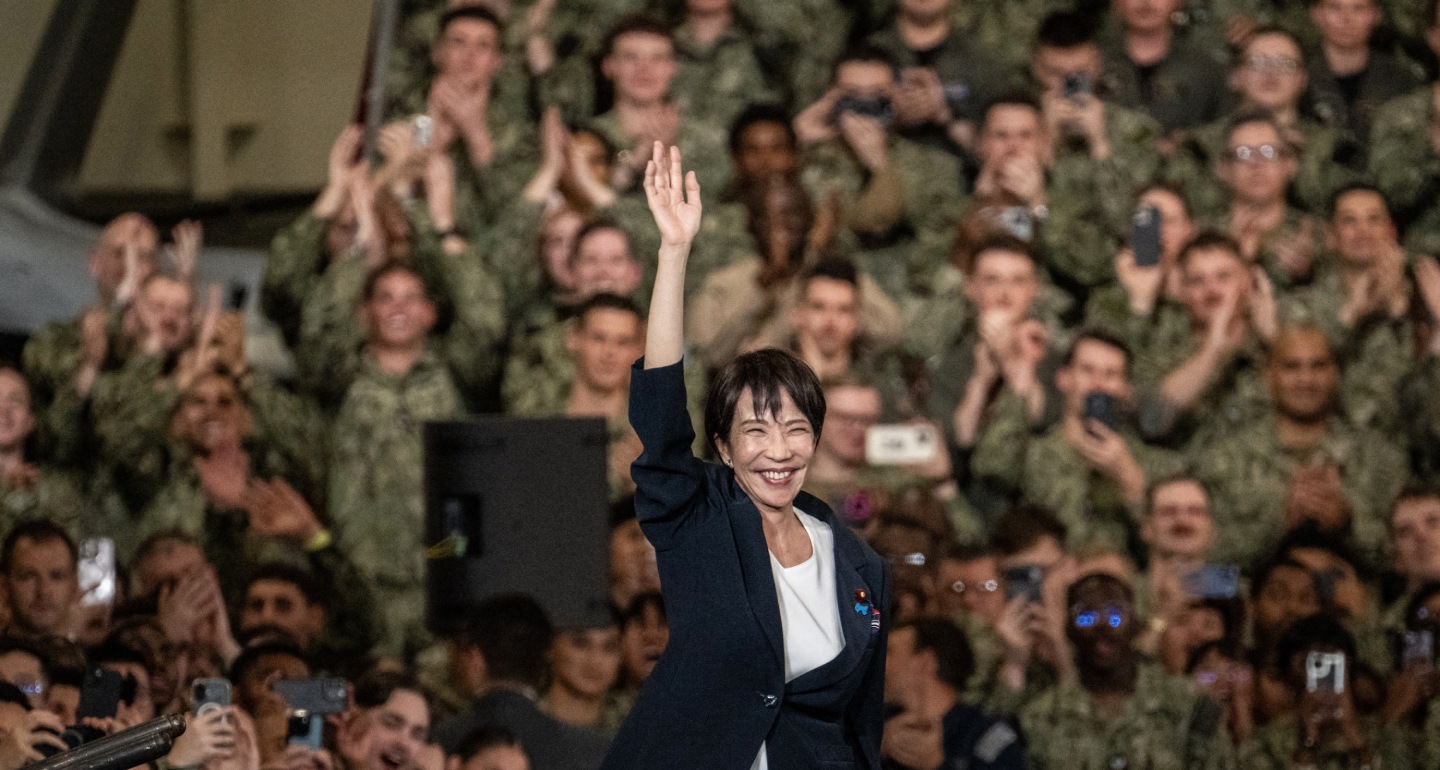
  • Commentary
    Carnegie Politika
    Japan’s “Militarist Turn” and What It Means for Russia

    For a real example of political forces engaged in the militarization of society, the Russian leadership might consider looking closer to home.

      James D.J. Brown

  • Commentary
    Carnegie Politika
    A New World Police: How Chinese Security Became a Global Export

    China has found a unique niche for itself within the global security ecosystem, eschewing military alliances to instead bolster countries’ internal stability using law enforcement. Authoritarian regimes from the Central African Republic to Uzbekistan are signing up.

      Temur Umarov
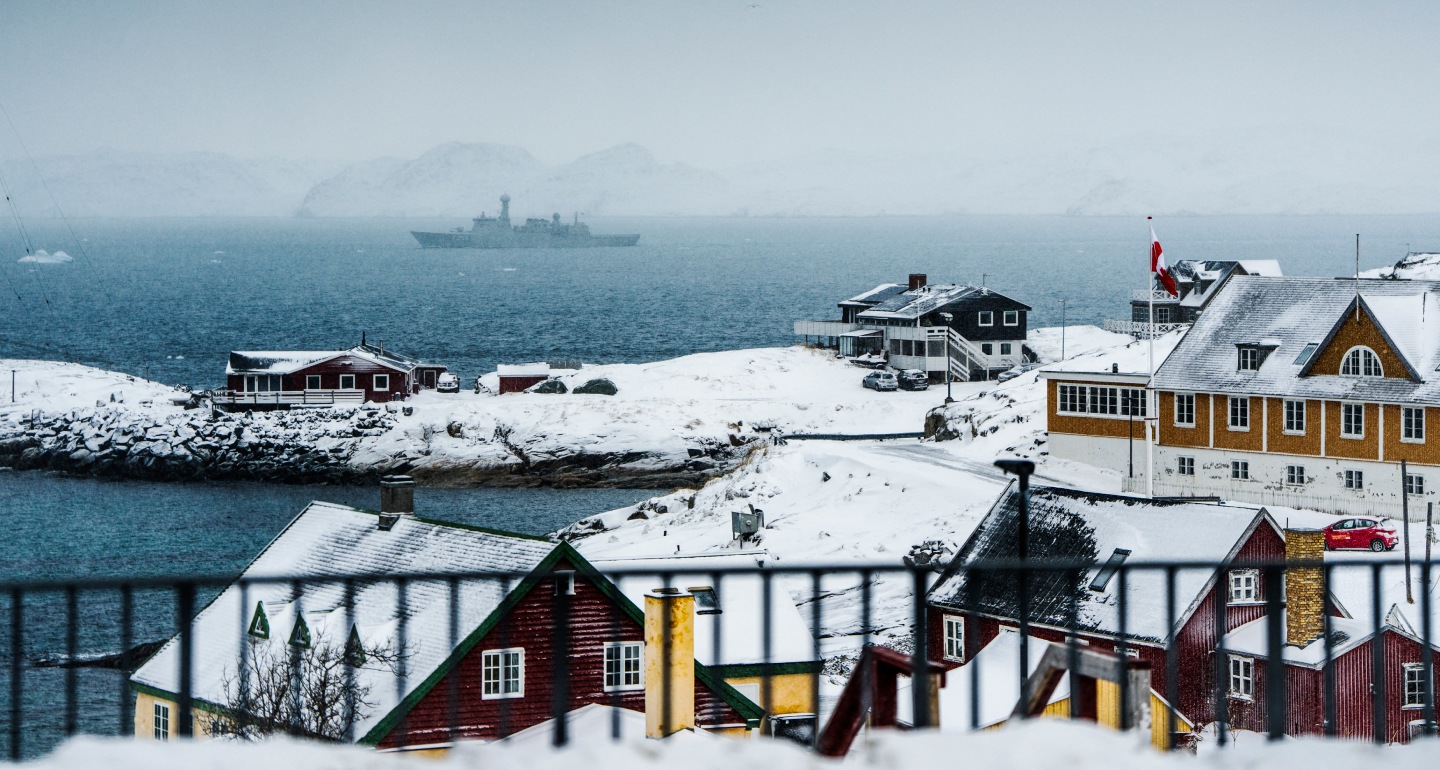
  • Commentary
    Carnegie Politika
    Is There Really a Threat From China and Russia in Greenland?

    The supposed threats from China and Russia pose far less of a danger to both Greenland and the Arctic than the prospect of an unscrupulous takeover of the island.

      Andrei Dagaev

Get more news and analysis from
Carnegie Russia Eurasia Center
Carnegie Russia Eurasia logo, white
  • Research
  • Politika
  • About
  • Experts
  • Events
  • Contact
  • Privacy
Get more news and analysis from
Carnegie Russia Eurasia Center
© 2026 Carnegie Endowment for International Peace. All rights reserved.