

Article
Dr. Albert Keidel
{
  "authors": [
    "Albert Keidel"
  ],
  "type": "testimony",
  "centerAffiliationAll": "dc",
  "centers": [
    "Carnegie Endowment for International Peace"
  ],
  "collections": [],
  "englishNewsletterAll": "asia",
  "nonEnglishNewsletterAll": "",
  "primaryCenter": "Carnegie Endowment for International Peace",
  "programAffiliation": "AP",
  "programs": [
    "Asia"
  ],
  "projects": [],
  "regions": [
    "North America",
    "United States",
    "China"
  ],
  "topics": [
    "Economy",
    "Foreign Policy"
  ]
}
Source: Getty
China's economy will remain strong despite the current global financial crisis, but its leaders should not assume that the crisis is a failure of capitalism, concluded Albert Keidel in a speech before the U.S.-China Business Council last week. Both the United States and China can learn from the crisis to improve their political and economic systems.
Source: U.S.-China Business Council

The lessons to be learned from the turmoil of recent months apply far more to the world's advanced economies than they do to China, which is still at an early stage of its economic and political modernization. For the United States and other mature industrial powers, this crisis is an opportunity to take further steps forward in improving the functioning of a competitive and democratic capitalist system. These steps include better regulatory systems and better insulation for democratic processes from excessive influence on the part of wealthy special interests. Details of the recovery plan are also important. The current U.S. program of recapitalizing banks without diluting the value of existing ownership stakes is an invitation to a repetition of irresponsible risk-taking down the road. Current plans to inject liquidity into the world financial systems followed by significant deficit-financed spending in the real economy are the way to go. The question is whether the political actors involved have the will to deliver the appropriate scale and structure of such disbursements. Given the severity of the financial "trigger" for this crisis, the greatest danger is of a downward "Keynesian spiral" whereby declining consumption and declining investment reinforce each other. The United States cannot afford to make the mistakes of FDR and his Congress in the 1930s, which could not escape popular emphasis on so-called “budgetary responsibility." The United States government is not a family sitting around the kitchen table. The world's effective money supply has collapsed. Only large-scale financial infusions and deficit spending can preempt a prolongued downturn.
China's economy is too small to be a major factor in the needed global recovery, but it can help -- especially if its import growth can remain strong. China should also lighten up its criticism of the West for causing this crisis. Such crises are the way the world's systems improve, in a learning-by-crisis effort at the frontier of institutional modernization. Only in several decades will China finally be at a stage in its modernization when it will need to study the lessons of this crisis. Until then, its major job is still catch-up in both economic growth and institutional sophisitication. Its current healthy status indicates it can do a very good job of such catch-up in the immediate future and for a long time to come.

Former Senior Associate, China Program
Keidel served as acting director and deputy director for the Office of East Asian Nations at the U.S. Department of the Treasury. Before joining Treasury in 2001, he covered economic trends, system reforms, poverty, and country risk as a senior economist in the World Bank office in Beijing.
Recent Work
Dr. Albert Keidel
Dr. Albert Keidel
Carnegie does not take institutional positions on public policy issues; the views represented herein are those of the author(s) and do not necessarily reflect the views of Carnegie, its staff, or its trustees.

With the growth in points of friction between the great powers, organizations like the SCO will continue to play a role in the strategic adaptation of the smaller powers caught between them.

Temur Umarov

When faced with fuel shortages in the past, Central Asian governments could always count on additional supplies from Moscow. That safety net no longer exists.

Galiya Ibragimova

Despite unhappiness on the ground, Moscow is determined to use both carrot and stick to ensure there is record support for United Russia in occupied Ukraine.

Konstantin Skorkin

The recent damage inflicted by Ukrainian drones and missiles on Russia has made Belarus aware of its own vulnerabilities—and surprisingly amenable to Kyiv’s demands.

Artyom Shraibman
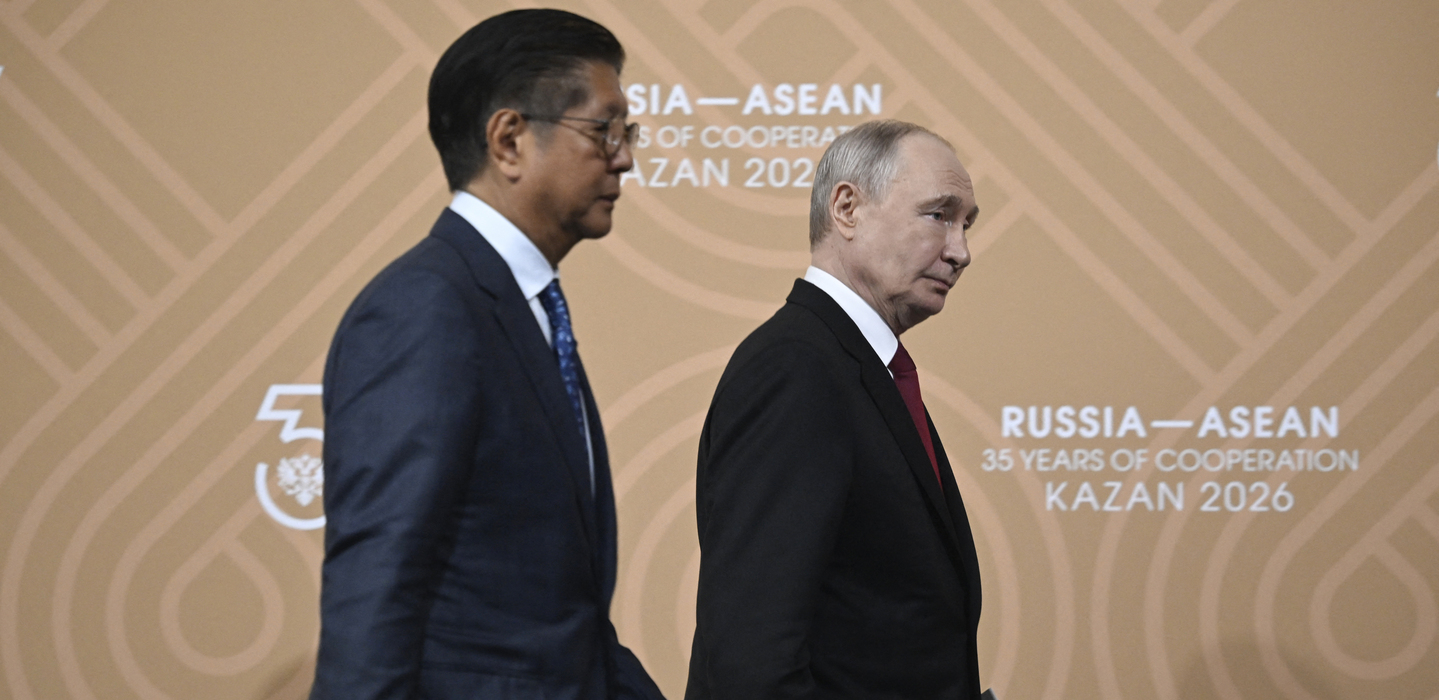
Russia looks set to reap economic benefits from closer ties with Southeast Asian countries that are keen to find reliable energy suppliers and diversify trade ties.

Alexander Gabuev