

Commentary
Maksim Samorukov
{
  "authors": [
    "Maksim Samorukov"
  ],
  "type": "commentary",
  "blog": "Carnegie Politika",
  "centerAffiliationAll": "",
  "centers": [
    "Carnegie Endowment for International Peace",
    "Carnegie Russia Eurasia Center"
  ],
  "englishNewsletterAll": "",
  "nonEnglishNewsletterAll": "",
  "primaryCenter": "Carnegie Russia Eurasia Center",
  "programAffiliation": "",
  "regions": [
    "Europe",
    "Western Balkans"
  ],
  "topics": [
    "Foreign Policy",
    "Domestic Politics",
    "Global Governance",
    "Political Reform"
  ]
}
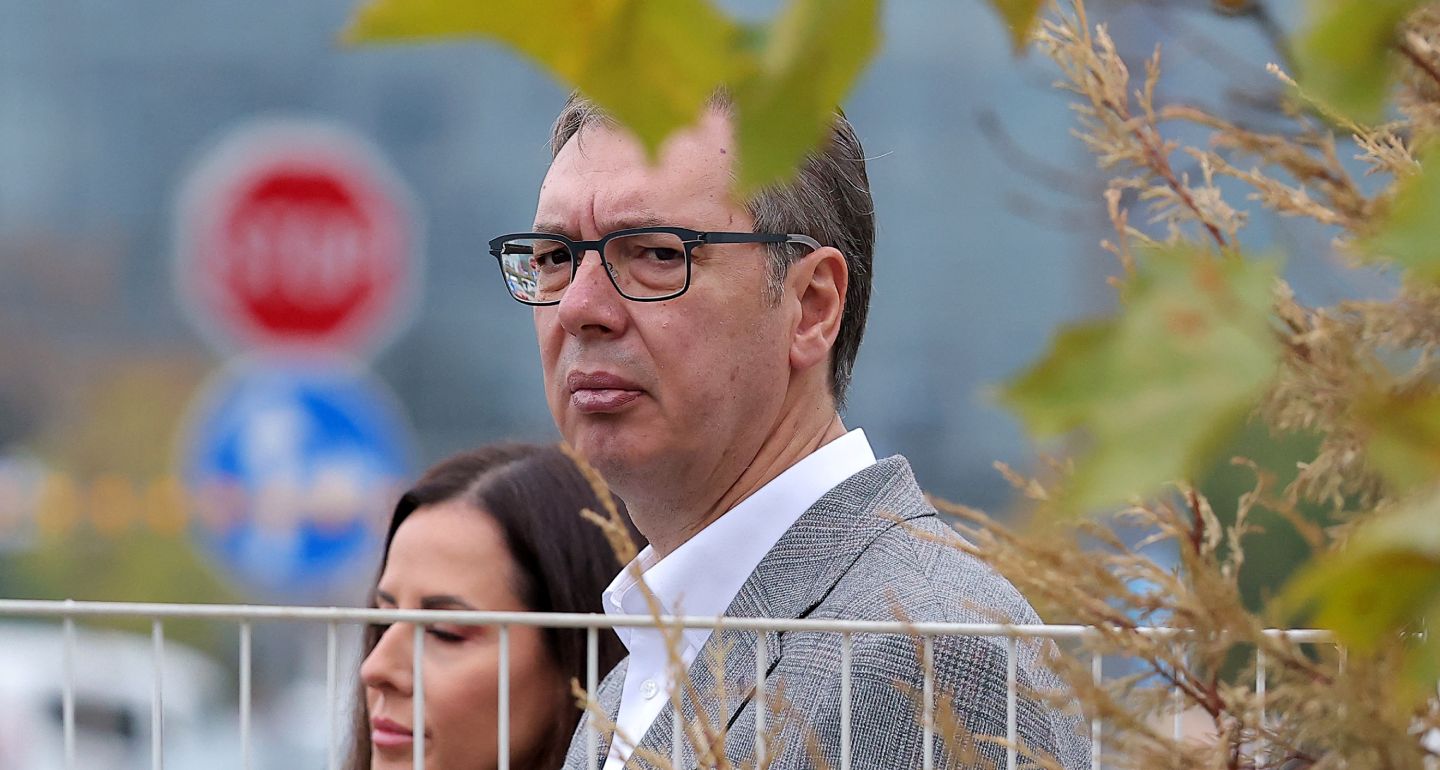
Фото: Getty Images
The new Serbian leadership may have promised to keep on cooperating with Russia, but soon they will have to make a choice between fighting corruption and sealing lucrative deals with Moscow. The two are mutually exclusive, even if the new leaders in Belgrade haven’t yet realized it.
As Serbia celebrates the electoral triumph of the opposition Student List over the country’s longtime strongman ruler Aleksandar Vučić, its historical ally Russia might appear to have little to worry about. Even though Vučić was widely seen as Moscow’s last friend in Europe, pro-Russian sentiment in Serbia dates back centuries and has survived many changes of the guard in Belgrade. Moreover, the victorious opposition has repeatedly emphasized that it is determined to uphold the Russia-friendly policies of its predecessor government.
Moscow has responded that it also hopes to continue “constructive relations” with Serbia’s new leadership. That, however, is easier said than done. Regardless of the Student List’s pro-Russian sympathies, their key priority—the institutional renewal of the Serbian state—is hardly compatible with Russia’s preferred way of doing business, while Moscow’s foreign policy has become too ossified to adapt to the new reality in Serbia.
In the past, Russia-Serbia relations have indeed proved resilient to the vagaries of Serbian domestic politics. Back in 2012, Vučić himself was a little-known opposition upstart when his party unexpectedly ousted Moscow’s established partner Boris Tadić, who had sold Serbia’s oil giant NIS to Gazprom to secure Russia’s support on the non-recognition of Kosovo. If that circumstance did not prevent Vučić from becoming an even greater friend of the Kremlin, why would things be significantly different now? There are, however, a number of differences this time around.
First, back in 2012, Vučić was keen to maintain continuity in terms of personnel within the Russian portfolio. Mindful of the Kremlin’s conservatism and mistrust of new people, he continued to deal with Moscow via tested figures from the Slobodan Milošević era, such as Aleksandar Vulin and Ivica Dačić. Another experienced apparatchik, the head of Srbijagas Dušan Bajatović—the key interlocutor with Gazprom—has remained in place from 2008 until today.
The trio relieved Russian bosses of the need to memorize new Serbian names and deftly navigated the Kremlin’s corridors of power. Vučić himself took advantage of his perfect command of Russian and soon mastered the same skills. He developed an impeccable understanding of Moscow’s sensitivities, red lines, and sore points, which allowed him to settle even major crises in relations with Russia without making so much as a ripple.
The Student List has no such personal affinity. The Serbian Socialist Party, which provided Vučić with his Russia hands, has failed to make it into parliament and is nowhere near the formation of the new government. In the meantime, the Student List’s aspiration to cleanse state institutions and corporations of Vučić cronies bodes ill for those Russian associates in Serbia who have held onto their posts for decades.
The new Serbian leadership may have promised to keep on cooperating with Russia, but soon they will have to make a choice between fighting corruption and sealing lucrative deals with Moscow. The two are mutually exclusive, even if the new leaders in Belgrade haven’t yet realized it.
Serbia’s newfound drive for democratization and transparency is also an ill match with the rigid foreign policy of Russia today. Back in 2012, the Kremlin was still flexible enough to see in Vučić a like-minded leader, worth dealing with despite Moscow’s general dislike of opposition victories. Fourteen years later, the elderly Russian leadership has grown so self-righteous and intellectually lazy that it will barely bother to give a second thought to any of its policies.
For two years, Moscow has been eagerly echoing Vučić’s narratives that Serbian protests are simply another attempt at a color revolution paid for and inspired by Western puppeteers. It will be an uphill struggle for the Student List to prove otherwise, given how selective the Kremlin’s perception of reality has become.
Such a diverse political movement is bound to make all kinds of statements and political gestures, including some strongly pro-European and critical of Russia. The Kremlin will seize on them as definitive confirmation of its belief that the events in Serbia were nothing more than another example of regime change engineered by the West to curb Russia’s influence.
Ever since the victory of pro-European protests in Ukraine in 2014, the concept of Maidan (as that revolution in Ukraine became known) has become for the Kremlin the all-eclipsing embodiment of everything it fears and detests in world politics. Even today, Russian President Vladimir Putin justifies the five years of Russia’s brutal invasion of Ukraine as being down to the supposedly unprecedented threat the victory of Maidan posed to Russian security. It is hard to imagine him abandoning his key political prejudice for the sake of mending ties with the new Serbian leadership.
Finally, the world around Serbia has changed beyond recognition. In 2012, Russia and the European Union were still partners, eager to turn Serbia into a showcase of their cooperation. Nowadays, Moscow openly calls the EU an existential enemy and leverages its remaining influence in Europe to sow discord and disruption. The Europeans have responded by investing heavily in eliminating Russia’s presence in their immediate neighborhood, including Serbia.
Brussels has not concealed its enthusiasm over the Student List’s victory, and is sure to follow up with offers of financing and advances in EU integration if Belgrade agrees to speed up reforms and bring Serbia’s foreign policy closer to that of the EU. That doesn’t mean that Serbia’s new leaders will rush to cut ties with Russia at the EU’s first urging—there is no reason to doubt the sincerity of their pledges to uphold cooperation with Moscow.
Rather, they will gradually come to appreciate the dilemma they are facing. On the one side is a wary and exigent Moscow, offering Serbia little more than energy blackmail, which is highly likely given that the country’s gas contract expires at the end of the year and the sale of NIS has not yet been finalized. On the other is a welcoming Brussels, ready to support the Student List in their key priorities, both financially and institutionally.
Of course, there will still be the thorny issue of Serbia’s non-recognition of Kosovo. But the indispensability of Russian support in this respect should not be exaggerated. Faced with the need to meet the EU halfway at least on some foreign policy issues, Belgrade may well decide that it is politically safer to downgrade ties with Russia instead of conceding on Kosovo. After all, the Kremlin has opposed Kosovo’s independence so vociferously for so long that it can hardly perform a sudden U-turn, regardless of Belgrade’s policies.
The departure of Vučić offers the EU an opportunity to curb Russian influence not only in Serbia, but in the whole of the Western Balkans. Pro-Russian narratives were part and parcel of the toxic version of Serbian nationalism that the former Serbian leader spread across the region. The Kremlin heavily relied on Vučić’s political infrastructure, as their agenda coincided on many points. Both fed off chauvinism and simmering ethnic conflicts, which helped Vučić to cling to power and Moscow to meddle in Balkan politics, obstructing the region’s integration with the EU and NATO.
Without Vučić, Russia’s influence in the Western Balkans can no longer count upon the state resources of the largest country in the region. Serbia, for its part, has a chance to follow in the footsteps of neighboring Montenegro. There, it was widely feared that the end of the ostensibly pro-Western but deeply corrupt and autocratic rule of Milo Ðjukanović could lead to the resurgence of Serbian nationalism and Russian influence. In reality, democratization has turned the country into a frontrunner of EU integration that may join the body as early as in the next couple of years.
Fellow, Carnegie Russia Eurasia Center
Samorukov is a fellow at the Carnegie Russia Eurasia Center.
Recent Work
Maksim Samorukov
Maksim Samorukov
Carnegie does not take institutional positions on public policy issues; the views represented herein are those of the author(s) and do not necessarily reflect the views of Carnegie, its staff, or its trustees.
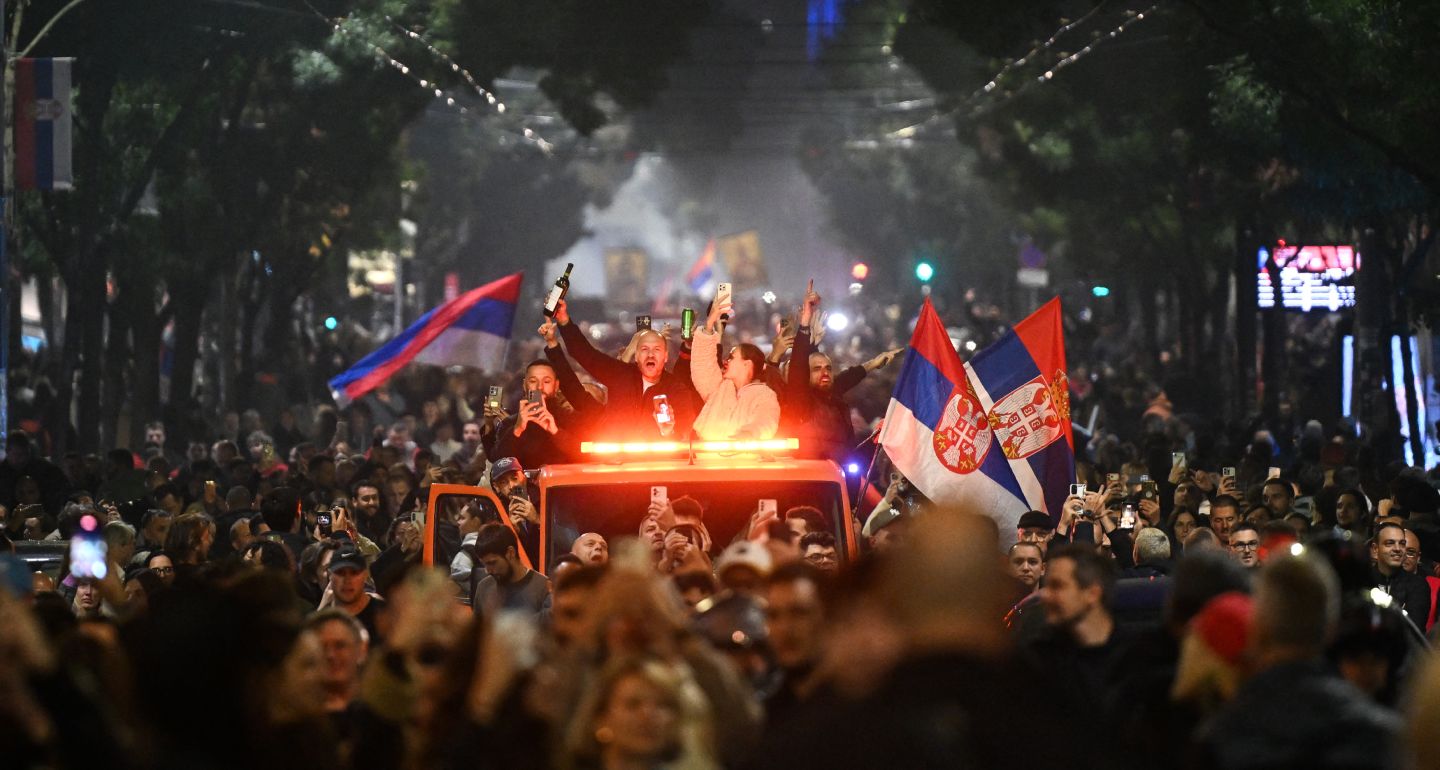
Serbia’s electoral earthquake is an extremely rare example of an entire political system being defeated by street protesters who played by the rules.
Alexander Baunov
The pressures of war are gradually warping Russia’s system of governance, making it more vulnerable to a future crisis.

Tatiana Stanovaya
A leak of Russian gas price data helps establish that China is paying Russia far less than Central Asian countries and Gazprom’s former European customers.
Sergey Vakulenko
Japan’s long-term security policy is driven by concerns about China, and there is little appetite for (or interest in) pursuing a confrontation with Moscow.

James D.J. Brown
The truth of the strategic situation is that Europe and Russia are extremely unlikely to be able to “turn the page” on their confrontation within the next two decades.
Arkady Moshes