

Commentary
If the Russian-speaking community in Latvia cannot articulate their interests without being seen as disloyal, they could end up embracing a pro-Kremlin agenda.
Sergejs Potapkins
{
  "authors": [],
  "type": "pressRelease",
  "centerAffiliationAll": "dc",
  "centers": [
    "Carnegie Endowment for International Peace"
  ],
  "collections": [],
  "englishNewsletterAll": "menaTransitions",
  "nonEnglishNewsletterAll": "",
  "primaryCenter": "Carnegie Endowment for International Peace",
  "programAffiliation": "MEP",
  "programs": [
    "Middle East"
  ],
  "projects": [],
  "regions": [
    "North Africa",
    "Egypt"
  ],
  "topics": [
    "Political Reform"
  ]
}
REQUIRED IMAGE
Islamist women, increasingly restless with their subordinate status in Egypt’s Muslim Brotherhood, are pushing for greater representation and a wider role.
BEIRUT, Oct 31—Islamist women, increasingly restless with their subordinate status in Egypt’s Muslim Brotherhood, are pushing for greater representation and a wider role, according to a new paper from the Carnegie Middle East Center.
Omayma Abdel-Latif explores the role of women within the movement, including recent debates following the release of the 2007 draft party platform that denied women the right to the country’s top position. She studies the growing impact of young leaders and female activists and examines what type of change is possible, despite major obstacles.
Key conclusions
Abdel-Latif concludes:
“Far from being resolved, the issue of the position of women in the Muslim Brotherhood is at the center of a lively debate. However, there is no evidence that this debate is threatening the unity of the movement. The questioning by women activists of their role, and their call for broader participation in decision-making bodies, are parts of the normal dynamics of change, not signs of a “rebellion of the Sisters,” as some observers described it. The Muslim Brotherhood, like any other sociopolitical movement, is not a static body. It is influenced by the social and political milieu in which it operates.”
###

Carnegie does not take institutional positions on public policy issues; the views represented herein are those of the author(s) and do not necessarily reflect the views of Carnegie, its staff, or its trustees.

If the Russian-speaking community in Latvia cannot articulate their interests without being seen as disloyal, they could end up embracing a pro-Kremlin agenda.

Sergejs Potapkins

Russia’s ruling party would have benefited from Putin appearing as its distant patron, but as an active frontman imposing his views on the public, he has done nothing but harm both the party’s election campaign and the ruling system overall.

Andrey Pertsev

In the tenth year of his presidency, President Mirziyoyev’s system is becoming even more personalized than that of his predecessor Karimov.

Galiya Ibragimova

The greater threat to Zelensky comes not from Fedorov alone, but from the convergence between the former defense minister’s political campaign and the anti-corruption investigations moving ever closer to the presidential administration.

Balázs Jarábik
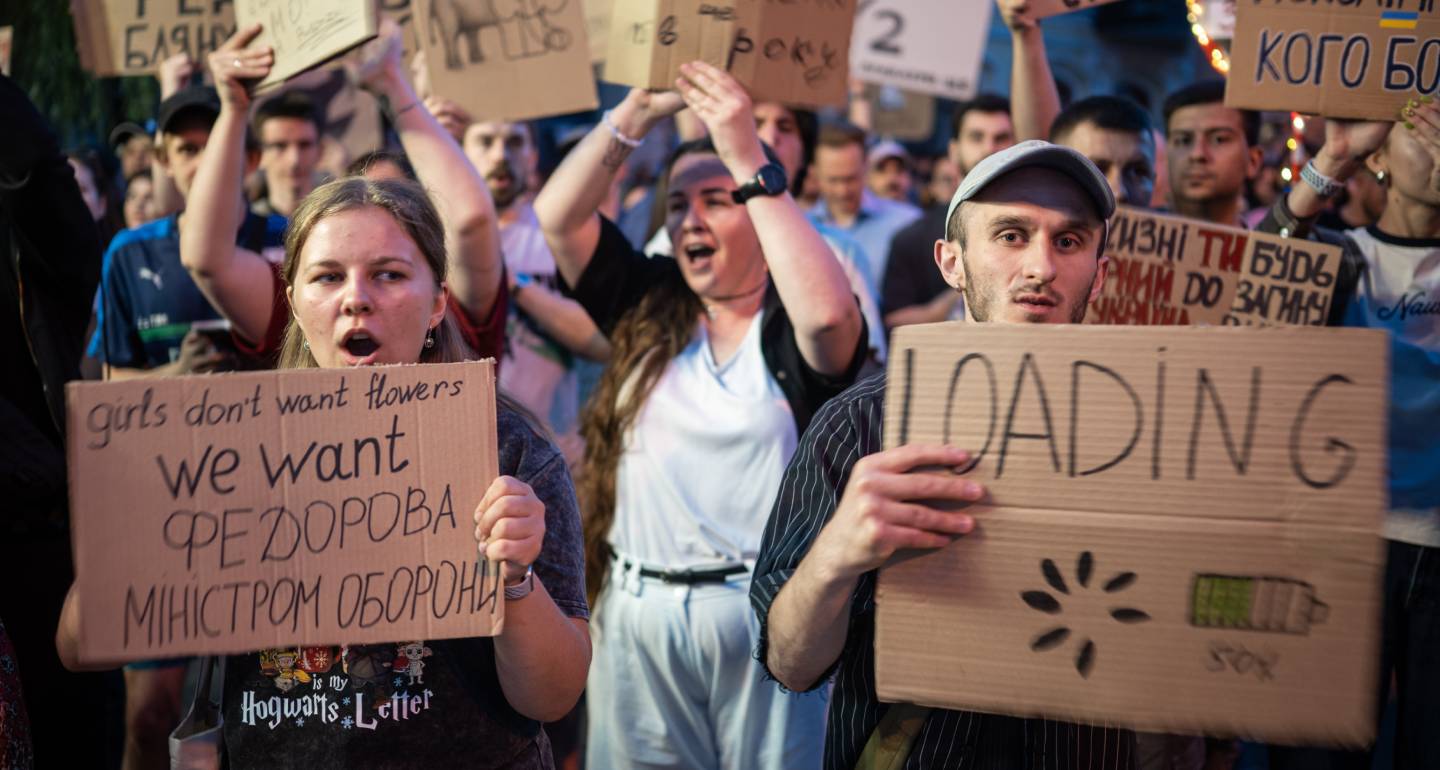
With his public call for new elections in Ukraine, ex-defense minister Mykhailo Fedorov has opened Pandora’s box.

Konstantin Skorkin