

Commentary
Nikolay Petrov
{
  "authors": [
    "Nikolay Petrov"
  ],
  "type": "legacyinthemedia",
  "centerAffiliationAll": "",
  "centers": [
    "Carnegie Endowment for International Peace",
    "Carnegie Russia Eurasia Center"
  ],
  "collections": [],
  "englishNewsletterAll": "",
  "nonEnglishNewsletterAll": "",
  "primaryCenter": "Carnegie Russia Eurasia Center",
  "programAffiliation": "",
  "programs": [],
  "projects": [],
  "regions": [
    "Caucasus",
    "Russia"
  ],
  "topics": [
    "Political Reform",
    "Democracy",
    "Economy"
  ]
}
Source: Getty
Weakened by the economic crisis, President Medvedev and the Kremlin do not want to risk any chance of allowing popular dissent to develop in Russia's regions. But by attacking its opponents the Kremlin is showing its helplessness. Before the crisis it had hoped to modernize the country, now it must resort to damage control.
Source: The Moscow Times

In addition, Tatarstan leader Mintimer Shaimiyev sharply criticized Moscow last week for dragging its feet on the issue of referendums. The public statements from political heavyweights such as Luzhkov and Shaimiyev are important because both are high-ranking members of United Russia. Moreover, both made their statements just before the United Russia congress, held on Thursday. Even more important, both politicians appealed directly to the public for support.
The Kremlin's public reaction was sharp. Clearly weakened by the financial and economic crisis, the government did not risk even the slightest chance of allowing popular dissent to develop in the regions. The is particularly important because today's situation looks very much like 1998, when Luzhkov and Shaimiyev led a dissent movement by regional governors against the Kremlin. But this time Luzhkov was forced to retract his statement.
When Medvedev suggested that those who favor direct gubernatorial elections should be dismissed, he violated several basic principles of federalism and democracy.
There is another inconsistency in Medvedev's position. Even under the current system, governors do not report directly to the president. When Putin abolished direct gubernatorial elections, he designed the system in such a way as to place a thin wall between the president and gubernatorial appointments. Technically, the president can only "nominate" a gubernatorial candidate; it is the legislature in the corresponding region that actually confirms the appointment. Similarly, although the president can initiate a no-confidence motion regarding an unpopular governor, only the regional legislature -- and not the president -- can actually remove him from his post.
These, of course, are only technicalities, but when Putin was president, he always understood the importance of observing these political niceties. This makes it all the more surprising when Medvedev said directly that any governor who disagrees with the current system of appointing governors could tender his resignation directly to him. Perhaps this was simply a slip of the tongue, but maybe he purposely set aside all political and legal trappings to make the distinct point that the Kremlin is the one that calls all the shots.
By attacking its opponents, the Kremlin is showing its helplessness. What barriers can it realistically throw up to protests by regional heads? Punish those who raise objections? This is unlikely to discourage others from doing the same. It seems the crisis has pushed back Kremlin plans to replace a group of obstinate politicians headed by Luzhkov, Shaimiyev and Sverdlovsk region Governor Eduard Rossel.
Should the Kremlin, instead, try to increase the rewards for its loyal supporters in the gubernatorial ranks? Perhaps, but it remains a question as to which meaningful incentives the Kremlin still has at its disposal; that list is shrinking daily along with the economy. One good thing to come out of this crisis is that the Kremlin may be forced to drop its paternalistic attitude toward the regions and the population in general.
If before the crisis the Kremlin had hoped to modernize the country, now its most urgent task is damage control.
This comment first appeared in The Moscow Times
Former Scholar-in-Residence, Society and Regions Program, Moscow Center
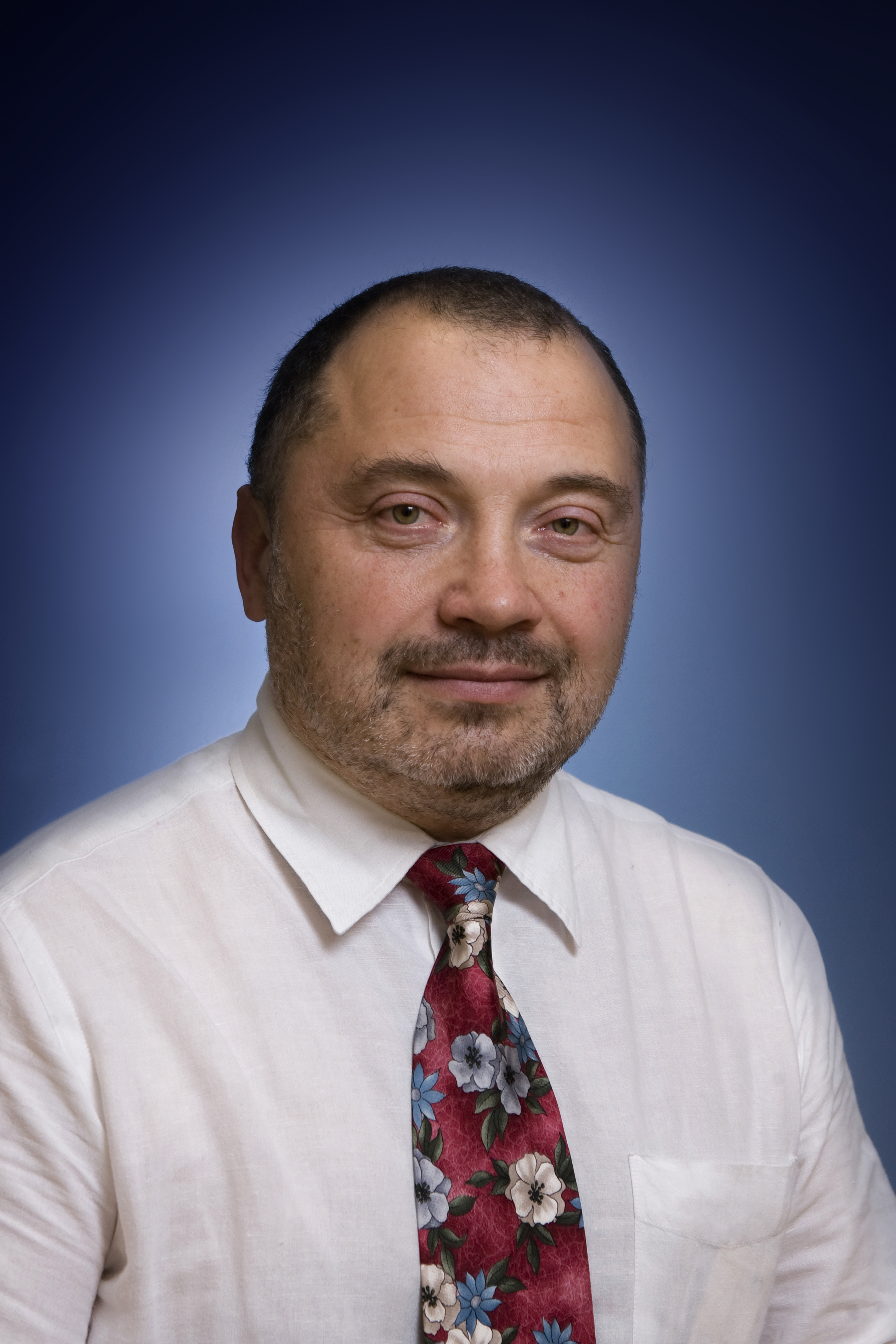
Nikolay Petrov was the chair of the Carnegie Moscow Center’s Society and Regions Program. Until 2006, he also worked at the Institute of Geography at the Russian Academy of Sciences, where he started to work in 1982.
Recent Work
Nikolay Petrov
Nikolay Petrov
Carnegie does not take institutional positions on public policy issues; the views represented herein are those of the author(s) and do not necessarily reflect the views of Carnegie, its staff, or its trustees.

Russian strikes are weakening the economy sustaining Ukraine’s war effort. Closing the growing funding gap will require more European support and politically contentious reforms in Kyiv.

Balázs Jarábik

Ex-president Gurbanguly Berdimuhamedov remains interested in politics, but his son Serdar, Turkmenistan’s current president, is becoming increasingly independent and willing to break with his father’s legacy. If their covert rivalry goes too far, both risk losing power.

Galiya Ibragimova

Despite a new textbook, an influx of Russian teachers and managers, and an end to the teaching of Ukrainian, the Kremlin is unlikely to have “reprogrammed” locals.

Konstantin Skorkin

For every ruble allocated to social policy, health, and education in 2027, double that amount is earmarked for the army, the police, and the security services.

Alexandra Prokopenko

Cargo traffic through Russia’s Northern Sea Route has increased because of the disruption caused by the conflict in the Middle East, the Ukraine war, and U.S.-China tensions.

Mikhail Korostikov