• Research
  • Politika
  • About
Carnegie Russia Eurasia center logoCarnegie lettermark logo
  • Donate
{
  "authors": [
    "Minxin Pei"
  ],
  "type": "legacyinthemedia",
  "centerAffiliationAll": "dc",
  "centers": [
    "Carnegie Endowment for International Peace"
  ],
  "collections": [],
  "englishNewsletterAll": "asia",
  "nonEnglishNewsletterAll": "",
  "primaryCenter": "Carnegie Endowment for International Peace",
  "programAffiliation": "AP",
  "programs": [
    "Asia",
    "Democracy, Conflict, and Governance"
  ],
  "projects": [],
  "regions": [
    "East Asia",
    "China"
  ],
  "topics": [
    "Political Reform",
    "Democracy"
  ]
}
Source: Getty

In The Media

Government By Corruption

The most common cause of corruption is a combination of discretionary power and low accountability, both of which are imperative for the political survival of authoritarian regimes.

Link Copied
By Minxin Pei
Published on Jan 22, 2009

Source: Forbes

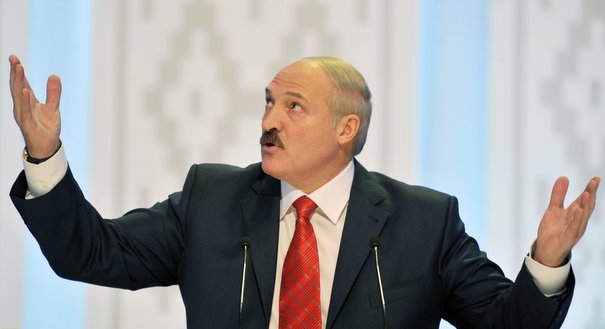
Corruption is universally viewed as a scourge. It stifles commerce, perverts governments and breeds social injustice. The most common cause of corruption is believed to be a combination of discretion and accountability. Governments with enormous discretionary power and low accountability are more corrupt than those with less discretion and more accountability. This observation has led us to seek institutional reforms that would grant governments less discretionary power, while making them more accountable to the people.

So far, so good. But in our quest to rid the world of corruption, we often forget one elemental truth--corruption may be a scourge for the ordinary people, but it is a vital governing tool for authoritarian regimes.
 
Of course, corruption exists in democracies as well, but such corruption, petty in both nature and sum, is fundamentally different from the massive looting by autocrats in dictatorships. That is why the least corrupt countries, with a few exceptions, all happen to be democracies, and the most corrupt countries are overwhelmingly autocracies. In Transparency International's Corruption Perception Index 2008, which covered 180 societies, 90% of the 60 least corrupt societies in the world are democracies. The remaining six non-democracies are small city-states (Singapore, Hong Kong, United Arab Emirates, Oman, Qatar and Bahrain). In contrast, about 60% of the 60 most corrupt countries are autocracies, including Russia, Iran, Venezuela, Belarus, Syria, Sudan and Burma. Nearly all the 30 most corrupt countries are dictatorships. (China is viewed as among the middle 60 "medium-corrupt" countries.)
 
That corruption is more prevalent in autocracies is no mere coincidence. While democracies derive their legitimacy and popular support through competitive elections and the rule of law, autocracies depend on the support of a small group of political and social elites, the military, the bureaucracy and the secret police. Because these elites and constituencies do not have any core values other than self-serving instincts, their loyalty and support are fickle and must be secured by constant bribes in the form of special privileges. They not only have ostensibly legal perks such as free world-class health care, lavish official residence, and expensive junkets, but also make huge illicit profits by rigging government contracts and looting public wealth in shady privatization deals.
 
 
The rest of this publication can be read here.

About the Author

Minxin Pei

Former Adjunct Senior Associate, Asia Program

Pei is Tom and Margot Pritzker ‘72 Professor of Government and the director of the Keck Center for International and Strategic Studies at Claremont McKenna College.

    Recent Work

  • In The Media
    How China Can Avoid the Next Conflict

      Minxin Pei

  • In The Media
    Small Change

      Minxin Pei

Minxin Pei
Former Adjunct Senior Associate, Asia Program
Minxin Pei
Political ReformDemocracyEast AsiaChina

Carnegie does not take institutional positions on public policy issues; the views represented herein are those of the author(s) and do not necessarily reflect the views of Carnegie, its staff, or its trustees.

More Work from Carnegie Russia Eurasia Center

  • Commentary
    Carnegie Politika
    Could the Rise of the New People Party Reshape Russia’s Managed Political System?

    Anger over online restrictions has led to a surge in support for the New People party, which has replaced the Communists as Russia’s second most popular political party.  

      Andrey Pertsev

  • Commentary
    Carnegie Politika
    In Russia, the Public Mood Is Souring

    The Russian regime is now visibly motivated by fear.

      Alexander Baunov

  • Commentary
    Carnegie Politika
    Could the Iran War Push Japan to Restore Russian Oil Imports?

    Tokyo would have to surmount a lot of obstacles—not least Western sanctions—if it wanted to return Russian oil imports to even modest pre-2022 volumes.

      Vladislav Pashchenko

  • Commentary
    Carnegie Politika
    The Much-Touted Middle Corridor Transport Route Could Prove a Dead End

    For the Middle Corridor to fulfill its promises, one of these routes must become scalable. At present, neither is.

      Friedrich Conradi

  • Commentary
    Carnegie Politika
    The Rada Reawakens: Ukraine’s Messy Politics Returns

    The return of parliamentary politics reflects a broader shift from earlier expectations of a settlement and elections toward the reality of a prolonged war.

      Balázs Jarábik

Get more news and analysis from
Carnegie Russia Eurasia Center
Carnegie Russia Eurasia logo, white
  • Research
  • Politika
  • About
  • Experts
  • Events
  • Contact
  • Privacy
  • For Media
Get more news and analysis from
Carnegie Russia Eurasia Center
© 2026 Carnegie Endowment for International Peace. All rights reserved.