• Research
  • Politika
  • About
Carnegie Russia Eurasia center logoCarnegie lettermark logo
  • Donate
{
  "authors": [
    "Nikolay Petrov"
  ],
  "type": "legacyinthemedia",
  "centerAffiliationAll": "",
  "centers": [
    "Carnegie Endowment for International Peace",
    "Carnegie Russia Eurasia Center"
  ],
  "collections": [],
  "englishNewsletterAll": "",
  "nonEnglishNewsletterAll": "",
  "primaryCenter": "Carnegie Russia Eurasia Center",
  "programAffiliation": "",
  "programs": [],
  "projects": [],
  "regions": [
    "Caucasus",
    "Russia"
  ],
  "topics": [
    "Political Reform",
    "Economy"
  ]
}
Source: Getty

In The Media
Carnegie Russia Eurasia Center

Suffocating Small Business to Death

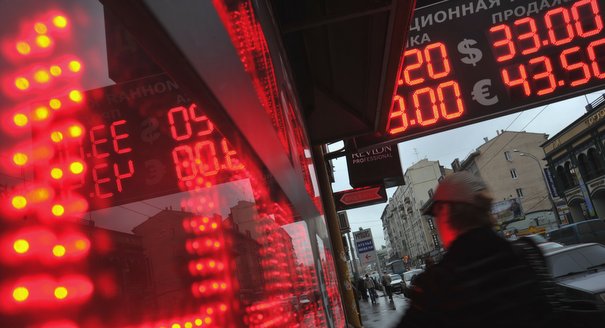
If Russia’s regions are to weather the financial crisis, both local and federal governments need to support and protect small businesses.

Link Copied
By Nikolay Petrov
Published on Mar 17, 2009

Source: The Moscow Times

Suffocating Small Business to DeathMoscow gave more than its usual attention to the regions last week. In Tula, President Dmitry Medvedev met with municipal deputies and with a joint session of the State Council Presidium and the Council on Cooperation with Religious Organizations. For his part, Prime Minister Vladimir Putin had an informal meeting with miners in a Kuzbass mine, and in Novokuznetsk, he led a session of the government commission for development of the regions.

The Kremlin and the White House are using sticks as well as carrots in dealing with the regions. Consider the decision in February to replace four governors for their "ineffectiveness" and the exaggerated rumors about firing two more in the near future. Fears have been raised not only because the dismissals clearly have been used as warnings, but because the changes were made at the height of a crisis. It demonstrates that the Kremlin is not making its staffing decisions out of concern for the needs of the regions, but to relocate Moscow officials who have lost their jobs over factional or bureaucratic reasons. 
 
The regional authorities have been criticized by the Health and Social Development Ministry for falling behind in developing programs to combat unemployment. At the government meeting in Novokuznetsk, it was announced that 300 billion rubles ($8.6 billion) would be added to the planned 1.3 trillion rubles ($37 billion) in financial aid to the regions. 
 
The money allocated to the regions is insufficient, but it has been suggested that additional funds will be made available later. The main problem, however, is that the money is not reaching businesses and does not alleviate the severity of the crisis in the real economy. The government's crude method of manually controlling the flow of financial resources does not actually address the problems of the worsening crisis. The problem now is not a shortage of money but the fact that those funds do not reach the intended recipients. This is like the blood circulatory system, where blocked arteries cannot be cured by a simple blood transfusion. 
 
During a brainstorming session at the sixth economic forum in Krasnoyarsk in late February, participants made the dismal estimate that the even the economically strongest regions could ride out the current crisis conditions for only one more month. According to the forum's host, Krasnoyarsk Governor Alexander Khloponin, the problem is that a nonpayment crisis has begun, and even companies dealing in raw materials and other successful businesses could become paralyzed as a result of this blockage to the "financial circulatory system." 
 
If small businesses were given the support and protection needed to prosper, they could hire a large percentage of the people now looking for jobs. Moreover, a more successful small business sector would also mean that regional budgets would have a larger tax base. (Before the crisis, small businesses accounted for only 9 percent of regional budgets.) 
 
As part of many anti-crisis measures in the West, governments have lightened the tax burdens for small businesses. In Russia, the opposite is the case. The local governments, via regulatory and inspection agencies, feed off of small business -- using legal and illegal methods to collect taxes and fines -- to fill depleted local budgets. 
 
The government has issued instructions that the state's coffers must be filled by any means -- even if it means suffocating small businesses to death.
 
This comment first appeared in The Moscow Times

About the Author

Nikolay Petrov

Former Scholar-in-Residence, Society and Regions Program, Moscow Center

Nikolay Petrov was the chair of the Carnegie Moscow Center’s Society and Regions Program. Until 2006, he also worked at the Institute of Geography at the Russian Academy of Sciences, where he started to work in 1982.

    Recent Work

  • Commentary
    Moscow Elections: Winners and Losers

      Nikolay Petrov

  • Commentary
    September 8 Election As a New Phase of the Society and Authorities' Coevolution

      Nikolay Petrov

Nikolay Petrov
Former Scholar-in-Residence, Society and Regions Program, Moscow Center
Nikolay Petrov
Political ReformEconomyCaucasusRussia

Carnegie does not take institutional positions on public policy issues; the views represented herein are those of the author(s) and do not necessarily reflect the views of Carnegie, its staff, or its trustees.
More Work from Carnegie Russia Eurasia Center

  • Commentary
    Carnegie Politika
    Why Are China and Russia Not Rushing to Help Iran?

    Most of Moscow’s military resources are tied up in Ukraine, while Beijing’s foreign policy prioritizes economic ties and avoids direct conflict.   

      • Alexander Gabuev

      Alexander Gabuev, Temur Umarov

  • Commentary
    Carnegie Politika
    Georgia’s Fall From U.S. Favor Heralds South Caucasus Realignment

    With the White House only interested in economic dealmaking, Georgia finds itself eclipsed by what Armenia and Azerbaijan can offer.

      Bashir Kitachaev

  • Commentary
    Carnegie Politika
    What Does War in the Middle East Mean for Russia–Iran Ties?

    If the regime in Tehran survives, it could be obliged to hand Moscow significant political influence in exchange for supplies of weapons and humanitarian aid.

      Nikita Smagin

  • Commentary
    Carnegie Politika
    How Trump’s Wars Are Boosting Russian Oil Exports

    The interventions in Iran and Venezuela are in keeping with Trump’s strategy of containing China, but also strengthen Russia’s position.

      • Mikhail Korostikov

      Mikhail Korostikov

  • Commentary
    Carnegie Politika
    How Far Can Russian Arms Help Iran?

    Arms supplies from Russia to Iran will not only continue, but could grow significantly if Russia gets the opportunity.

      Nikita Smagin

Get more news and analysis from
Carnegie Russia Eurasia Center
Carnegie Russia Eurasia logo, white
  • Research
  • Politika
  • About
  • Experts
  • Events
  • Contact
  • Privacy
Get more news and analysis from
Carnegie Russia Eurasia Center
© 2026 Carnegie Endowment for International Peace. All rights reserved.