

Paper
Ashley J. Tellis
{
  "authors": [
    "Ashley J. Tellis"
  ],
  "type": "legacyinthemedia",
  "centerAffiliationAll": "dc",
  "centers": [
    "Carnegie Endowment for International Peace"
  ],
  "collections": [],
  "englishNewsletterAll": "ctw",
  "nonEnglishNewsletterAll": "",
  "primaryCenter": "Carnegie Endowment for International Peace",
  "programAffiliation": "SAP",
  "programs": [
    "South Asia"
  ],
  "projects": [],
  "regions": [
    "South Asia",
    "Afghanistan",
    "Pakistan"
  ],
  "topics": [
    "Security",
    "Military",
    "Foreign Policy"
  ]
}
Source: Getty
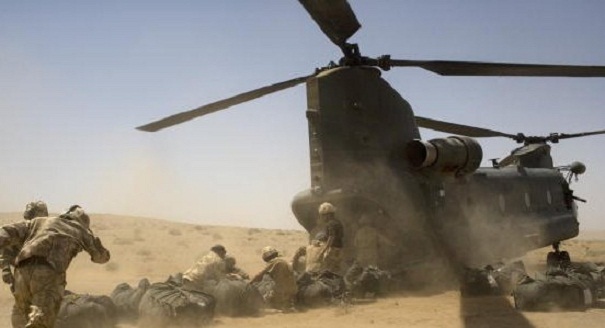
President Obama's failure to explicitly mention that the U.S. intends to stay in Afghanistan could could strengthen the Taliban, which seeks to outlast the international coalition.
Source: Yale Global

Comprehensive engagement in Afghanistan, of course, was opposed by a variety of constituencies. Senator John Kerry (D-Mass.), for example, warned against any reconstruction intended “to make [Afghanistan] our 51st state,” suggesting instead that allied objectives in that country be limited to ensuring that “it does not become an al-Qaeda narco-state and terrorist beachhead capable of destabilizing neighboring Pakistan.” Others, such as the former president of the Council on Foreign Relations, Leslie Gelb, urged Obama “to explore a strategy of power extrication” by which the United States would “leave Afghanistan” because “trying to eliminate the Taliban and Qaeda threat [therein] is unattainable.” Some other alternatives were proposed as well. David Boaz of the libertarian Cato Institute wondered whether the US would “be able to extricate [itself] sooner if we accept a decentralized Afghanistan with some regions ruled by groups that are currently fighting against our troops?” And, one senior NATO official, reflecting the view of many European governments eager to end their involvement in Afghanistan, has been quoted by the Guardian as arguing that Kabul “doesn’t need to be a democracy, just secure.”
Former Senior Fellow
Ashley J. Tellis was a senior fellow at the Carnegie Endowment for International Peace.
Recent Work
Ashley J. Tellis
Ashley J. Tellis
Carnegie does not take institutional positions on public policy issues; the views represented herein are those of the author(s) and do not necessarily reflect the views of Carnegie, its staff, or its trustees.

Russia’s AI-driven propaganda campaigns operate in a fragmented, chaotic, and often illogical manner. That’s not necessarily a problem for the Kremlin, though: It’s much easier to mimic genuine public debate that way.

Ilya Klishin

Without a ceasefire with Ukraine on attacking each other’s energy infrastructure—to which the Kremlin is unlikely to agree—the diesel agreement between Putin and Trump is largely for show, rather than representing a genuine increase in the volumes of Russian diesel on the global market.

Sergey Vakulenko

Russian strikes are weakening the economy sustaining Ukraine’s war effort. Closing the growing funding gap will require more European support and politically contentious reforms in Kyiv.

Balázs Jarábik

Despite a new textbook, an influx of Russian teachers and managers, and an end to the teaching of Ukrainian, the Kremlin is unlikely to have “reprogrammed” locals.

Konstantin Skorkin

Cargo traffic through Russia’s Northern Sea Route has increased because of the disruption caused by the conflict in the Middle East, the Ukraine war, and U.S.-China tensions.

Mikhail Korostikov