

Commentary
Michael Pettis
{
  "authors": [
    "Michael Pettis"
  ],
  "type": "legacyinthemedia",
  "centerAffiliationAll": "dc",
  "centers": [
    "Carnegie Endowment for International Peace"
  ],
  "collections": [],
  "englishNewsletterAll": "asia",
  "nonEnglishNewsletterAll": "",
  "primaryCenter": "Carnegie Endowment for International Peace",
  "programAffiliation": "AP",
  "programs": [
    "Asia"
  ],
  "projects": [],
  "regions": [
    "United States",
    "China"
  ],
  "topics": [
    "Economy",
    "Trade"
  ]
}
Source: Getty
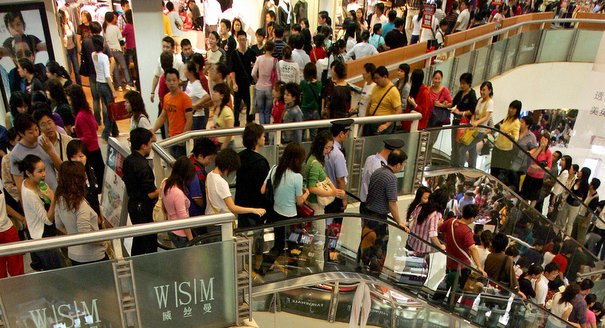
With little chance that China will be able to increase its consumption rate to compensate for increased U.S. savings rates, the world may face a period of slower growth.
Source: The New York Times

These policies inevitably require households to foot the bill, primarily through sluggish wage growth, low interest rates on their bank deposits, an undervalued currency and a weak social safety net. Since total savings is just the difference between what is produced and what is consumed, subsidizing producers at the expense of household consumers necessarily causes savings to rise.
But Beijing’s massive stimulus will probably prevent the necessary adjustment toward faster consumption growth from taking place in the near future. Instead of reversing those policies that shift income from households to producers, which might have also caused a surge in unemployment, Beijing forced through a large increase in investment.
As in the past, households will be forced to foot the bill for any misallocated investment or non-performing loans, which could be considerable, making it difficult for households to power consumption growth.
This will be a problem for China and the world. As the U.S. rebalances its economy toward higher savings rates, China has no choice but to rebalance toward higher consumption rates. This can happen either because of a sharp pick-up in consumption growth or, more likely, a sharp slowdown in GDP growth. I worry that China will find it difficult to generate the kind of consumption growth that will take up some of the American slack, and we may be locked into a period during which the world adjusts by growing more slowly.

Nonresident Senior Fellow, Carnegie China
Michael Pettis is a nonresident senior fellow at the Carnegie Endowment for International Peace. An expert on China’s economy, Pettis is professor of finance at Peking University’s Guanghua School of Management, where he specializes in Chinese financial markets.
Recent Work
Michael Pettis
Michael Pettis
Carnegie does not take institutional positions on public policy issues; the views represented herein are those of the author(s) and do not necessarily reflect the views of Carnegie, its staff, or its trustees.
A leak of Russian gas price data helps establish that China is paying Russia far less than Central Asian countries and Gazprom’s former European customers.

Sergey Vakulenko

Without a ceasefire with Ukraine on attacking each other’s energy infrastructure—to which the Kremlin is unlikely to agree—the diesel agreement between Putin and Trump is largely for show, rather than representing a genuine increase in the volumes of Russian diesel on the global market.
Sergey Vakulenko

Russian strikes are weakening the economy sustaining Ukraine’s war effort. Closing the growing funding gap will require more European support and politically contentious reforms in Kyiv.

Balázs Jarábik

For every ruble allocated to social policy, health, and education in 2027, double that amount is earmarked for the army, the police, and the security services.

Alexandra Prokopenko

Cargo traffic through Russia’s Northern Sea Route has increased because of the disruption caused by the conflict in the Middle East, the Ukraine war, and U.S.-China tensions.

Mikhail Korostikov