

Commentary
Uri Dadush
{
  "authors": [
    "Uri Dadush"
  ],
  "type": "questionAnswer",
  "centerAffiliationAll": "",
  "centers": [
    "Carnegie Endowment for International Peace"
  ],
  "collections": [],
  "englishNewsletterAll": "",
  "nonEnglishNewsletterAll": "",
  "primaryCenter": "Carnegie Endowment for International Peace",
  "programAffiliation": "",
  "programs": [],
  "projects": [],
  "regions": [
    "North America"
  ],
  "topics": [
    "Economy"
  ]
}
Source: Getty
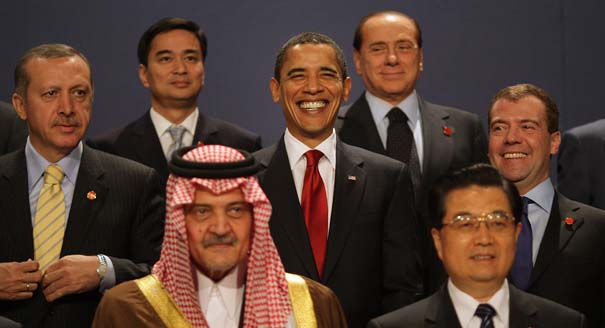
Discussions among leaders from the G20 countries meeting in Pittsburgh this week will focus on the sustainability of the global economic recovery.
G20 leaders will discuss how best to sustain the global recovery when they meet in Pittsburgh this week. In a new video Q&A, Uri Dadush previews the G20 summit and says, “The biggest error policy makers could make is to withdraw stimulus measures too early.”
Dadush addresses the following questions:
The G8 does not represent the world’s key players and the G20 summit represents the inevitable shift away from it, asserts Dadush. “The economic weight of China, India, Brazil, and other developing economies is such that they must be included as full participants in deliberations of international economic strategy.”

Former Senior Associate, International Economics Program
Dadush was a senior associate at the Carnegie Endowment for International Peace. He focuses on trends in the global economy and is currently tracking developments in the eurozone crisis.
Recent Work
Uri Dadush
Uri Dadush
Carnegie does not take institutional positions on public policy issues; the views represented herein are those of the author(s) and do not necessarily reflect the views of Carnegie, its staff, or its trustees.
A much-discussed disagreement over internet restrictions in Russia was never an existential threat for Putin: It was about elite groups protecting their interests.

Alexandra Prokopenko

The demands of the Kremlin’s war in Ukraine, demographic problems, and public hostility toward Central Asians mean Russia does not have enough workers.
Salavat Abylkalikov
Minsk’s faith in the future of its larger neighbor’s economy is fading as Belarusian firms in Russia see record losses.

Olga Loiko

The cost of air defense has become an unregistered tax on revenue for businesses. While military rents are consolidated in the federal budget, the costs of defense are being spread across the balance sheets of companies and regional governments.
Alexandra Prokopenko
Powerful lobbyists and inertia led to Russia’s coal-mining sector missing an excellent opportunity to solve its structural problems.
Alexey Gusev