

Paper
Douglas H. Paal
{
  "authors": [
    "Douglas H. Paal"
  ],
  "type": "legacyinthemedia",
  "centerAffiliationAll": "dc",
  "centers": [
    "Carnegie Endowment for International Peace"
  ],
  "collections": [],
  "englishNewsletterAll": "asia",
  "nonEnglishNewsletterAll": "",
  "primaryCenter": "Carnegie Endowment for International Peace",
  "programAffiliation": "AP",
  "programs": [
    "Asia"
  ],
  "projects": [],
  "regions": [
    "North America",
    "United States",
    "East Asia",
    "South Korea"
  ],
  "topics": [
    "Foreign Policy"
  ]
}
Source: Getty
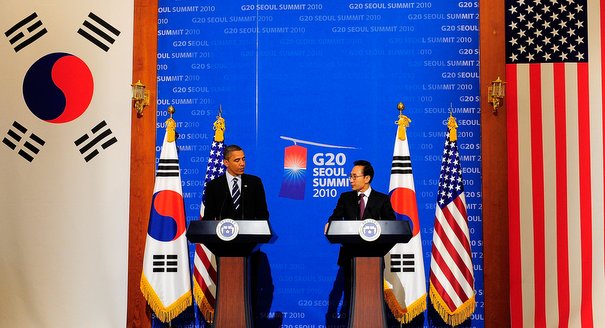
By stopping in Seoul and addressing its security and trade concerns with sincerity and action, Obama can demonstrate American commitment to its ally South Korea and to the entire region.
Source: South China Morning Post

On October 30, the Korean government announced a new commitment of 300 troops and 200 civilians to constitute a Provincial Reconstruction Team for an as-yet unnamed province in Afghanistan.
In return for its troubles, Seoul seeks White House support for the Korea-U.S. Free Trade Agreement (Korus), which has been languishing in Congress for more than two years. Obama is unlikely to do more than commit to a further review of the pact, which he criticized as falling short in his presidential campaign.
Nonetheless, the background of this visit reveals a positive change in the management of the alliance, in contrast with the policy spats between Washington and Seoul towards North Korea under President Lee Myung-bak’s two predecessors. Obama’s team has reestablished genuine consultation with America’s Korean allies.
Even under Lee’s predecessor, the late president Roh Moo-hyun, and despite noisy public disputes, substantial progress was achieved in modernizing the alliance, as South Korea contributed to the wars in Iraq and Afghanistan, reached a free trade agreement, and undertook long-delayed adjustments in the footprint of the US military presence. The White House staff naturally sought to limit Obama’s travel time, but he wisely recognized that it would be an unpardonable snub not to stop in South Korea and show his commitment to the alliance. So he is due to fly in from China late on Wednesday evening, and leave after lunch the next day.
Nine days is a substantial commitment of White House time, and a wise gesture to reassure Asian nations that, while China is growing in power and influence, the US will not abandon them to face it alone. At the same time, Obama’s trip signals that Washington seeks no confrontation with Beijing and in fact hopes to work with China on problems too great for any one power to manage.
Obama is also boosting the message that America is back after its long preoccupation with terrorism. Within that context, U.S. relations with South Korea are their best in 12 years. But the US cannot take Seoul for granted, as political support for the high-visibility free trade agreement is starting to wane in South Korea while the Obama administration sorts out its domestic priorities and examines flaws it sees.
Obama will also need to be careful not to let new and worthy, but less domestically sensitive, free trade opportunities – such as the Trans-Pacific Partnership – jump the queue on Korus, which would only fire up Korean opponents of a deal that already favors US exporters overwhelmingly.
By paying respects in Seoul, and addressing the South Korean people’s concerns with sincerity and action, Obama can depart from Asia on a high note, demonstrating American co-operation with a longtime ally in the region and underscoring the purpose of his trip.
Distinguished Fellow, Asia Program
Paal previously served as vice chairman of JPMorgan Chase International and as unofficial U.S. representative to Taiwan as director of the American Institute in Taiwan.
Recent Work
Douglas H. Paal

Douglas H. Paal, Tong Zhao, Chen Qi, …
Carnegie does not take institutional positions on public policy issues; the views represented herein are those of the author(s) and do not necessarily reflect the views of Carnegie, its staff, or its trustees.

With the growth in points of friction between the great powers, organizations like the SCO will continue to play a role in the strategic adaptation of the smaller powers caught between them.

Temur Umarov

When faced with fuel shortages in the past, Central Asian governments could always count on additional supplies from Moscow. That safety net no longer exists.

Galiya Ibragimova

Despite unhappiness on the ground, Moscow is determined to use both carrot and stick to ensure there is record support for United Russia in occupied Ukraine.

Konstantin Skorkin
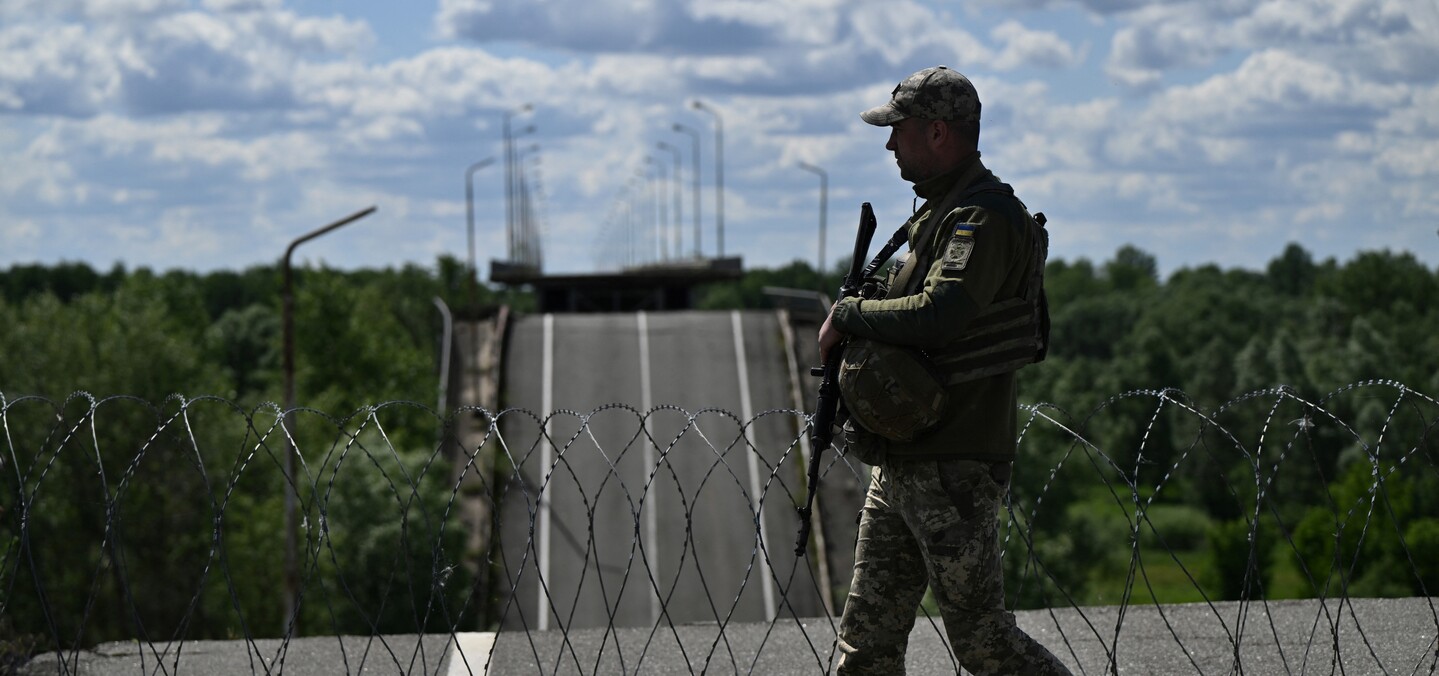
The recent damage inflicted by Ukrainian drones and missiles on Russia has made Belarus aware of its own vulnerabilities—and surprisingly amenable to Kyiv’s demands.

Artyom Shraibman
Russia looks set to reap economic benefits from closer ties with Southeast Asian countries that are keen to find reliable energy suppliers and diversify trade ties.

Alexander Gabuev