

• Research
  • Politika
  • About
Carnegie Russia Eurasia center logoCarnegie lettermark logo
  • Donate
{
  "authors": [
    "Uri Dadush",
    "Lauren Falcão"
  ],
  "type": "other",
  "centerAffiliationAll": "",
  "centers": [
    "Carnegie Endowment for International Peace"
  ],
  "collections": [],
  "englishNewsletterAll": "",
  "nonEnglishNewsletterAll": "",
  "primaryCenter": "Carnegie Endowment for International Peace",
  "programAffiliation": "",
  "programs": [],
  "projects": [],
  "regions": [
    "North America",
    "United States",
    "South America",
    "Western Europe"
  ],
  "topics": [
    "Economy",
    "Trade"
  ]
}

Source: Getty

Other

Migrants and the Global Financial Crisis

Migrants are economic assets for both their host and home countries, but they are disproportionately affected by the global financial crisis. Temporary migration programs and collaboration with migrant-sending countries can help maximize the economic benefits of migration, even in times of crisis.

Link Copied
By Uri Dadush and Lauren Falcão
Published on Dec 8, 2009

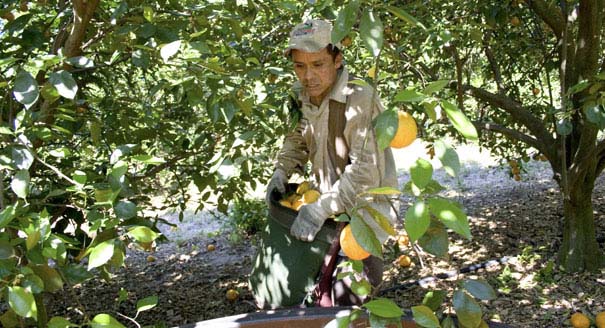
More than 200 million people reside in a country that is not their birthplace. This “diaspora nation” of migrants outranks all but four of the world’s countries in population. These migrants make an immense economic contribution both to their host country and to their home country, primarily through transfers of money they earn back to their home country, which are known as “remittances.” About 82 percent of migrants originate in developing countries, and their remittances, which amounted to an estimated $305 billion in 2008, represent an essential source of foreign exchange for these countries, as well as a major instrument in the fight against poverty.

  • Migrants are economic assets for both their host and home countries, but the global financial crisis has disproportionately affected migrants, who are both economically and politically vulnerable.

  • Migration responds to labor demand in the host country—it increases during economic booms and decreases during busts, thus minimizing competition with native-born workers.

  • Policy makers in host countries should resist political pressures calling for measures against migrants and make sure that migrants’ contribution to economic welfare is more broadly understood.

  • Temporary migration programs and collaboration with migrant-sending countries can help maximize the economic benefits of migration, including in times of crisis.

About the Authors

Uri Dadush

Former Senior Associate, International Economics Program

Dadush was a senior associate at the Carnegie Endowment for International Peace. He focuses on trends in the global economy and is currently tracking developments in the eurozone crisis.

Lauren Falcão

Former Junior Fellow, Trade, Equity, and Development Program

Authors

Uri Dadush
Former Senior Associate, International Economics Program
Uri Dadush
Lauren Falcão
Former Junior Fellow, Trade, Equity, and Development Program
EconomyTradeNorth AmericaUnited StatesSouth AmericaWestern Europe

Carnegie does not take institutional positions on public policy issues; the views represented herein are those of the author(s) and do not necessarily reflect the views of Carnegie, its staff, or its trustees.

More Work from Carnegie Russia Eurasia Center

  • Commentary
    Carnegie Politika
    Lukashenko’s Bromance With Trump Has a Sell-By Date

    Lukashenko is willing to make big sacrifices for an invitation to Mar-a-Lago or the White House. He also knows that the clock is ticking: he must squeeze as much out of the Trump administration as he can before congressional elections in November leave Trump hamstrung or distracted.

      Artyom Shraibman

  • Commentary
    Carnegie Politika
    What the Russian Energy Sector Stands to Gain From War in the Middle East

    The future trajectory of the U.S.-Iran war remains uncertain, but its impact on global energy trade flows and ties will be far-reaching. Moscow is likely to become a key beneficiary of these changes; the crisis in the Gulf also strengthens Russia’s hand in its relationships with China and India, where advantages might prove more durable.

      • Sergey Vakulenko

      Sergey Vakulenko

  • Commentary
    Carnegie Politika
    Beyond Oil: Hormuz Closure Puts Russia in the Lead in the Fertilizer Market

    The Kremlin expects to not only profit from rising fertilizer prices but also exact revenge for the collapse of the 2023 grain deal.

      Alexandra Prokopenko

  • Paper
    A Tight Spot: Challenges Facing the Russian Oil Sector Through 2035

    Russian oil production is remarkably resilient to significant price changes, but significant political headwinds may lead to a drop regardless of economics.

      • Sergey Vakulenko

      Sergey Vakulenko

  • Commentary
    Carnegie Politika
    Georgia’s Fall From U.S. Favor Heralds South Caucasus Realignment

    With the White House only interested in economic dealmaking, Georgia finds itself eclipsed by what Armenia and Azerbaijan can offer.

      Bashir Kitachaev

Get more news and analysis from
Carnegie Russia Eurasia Center
Carnegie Russia Eurasia logo, white
  • Research
  • Politika
  • About
  • Experts
  • Events
  • Contact
  • Privacy
  • For Media
Get more news and analysis from
Carnegie Russia Eurasia Center
© 2026 Carnegie Endowment for International Peace. All rights reserved.







