The Obama administration is trying to reconcile its continuing diplomacy with the Iranian regime and its desire to show support and solidarity for the demands of the Iranian people.
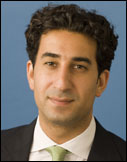
AMANPOUR: Joining me now for more on Iran, Hooman Majd, author of "The Ayatollah Begs to Differ." He was born in Tehran and was a translator for President Ahmadinejad at the U.N. And Karim Sadjadpour, an associate at the Carnegie Endowment for International Peace, he's a leading Iran analyst.
Welcome both you gentlemen to the program. I want to ask you, Hooman, about this issue of the parliament censuring Saeed Mortazavi, the dreaded prosecutor-general. What do you make of that, the significance of it?
HOOMAN MAJD, AUTHOR, "THE AYATOLLAH BEGS TO DIFFER": Well, I think it's very significant, particularly now. In the last week or so, the government seems to have backed off many of its accusations against the opposition, that they're fomenting a velvet revolution. They're even not using the word anymore, "velvet revolution."
AMANPOUR: Where do you get that from?
MAJD: They're not using "fetneh." (ph) From talking to the opposition in Tehran, people in the opposition, and -- and following what's going on in Tehran through contacts there. They've stopped even using the word "velvet revolution."
I think there's a -- there's a realization that they're going to have to deal with some of these issues that have been brought up by Mousavi, Karroubi, and Khatami. I think -- and Rafsanjani, as well. One of them is the prison abuse. And I think parliament and, of course, Ali Larijani, the speaker of parliament, is no fan of Ahmadinejad's and is, although a conservative, generally opposed to Ahmadinejad and opposed to his government.
So I think you're going to see some more of this, and it's not really going to be scapegoating. It's going to be pretty intensive.
AMANPOUR: And, Karim, you know, obviously, there's a lot of wishful thinking when it comes in certain quarters to projecting what people would like to see happening in Iran. People are trying to figure, is there a winner? Is there a loser? What's going to happen? Today, how do you analyze what's going to happen?
KARIM SADJADPOUR, CARNEGIE ENDOWMENT FOR INTERNATIONAL PEACE: It's obviously difficult to say, Christiane. Iran is not a monolithic society. That being said, I think many people predicted back in June that these protests would fizzle out after a few weeks. They said the protestors are only the urban elite in northern Tehran, they're disunited, and they're not going to go anywhere. And I think, six months later, we see that these protests actually transcend socioeconomic classes and they remain strong.
And I remember your guest, Professor Marandi, said six months ago that the protests were going to be dead.
So I think that -- I wouldn't -- I am less confident that Hooman -- than Hooman is that we're seeing some types of conciliation. I think that the demands of the opposition have only hardened with time.
AMANPOUR: Well, have they? I'm interested in you saying that, because, in fact, it seems that Mr. Mousavi, after the Ashura demonstrations and on January 1st, his latest pronouncements have stopped calling for a change of government and for an overthrow of Ahmadinejad. Am I right?
SADJADPOUR: Yes. Yes.
AMANPOUR: And do you believe the people and the opposition are calling for a revolution?
MAJD: I don't believe that the opposition is calling for -- the organized opposition, the opposition that we know, Mousavi, Karroubi, and Khatami, are calling for a -- they're certainly not calling for a revolution. They've made it very clear that they're not calling for a revolution, including Khatami's latest statement from a couple of days ago.
So I think that -- and in demand that you were talking about, to have a new election, that demand has gone away, although he did refer to free elections, so the implication is that they do want free elections, and they want them sooner, rather than later, for -- for the presidency.
I -- I don't think that -- I think that Mousavi and Karroubi and Khatami -- now, if you believe that they are the leaders of this movement - - some people disagree that they're the leaders anymore -- but if you believe that they are -- and I tend to believe that they still are -- they do want to have reform, they want to have change, they want to have free elections, they want to go back to the principles of the constitution and the Islamic republic. And I think the majority of the supporters certainly feel that way, too.
AMANPOUR: So more of a civil rights movement...
MAJD: I believe it is that.
AMANPOUR: ... than a revolution?
MAJD: That's how they're determining it. That's how they're analyzing it, yeah.
AMANPOUR: Well, this is interesting, Karim, to ask you, because you're obviously in touch with a lot of the American policymakers. And clearly, many of them, as I say, there's a lot of projection, a lot of wishful thinking, hoping that they -- the government won't have to make the hard decisions, the people of Iran will. How is this going to affect U.S. policy, particularly right now when the nuclear issue is coming up yet again, in fact, this weekend?
SADJADPOUR: Christiane, I don't think anyone in Washington believes that the collapse of the Islamic republic is imminent. I think people take what's happening in Iran seriously. They think the regime is in a state of crisis. But I think the Obama administration is going to move forward with diplomacy. The door of dialogue is going to remain open with Iran on the nuclear issue, on issues like Afghanistan and Iraq.
But they also want to reconcile that with show of support and solidarity for the demands of the Iranian people. Hooman mentioned the term civil rights movement. I think that the Obama administration is looking at this within the context of a civil rights movement. They're not looking at it as a potential revolutionary moment.
But I think, Christiane, they want to be on the right side of history. President Obama has said this many times over about being on the right side of history. And I would argue -- and I think I would argue and feel confident in saying that the vast majority of Iran's very youthful population believes that the regime is on the wrong side of history.
AMANPOUR: OK, well, then let me ask you, Hooman, if the United States wants to be on the right side of history, what is it going to do? Because sanctions seem to be the next step; at least that's what they're preparing at the U.N., it seems. And are they going to be crippling? Are they going to be targeted? How are they going to not hurt the Iranian people?
MAJD: Well, it appears that they -- they -- the administration has backed off the crippling sanctions, as Hillary Clinton once talked about, so now it's about targeted sanctions and targeting the Revolutionary Guards and the Basij forces. But the problem with that is that it does hurt ordinary Iranians, because the Revolutionary Guards are involved in every business. I have friends in Iran, family in Iran who are businessmen, but they have to have partners in the -- or they do have partners in the Revolutionary -- they -- they will be affected.
And these are not people who are in the administration of Ahmadinejad or even pro-Ahmadinejad. They're actually anti-Ahmadinejad people, but that's the way the -- the tentacles of the Revolutionary Guards are spread far and wide throughout business.
So I don't know that you can do any -- you can impose any kind of sanctions that will not affect Iranian people. And every opposition leader has come against sanctions, so...
AMANPOUR: All right. On that note -- and we're going to continue to follow this. We'll talk to you again at another time. Thank you so much for being with us, both Hooman Majd and Karim Sadjadpour.
Karim Sadjadpour is a senior fellow at the Carnegie Endowment for International Peace, where he focuses on Iran and U.S. foreign policy toward the Middle East.
Carnegie does not take institutional positions on public policy issues; the views represented herein are those of the author(s) and do not necessarily reflect the views of Carnegie, its staff, or its trustees.
Trump has promised Belarus a massive potash deal. But Minsk is seeking something greater: restored Western transit and greater room for maneuver from Russia.
The European far right might fail to steer EU policy in the direction Russia wants, but they will create enough chaos inside Europe to benefit the Kremlin.
If the Russian-speaking community in Latvia cannot articulate their interests without being seen as disloyal, they could end up embracing a pro-Kremlin agenda.
Russia’s ruling party would have benefited from Putin appearing as its distant patron, but as an active frontman imposing his views on the public, he has done nothing but harm both the party’s election campaign and the ruling system overall.