• Research
  • Politika
  • About
Carnegie Russia Eurasia center logoCarnegie lettermark logo
  • Donate
{
  "authors": [],
  "type": "other",
  "centerAffiliationAll": "",
  "centers": [
    "Carnegie Endowment for International Peace",
    "Malcolm H. Kerr Carnegie Middle East Center"
  ],
  "collections": [],
  "englishNewsletterAll": "",
  "nonEnglishNewsletterAll": "",
  "primaryCenter": "Carnegie Endowment for International Peace",
  "programAffiliation": "",
  "programs": [],
  "projects": [],
  "regions": [
    "Egypt",
    "Gulf",
    "Levant",
    "Maghreb"
  ],
  "topics": [
    "Political Reform",
    "Security",
    "Economy"
  ]
}
Source: Getty

Other

Carnegie Middle East Center Ranked Leading Think Tank in Middle East

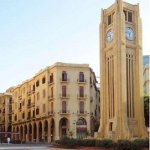
The Carnegie Middle East Center, based in Beirut, was ranked "first among the 273 think tanks in the Middle East and North Africa" for 2009 in a study of the world's 6,305 think tanks. Established only three years ago, the Center was also named among "the best five new think tanks in the world."

Link Copied
Published on Feb 12, 2010
The Carnegie Middle East Center, based in Beirut, was ranked "first among the 273 think tanks in the Middle East and North Africa" for 2009 in a study of the world's 6,305 think tanks. Established only three years ago, the Center was also named among "the best five new think tanks in the world."

The study recognized the Carnegie Endowment for International Peace's global network. The Carnegie Moscow Center was ranked first among the 517 think tanks in Central and Eastern Europe and the Washington-based Carnegie Endowment was ranked second among the 1,183 think tanks in the United States.

Paul Salem, director of the Carnegie Middle East Center, said:

"This survey result is wonderful recognition for the work of our scholars from various Arab countries and abroad; and all those who helped establish and grow the Center. I strongly believe that, in cooperation with other Middle East institutions, we can make valuable contributions to much needed political and socio-economic reform and development in the region."
Political ReformSecurityEconomyEgyptGulfLevantMaghreb

Carnegie does not take institutional positions on public policy issues; the views represented herein are those of the author(s) and do not necessarily reflect the views of Carnegie, its staff, or its trustees.

More Work from Carnegie Russia Eurasia Center

  • Commentary
    Carnegie Politika
    The Rada Reawakens: Ukraine’s Messy Politics Returns

    The return of parliamentary politics reflects a broader shift from earlier expectations of a settlement and elections toward the reality of a prolonged war.

      Balázs Jarábik

  • Commentary
    Carnegie Politika
    What Does Nuclear Proliferation in East Asia Mean for Russia?

    Troubled by the growing salience of nuclear debates in East Asia, Moscow has responded in its usual way: with condemnation and threats. But by exacerbating insecurity, Russia is forcing South Korea and Japan to consider radical security options.

      James D.J. Brown

  • Commentary
    Carnegie Politika
    Who Is Responsible for the Demise of the Russian Internet?

    The Russian state has opted for complete ideological control of the internet and is prepared to bear the associated costs.

      Maria Kolomychenko

  • Commentary
    Carnegie Politika
    Russia’s Coal Industry Is Running on Borrowed Time

    Powerful lobbyists and inertia led to Russia’s coal-mining sector missing an excellent opportunity to solve its structural problems.

      Alexey Gusev

  • Commentary
    Carnegie Politika
    Is Opposition to Online Restrictions an Inflection Point for the Russian Regime?

    After four years of war, there is no one who can stand up to the security establishment, and President Vladimir Putin is increasingly passive. 

      Tatiana Stanovaya

Get more news and analysis from
Carnegie Russia Eurasia Center
Carnegie Russia Eurasia logo, white
  • Research
  • Politika
  • About
  • Experts
  • Events
  • Contact
  • Privacy
  • For Media
Get more news and analysis from
Carnegie Russia Eurasia Center
© 2026 Carnegie Endowment for International Peace. All rights reserved.








