

Paper
James M. Acton, Ankit Panda
{
  "authors": [
    "James M. Acton"
  ],
  "type": "legacyinthemedia",
  "centerAffiliationAll": "dc",
  "centers": [
    "Carnegie Endowment for International Peace",
    "Carnegie Europe"
  ],
  "collections": [
    "U.S. Nuclear Policy"
  ],
  "englishNewsletterAll": "ctw",
  "nonEnglishNewsletterAll": "",
  "primaryCenter": "Carnegie Endowment for International Peace",
  "programAffiliation": "NPP",
  "programs": [
    "Nuclear Policy"
  ],
  "projects": [],
  "regions": [
    "North America",
    "United States"
  ],
  "topics": [
    "Nuclear Policy"
  ]
}
Source: Getty
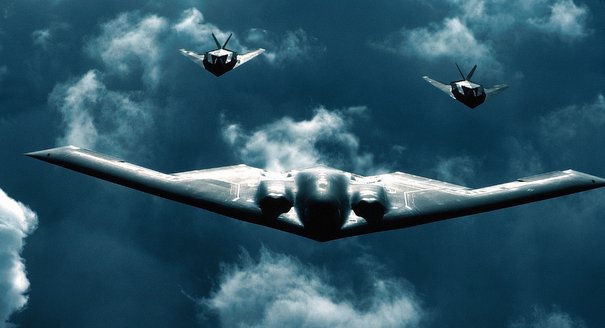
The goal of nuclear superiority is unattainable. Instead, the United States can enhance its security by giving nuclear-armed adversaries strong incentives for restraint in a crisis.
Source: Foreign Affairs

If the United States really did face an adversary with a small nuclear arsenal consisting purely of silo-based missiles— or were likely to face such an enemy in the future—there may indeed be a case for a force consisting of more low-yield, high-accuracy weapons. Even then, however, because enhanced U.S. counterforce capabilities would simply encourage an adversary to launch more of its weapons initially (leaving fewer behind as targets), there would not be a clear-cut case for such a force.
The main problem with Lieber and Press’ argument is that no state actually has a small arsenal consisting solely of silo-based missiles. China, Iran, and North Korea are all focusing on the development of road-mobile missiles (in fact, the latter two do not appear to have any silo-based weapons at all). Although China has very few road-mobile missiles that could reach U.S. soil, and Iran and North Korea have none, each country has plenty that could reach the territory of key U.S. friends and allies.
The challenge with destroying road-mobile weapons is locating them. If their location is known, conventional munitions will suffice. If their location is not known, even nuclear weapons are useless (discounting the possibility of wide-area nuclear bombardment, which Lieber and Press would presumably not advocate). Locating mobile ballistic missiles is exceptionally hard. According to the Gulf War Air Power Survey (an official analysis of U.S. Air Force operations during the Persian Gulf War), the United States launched about 1,500 sorties against Scud launchers in Iraq during the 1991 war; not a single mobile launcher was confirmed destroyed.
Granted, U.S. capabilities and doctrine have improved markedly since then. Nonetheless, it is still fiendishly diffcult to locate mobile missiles hidden by a well-prepared enemy. The bottom line is that because the bulk of China’s, Iran’s, and North Korea’s missile forces are mobile, the United States could not eliminate their entire arsenals with a high probability. Increasing the United States’ ability to eliminate only silo-based weapons would add very little to deterrence.
Rather than seeking to deny China’s second-strike capability, the United States would be better off acknowledging that its relationship with China is one of mutual vulnerability (as it did with the Soviet Union and then Russia). Even in the face of U.S. missile defense measures and enhanced counterforce capabilities, China can preserve its capability to inflict unacceptable damage on the United States. It can fit its missiles with multiple warheads, develop more sophisticated countermeasures, or simply build more missiles.
Instead of pursuing strategic competition with China, therefore, the United States should seek strategic stability through dialogue and arms control, recognizing that mutual vulnerability is a fact, not a choice. The United States’ failure to accept this is not the only—or even the main—reason for the failure of the strategic dialogue that President George W. Bush tried to initiate with China; China’s opacity about its nuclear doctrine and its unwillingness to enter into a serious, candid discussion are also significant barriers. Nevertheless, by acknowledging mutual vulnerability, the United States would increase the chances of having a much-needed dialogue.
North Korea and a putative nuclear-armed Iran require a different approach. First, the United States should continue its policy of seeking behavioral change and not regime change. Lieber and Press rightly argue that deterrence is most likely to fail when a regime believes that it is about to be toppled and that the only chance to save itself is to use a nuclear weapon. The United States could change this calculus—and give an embattled regime a very strong reason for nuclear restraint—by not seeking regime change, unless the United States or its friends and allies are attacked with nuclear weapons. The problem here, as Lieber and Press note, is that the U.S. military’s battlefield doctrine of decapitating the enemy undermines this strategy. The solution is to change tactics; if the president says he does not seek regime change, the military should not pursue it.
Second, the surest and best way of avoiding nuclear use is preventing nuclear proliferation (or, in the case of North Korea, rolling it back). A successful nonproliferation regime requires a broad-based international consensus. As President Barack Obama recognized in his April 2009 speech in Prague, creating consensus will require the United States to work toward a world without nuclear weapons. Devaluing nuclear weapons is an important step on this path. The further development of nuclear counterforce capabilities will only make this goal harder to achieve.
Reprinted by permission of FOREIGN AFFAIRS, March 01, 2010 by the Council on Foreign Relations, Inc.

Jessica T. Mathews Chair, Co-director, Nuclear Policy Program
Acton holds the Jessica T. Mathews Chair and is co-director of the Nuclear Policy Program at the Carnegie Endowment for International Peace.
Recent Work

James M. Acton, Ankit Panda
James M. Acton
Carnegie does not take institutional positions on public policy issues; the views represented herein are those of the author(s) and do not necessarily reflect the views of Carnegie, its staff, or its trustees.

Trump has promised Belarus a massive potash deal. But Minsk is seeking something greater: restored Western transit and greater room for maneuver from Russia.

Balázs Jarábik

Minsk clearly expected the dialogue with Washington to yield more results, in particular the lifting of EU sanctions and permission to export potash.

Artyom Shraibman

Ongoing uncertainty in the Middle East allows Moscow to both increase its influence in Tehran and continue to enjoy the financial windfall of higher oil prices.

Nikita Smagin

Governments in Estonia, Latvia, and Lithuania want to ensure that a U.S. military withdrawal would not leave them dangerously exposed to a Russian attack.

Sergejs Potapkins
Troubled by the growing salience of nuclear debates in East Asia, Moscow has responded in its usual way: with condemnation and threats. But by exacerbating insecurity, Russia is forcing South Korea and Japan to consider radical security options.

James D.J. Brown