

Paper
Ashley J. Tellis
{
  "authors": [
    "Ashley J. Tellis"
  ],
  "type": "legacyinthemedia",
  "centerAffiliationAll": "dc",
  "centers": [
    "Carnegie Endowment for International Peace"
  ],
  "collections": [],
  "englishNewsletterAll": "ctw",
  "nonEnglishNewsletterAll": "",
  "primaryCenter": "Carnegie Endowment for International Peace",
  "programAffiliation": "SAP",
  "programs": [
    "South Asia"
  ],
  "projects": [],
  "regions": [
    "North America",
    "United States",
    "South Asia",
    "India",
    "Afghanistan",
    "Pakistan"
  ],
  "topics": [
    "Political Reform",
    "Security",
    "Foreign Policy"
  ]
}
Source: Getty
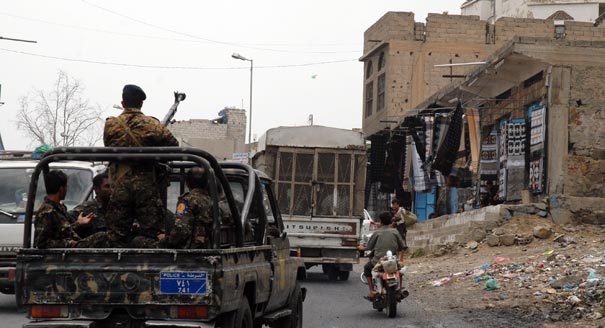
Pakistan's support of terrorist organizations like Lashkar-e-Taiba has stymied the India-Pakistan peace process, hindered U.S.-Pakistan relations, and threatens to undermine any attempts to create stability in Afghanistan.
Source: Yale Global

The disruption of the India-Pakistan peace process, which has remained frozen since the Mumbai attack, is due principally to Pakistan’s unwillingness to bring to justice the Lashkar leadership, which has enjoyed the support of the country’s powerful intelligence organization – Inter-Services Intelligence (ISI). After almost two decades of punting, many Pakistanis today – academics, policy analysts, and even officials – concede that fomenting insurgencies within India has been a main component of Pakistan’s national strategy. But that late admission comes long after Pakistan’s military establishment moved to replace its failed strategy of encouraging insurgencies with the more lethal device of unleashing terrorism.
Since its formation in 1947, Pakistan has sought to stir up insurgencies within India. The earliest efforts in 1947-48 centered on provoking insurrections in Jammu and Kashmir in hopes that an internal rebellion would permit the seizure of this disputed state. These efforts failed miserably: through three major conflicts with India, the people of Kashmir stayed loyal to New Delhi. After Pakistan’s defeat in the 1971 war, Islamabad attempted to stoke other secessionist movements, this time not for any territorial gains but merely to avenge its humiliation. But this effort too was beaten back by the Indian state. Finally, in 1989, when the first genuinely Kashmiri uprising against New Delhi broke out, Islamabad quickly threw its support behind the insurgents who were led by the secular Jammu and Kashmir Liberation Front (JKLF). This revolt, however, was quickly overpowered by the Indian Army by 1993 – and the defeat forced the momentous change in Islamabad’s strategy.
Flushed with confidence flowing from the success of the anti-Soviet jihad in Afghanistan during the 1980s, Pakistan sought to replicate in the east what it had managed in the west, namely, the defeat of a great power larger than itself. Using the same instruments as before – radical Islamist groups that had sprung up throughout Pakistan – Pakistan’s ISI pushed into Jammu and Kashmir for the first time in 1993 with combat-hardened aliens tasked to inflict large-scale murder and mayhem.
Through this act, Pakistan’s traditional strategy of fomenting insurgencies finally gave way to a new approach, namely, fomenting terrorism (an instrument that most Pakistanis still refuse to acknowledge). No longer would Pakistan rely on dissatisfied indigenous populations to advance Islamabad’s interests; rather, vicious bands of Islamic terrorists, most of whom had little or no connection to any existing grievances with India, would be unleashed indiscriminately to kill large numbers of civilians.
From 1996, these attacks were deliberately extended at ISI’s behest throughout India and of all the myriad terrorist organizations involved, none enjoyed greater state support than Lashkar-e-Taiba (LeT). LeT has now sprung to international attention because of the bloodbath in Mumbai in November 2008, but the group has been active in South Asia since 1987, first in Afghanistan and thereafter in India.
Of all the terrorist groups ISI has sponsored over the years, LeT has been especially favored because its dominant Punjabi composition matched the primary ethnicity of the Pakistani Army and ISI; and its puritanical Salafism undergirded its willingness to engage in risky military operations throughout India. Many in ISI are deeply sympathetic to LeT’s vision of recovering “lost Muslim lands” in Asia and Europe and resurrecting a universal Islamic Caliphate through the instrument of jihad.
Although Pakistani propaganda often asserts that LeT is a Kashmiri organization moved by the Kashmiri cause, it is nothing of the kind. The 3,000-odd foot soldiers who man its fighting ranks are drawn primarily from the Pakistani Punjab. Indian intelligence today estimates that LeT maintains some kind of presence in twenty-one countries worldwide with the intention of supporting or participating in what its leader Hafeez Saeed has called the perpetual “jihad against the infidels.” Consequently, LeT’s operations in and around India, which often receive the most attention, are only part of a large pastiche that has taken LeT operatives and soldiers as far afield as Australia, Canada, Chechnya, China, Eritrea, Kosovo, Oman, Palestine, Saudi Arabia, Spain, the United Kingdom, and even the US.
Given the organization’s vast presence, its prolific capacity to raise funds worldwide, and its ability to conduct militant activities at great distances from its home base, LeT has become ISI’s preferred instrument for its ongoing covert war with India. This includes the campaign that Pakistan is currently waging against the Indian presence in Afghanistan and against US counterinsurgency efforts in that country. Active LeT operations in Pakistan’s northwestern border areas involve close collaboration with Al Qaeda, the Afghan Taliban, the Haqqani network, and Jamiat al-Dawa al-Quran wal-Sunna. Thanks to these activities and others worldwide, Washington has now reached the conclusion that LeT represents a threat to America’s national interests second only to Al Qaeda and in fact exceeds the latter by many measures.
Based on this judgment, President Barack Obama has told Pakistan’s President Asif Zardari that targeting LeT would be one of his key conditions for a renewed US strategic partnership with Pakistan. Thus far, however, the Pakistani military, which still rules Pakistan even though it does not formally govern, has been non-responsive, preferring instead to emphasize the threat India supposedly poses to Pakistan – thereby implicitly justifying ISI’s continued reliance on terrorism – while demanding further US assistance. Such a demand is intended to inveigle the US into Pakistan’s relentless competition with India. The military’s dismissal of Obama’s injunctions regarding LeT are driven at least partly by its belief that all US warnings are little other than special pleading on the behalf of India.
Since assaulting India has become a quite satisfying end in itself, the Pakistani establishment has no incentive whatsoever to interdict this group. To the degree that ISI has attempted to control LeT, it is mainly to prevent excessive embarrassment to its sponsors or serious crises leading to war. But outside of these aims, the Pakistani military has no interest in dismantling any terrorist assets that it believes serve it well.
Military leaders in Rawalpindi have thus not only failed to understand that American concerns about LeT derive fundamentally from its own growing conviction that the group’s activities worldwide make it a direct threat to the US, but they also continue to harbor the illusion that their current strategy of unleashing terrorism will enervate India, push it out of Afghanistan, and weaken US stabilization efforts there. Such a strategy is designed to make Islamabad the kingmaker in determining Kabul’s future. This too promises to become one more in the long line of cruel illusions that has gripped Pakistan since its founding.
Former Senior Fellow
Ashley J. Tellis was a senior fellow at the Carnegie Endowment for International Peace.
Recent Work
Ashley J. Tellis
Ashley J. Tellis
Carnegie does not take institutional positions on public policy issues; the views represented herein are those of the author(s) and do not necessarily reflect the views of Carnegie, its staff, or its trustees.

By fueling the arguments of both supporters and opponents of Armenian Prime Minister Nikol Pashinyan, Azerbaijan wants to ensure he is re-elected with a weaker mandate.

Bashir Kitachaev

A much-discussed disagreement over internet restrictions in Russia was never an existential threat for Putin: It was about elite groups protecting their interests.

Alexandra Prokopenko

By reminding the world that Lukashenko is a threat to NATO and Ukraine, Kyiv is trying to return the focus to why the Belarusian regime needs to be contained rather than rewarded.

Artyom Shraibman

The demands of the Kremlin’s war in Ukraine, demographic problems, and public hostility toward Central Asians mean Russia does not have enough workers.

Salavat Abylkalikov

Minsk’s faith in the future of its larger neighbor’s economy is fading as Belarusian firms in Russia see record losses.

Olga Loiko