• Research
  • Politika
  • About
Carnegie Russia Eurasia center logoCarnegie lettermark logo
  • Donate
{
  "authors": [
    "Henri J. Barkey"
  ],
  "type": "legacyinthemedia",
  "centerAffiliationAll": "dc",
  "centers": [
    "Carnegie Endowment for International Peace"
  ],
  "collections": [],
  "englishNewsletterAll": "menaTransitions",
  "nonEnglishNewsletterAll": "",
  "primaryCenter": "Carnegie Endowment for International Peace",
  "programAffiliation": "MEP",
  "programs": [
    "Middle East"
  ],
  "projects": [],
  "regions": [
    "Middle East",
    "Türkiye",
    "Caucasus",
    "Armenia"
  ],
  "topics": [
    "Foreign Policy"
  ]
}
Source: Getty

In The Media

The Armenian Genocide Resolution is a Farce All Around

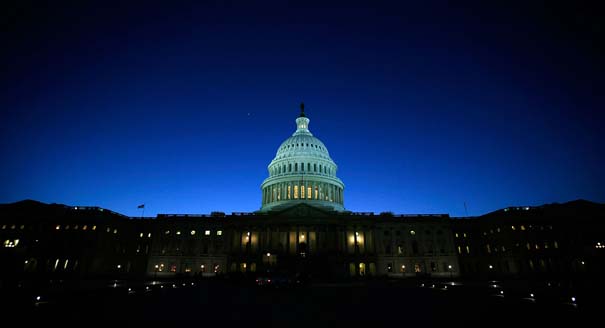
Rather than pursuing its annual Armenian genocide resolution, the U.S. Congress should focus its efforts on helping to mediate a reconciliation between Turkey and Armenia that would put an end to Armenia’s economic isolation.

Link Copied
By Henri J. Barkey
Published on Mar 2, 2010

Source: The Washington Post

The Armenian Genocide Resolution is a Farce All ArThe House of Representatives has decided to make a problem from the past into a problem of the present. On Thursday, the House foreign affairs committee is set to launch its fruitless annual effort to declare that the 1915 massacre of over a million Armenians by Ottoman Turks was genocide. As in the past, the resolution isn't likely to get very far. But this year, it portends great damage to the Obama administration's attempts to rescue a fragile Turkey-Armenia reconciliation.

To be clear, the overwhelming historical evidence demonstrates that what took place in 1915 was genocide. But while some U.S. lawmakers feel strongly about the Armenian genocide resolution, most realize that no moral good can come from a label applied almost a century later. They support the resolution only to score points with the highly organized Armenian-American lobby. And they know full well that pressure from Turkey, which remains a critical U.S. ally, ultimately will prevent passage on the House floor.
 
The cynicism of this effort is matched only by the cynicism of the Armenians and the Turks.
 
For Armenians, the genocide issue is of paramount concern, and Armenian populations in Europe have even supported laws punishing Armenian genocide deniers. Yet in 2007, Yerevan State University awarded an honorary degree to the No. 1 Holocaust denier in the world: Mahmoud Ahmadinejad. The Iranian president not only invited fellow deniers to Tehran for a "conference," but he has systematically called for the destruction a member state of the United Nations. This clearly didn't bother Armenian politicians who, in the interest of fostering ongoing friendly ties with neighboring Iran, decided to honor him. They must have been disappointed, though, when Ahmadinejad skipped a trip to Yerevan's Armenian Genocide Memorial, citing important obligations in Tehran. Maybe he values his country's relations with the Turks, or maybe he doesn't believe there was an Armenian genocide any more than a Holocaust.
 
And what of the Turks? You'd think they'd be careful about throwing around a word like genocide. On the contrary, in a country where a Turkish citizen can be jailed for arguing that the Ottoman massacres were genocide, Turks will hurl that accusation at almost anyone else. The speaker of the Turkish parliament recently declared that the killing of 400 Azeris by the Armenians during the 1992 Nagorno-Karabakh war was genocide. Turkish politicians have on numerous occasions accused Israel of genocide in the occupied territories. And last year, Turkish Prime Minister Recep Tayyip Erdogan accused the Chinese of committing genocide in Xinjiang, where interethnic riots killed 200 people. (He did, however, deny that the Sudanese government's actions in Darfur were genocidal, on the grounds that "Muslims do not commit genocide.")
 
The Turks, Armenians and the United States all dilute the meaning of the word genocide by playing politics with it. But the U.S. alone has the power to help broker an agreement that would make a meaningful difference in Armenians' lives, by ending their economic isolation.
 
The Obama administration has been pushing for a deal that would normalize Turkish-Armenian relations and open the borders between them. Realizing the delicacy of the situation, Obama made a point to avoid "genocide" in his April 2009 statement commemorating the start of the massacres, instead using the Armenian expression "Great Catastrophe." Unfortunately, Turkish leaders have shown signs of cold feet. And further antagonism would undoubtedly set back the process for years.
 
With that in mind, the U.S. Congress should drop its annual Armenian genocide resolution. And lawmakers worried about responding to Armenian-American constituents should focus their efforts on helping to mediate a reconciliation that would benefit Armenians. It'd be better if they used their power to end ongoing fights than to pick old ones.

About the Author

Henri J. Barkey

Former Visiting Scholar, Middle East Program

Barkey served as a member of the U.S. State Department Policy Planning Staff, working primarily on issues related to the Middle East, the Eastern Mediterranean, and intelligence from 1998 to 2000.

    Recent Work

  • Article
    Winners and Losers in Turkey’s Election

      Henri J. Barkey

  • Article
    The Road to Turkey’s June Elections: Crises, Strategies, and Outcomes

      Henri J. Barkey

Henri J. Barkey
Former Visiting Scholar, Middle East Program
Henri J. Barkey
Foreign PolicyMiddle EastTürkiyeCaucasusArmenia

Carnegie does not take institutional positions on public policy issues; the views represented herein are those of the author(s) and do not necessarily reflect the views of Carnegie, its staff, or its trustees.

More Work from Carnegie Russia Eurasia Center

  • Commentary
    Carnegie Politika
    Why Are China and Russia Not Rushing to Help Iran?

    Most of Moscow’s military resources are tied up in Ukraine, while Beijing’s foreign policy prioritizes economic ties and avoids direct conflict.   

      • Alexander Gabuev

      Alexander Gabuev, Temur Umarov

  • Commentary
    Carnegie Politika
    Georgia’s Fall From U.S. Favor Heralds South Caucasus Realignment

    With the White House only interested in economic dealmaking, Georgia finds itself eclipsed by what Armenia and Azerbaijan can offer.

      Bashir Kitachaev

  • Commentary
    Carnegie Politika
    What Does War in the Middle East Mean for Russia–Iran Ties?

    If the regime in Tehran survives, it could be obliged to hand Moscow significant political influence in exchange for supplies of weapons and humanitarian aid.

      Nikita Smagin

  • Commentary
    Carnegie Politika
    How Trump’s Wars Are Boosting Russian Oil Exports

    The interventions in Iran and Venezuela are in keeping with Trump’s strategy of containing China, but also strengthen Russia’s position.

      • Mikhail Korostikov

      Mikhail Korostikov

  • Commentary
    Carnegie Politika
    How Far Can Russian Arms Help Iran?

    Arms supplies from Russia to Iran will not only continue, but could grow significantly if Russia gets the opportunity.

      Nikita Smagin

Get more news and analysis from
Carnegie Russia Eurasia Center
Carnegie Russia Eurasia logo, white
  • Research
  • Politika
  • About
  • Experts
  • Events
  • Contact
  • Privacy
Get more news and analysis from
Carnegie Russia Eurasia Center
© 2026 Carnegie Endowment for International Peace. All rights reserved.