• Research
  • Politika
  • About
Carnegie Russia Eurasia center logoCarnegie lettermark logo
  • Donate
{
  "authors": [],
  "type": "pressRelease",
  "centerAffiliationAll": "dc",
  "centers": [
    "Carnegie Endowment for International Peace"
  ],
  "collections": [],
  "englishNewsletterAll": "menaTransitions",
  "nonEnglishNewsletterAll": "",
  "primaryCenter": "Carnegie Endowment for International Peace",
  "programAffiliation": "MEP",
  "programs": [
    "Middle East"
  ],
  "projects": [],
  "regions": [
    "Middle East",
    "Palestine"
  ],
  "topics": []
}
REQUIRED IMAGE

REQUIRED IMAGE

Press Release

Fayyad failing to rebuild West Bank

The international community’s understandable admiration for Palestinian Prime Minister Salam Fayyad and his efforts to rebuild the West Bank obscures a dangerous regression in democracy and human rights.

Link Copied
Published on Jul 1, 2010

WASHINGTON, July 1—The international community’s understandable admiration for Palestinian Prime Minister Salam Fayyad and his efforts to rebuild the West Bank obscures a dangerous regression in democracy and human rights. Just back from the West Bank, Nathan J. Brown contends that the United States is once again confusing support for an admirable individual with sound policy.

Key Conclusions

  • Government circumventing democracy. The unaccountable governing process that Fayyad has had to invent is not just postponing a democratic system—it is actively denying it.
  • Isolated successes do not create rule of law. The increasing number of cases seen and submitted to the courts indicates growing efficiency and confidence, but security services continue to act outside the law under the guise of cracking down on Hamas.
  • Lack of institution building. While Fayyad’s cabinet has managed to make a few existing institutions more effective and less corrupt, there has been regression in other governing bodies. Palestinian civil society is showing signs of decay as well. Ironically, there was more institution building and civil society development under Yasser Arafat than there has been since the West Bank-Gaza split in 2007.
  • Disillusionment increasing among Palestinians. Popular support for Fayyad is growing but he still has no organized base. And Palestinians are increasingly cynical about the prospects for long-term development.
  • Fatah is in disarray. The party remains bitterly divided. Party leaders recently forced Fayyad’s cabinet to cancel local elections when Fatah could not organize itself on time.

“To the extent that Fayyadism is building institutions, it is unmistakably doing so in an authoritarian context,” writes Brown. “There is no reason to associate Fayyad personally with the most egregious aspects of this new authoritarianism, but there is no way his cabinet could have been created or sustained in a more democratic environment.”

“Palestinian authoritarianism in 2010 is different from Palestinian authoritarianism under Arafat—it is less venal and probably less capricious. But it is also more stultifying.”

###


NOTES

  • Click here to read the commentary online
  • Nathan J. Brown is a professor of political science and international affairs at the George Washington University, a nonresident senior associate at the Carnegie Endowment, and a distinguished scholar and author of four well-received books on Arab politics.
  • The Carnegie Middle East Program combines in-depth local knowledge with incisive comparative analysis to examine economic, socio-political, and strategic interests in the Arab world to provide analysis and recommendations in both English and Arabic that are deeply informed by knowledge and views from the region.
  • The Carnegie Middle East Center based in Beirut, Lebanon, aims to better inform the process of political change in the Middle East.
  • Carnegie's Arab Reform Bulletin analyzes political reform in the Middle East.
  • Press Contact: David Kampf, 202-939-2233, pressoffice@ceip.org
Middle EastPalestine

Carnegie does not take institutional positions on public policy issues; the views represented herein are those of the author(s) and do not necessarily reflect the views of Carnegie, its staff, or its trustees.
More Work from Carnegie Russia Eurasia Center

  • Commentary
    Carnegie Politika
    Once Neutral on the Ukraine War, Arab States Increasingly Favor Moscow

    Disillusioned with the West over Gaza, Arab countries are not only trading more with Russia; they are also more willing to criticize Kyiv.  

      Ruslan Suleymanov

  • Commentary
    Carnegie Politika
    Baku Proceeds With Caution as Ethnic Azeris Join Protests in Neighboring Iran

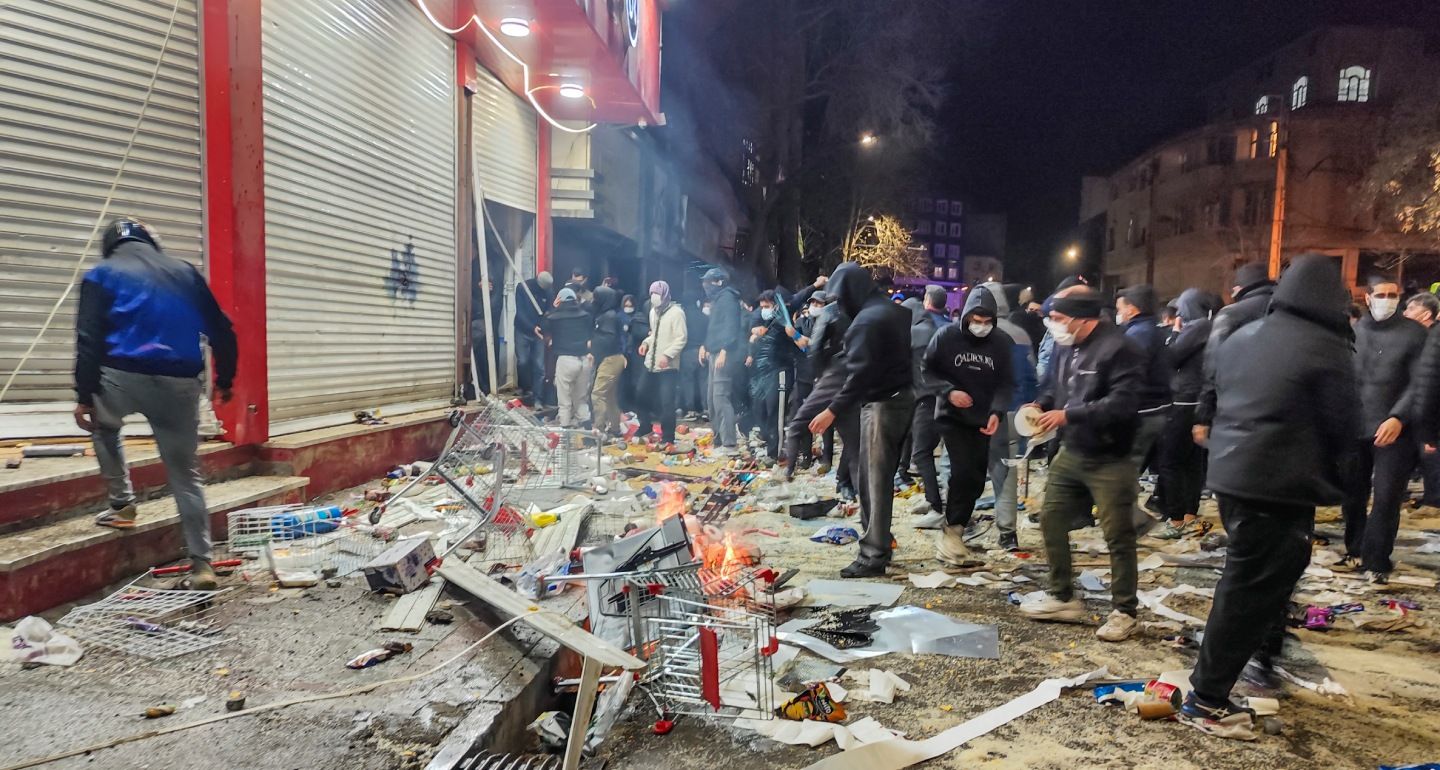
    Baku may allow radical nationalists to publicly discuss “reunification” with Azeri Iranians, but the president and key officials prefer not to comment publicly on the protests in Iran.

      Bashir Kitachaev
  • Commentary
    Carnegie Politika
    What Russia Will—and Won’t—Do for Its Embattled Ally Iran

    It’s one thing to export Russian helicopters to Iran to fight the insurgency, and it’s easy to imagine Moscow becoming a haven for fleeing Iranian leaders. But it’s very difficult to imagine Russian troops defending the Iranian regime on the ground.

      Nikita Smagin

  • Commentary
    Carnegie Politika
    Trump’s Gaza Deal Belies the Kremlin’s Theory of a New Global Order

    The U.S. president’s successful imposition of a ceasefire on notorious sworn enemies who have both agreed to make concessions only highlights Putin’s intransigence and his lack of competence and reason.

      Alexander Baunov

  • Commentary
    Carnegie Politika
    What Does the New Reality in the Middle East Mean for Russia?

    Trump’s Egypt summit may have thwarted the Kremlin’s attempts to get Middle Eastern leaders to congregate in Moscow, but Middle Eastern states are less and less convinced that the West can be relied upon, which is inevitably pushing them toward deals with Russia.

      Nikita Smagin

Get more news and analysis from
Carnegie Russia Eurasia Center
Carnegie Russia Eurasia logo, white
  • Research
  • Politika
  • About
  • Experts
  • Events
  • Contact
  • Privacy
Get more news and analysis from
Carnegie Russia Eurasia Center
© 2026 Carnegie Endowment for International Peace. All rights reserved.