• Research
  • Politika
  • About
Carnegie Russia Eurasia center logoCarnegie lettermark logo
  • Donate
{
  "authors": [
    "Michael Pettis"
  ],
  "type": "legacyinthemedia",
  "centerAffiliationAll": "dc",
  "centers": [
    "Carnegie Endowment for International Peace"
  ],
  "collections": [],
  "englishNewsletterAll": "asia",
  "nonEnglishNewsletterAll": "",
  "primaryCenter": "Carnegie Endowment for International Peace",
  "programAffiliation": "AP",
  "programs": [
    "Asia"
  ],
  "projects": [],
  "regions": [
    "North America",
    "United States",
    "Western Europe"
  ],
  "topics": [
    "Economy",
    "Trade"
  ]
}
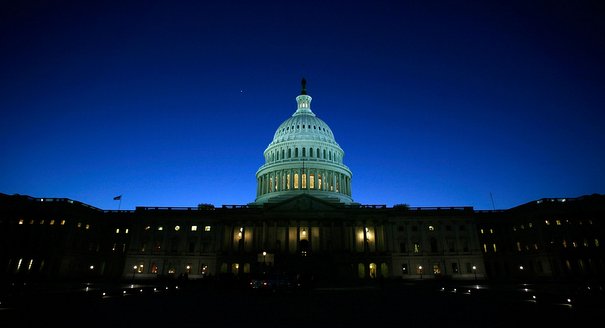
Source: Getty

In The Media

American Anger May Give Way to a Protectionist Response

While the U.S. trade deficit will still increase over the next year, growing anger in the United States over trade imbalances is likely to result in new protectionist policies.

Link Copied
By Michael Pettis
Published on Jul 23, 2010

Source: The Economist

American Anger May Give Way to a Protectionist ResReserve accumulation is likely to be just one of the symptoms of beggar-thy-neighbour policymaking. As a consequence of the financial crisis most countries are struggling to gain greater access to dwindling global demand. Many of them explicitly or implicitly seek to goose domestic growth and employment by accessing foreign demand and running current account surpluses.

Net capital exports, of course, are simply the obverse of current account surpluses, and one of the easiest ways for policymakers to increase net capital exports is to do so officially, through reserve accumulation. This is what seems to be happening. The combination of currency intervention and financial repression (setting domestic interest rate artificially low) allows central banks to accumulate foreign reserves in a non-inflationary way, and, as a consequence, to turbo charge the current account surplus, although at the expense of overinvestment and, in the case of some countries, severe domestic imbalances.Obviously this can only go on if there are countervailing current account deficits and net capital imports elsewhere. Until recently there have been two very large countervailing deficits—that of the US and that of the trade-deficit countries of Europe. The latter, because of the European financial crisis, will have real difficulty in maintaining their trade deficits as net capital imports dry up, so that pretty much leaves the US as the world’s only great trade deficit country.
 
The appetite in the US for running up larger deficits, however, is clearly finite. I expect rapid reserve accumulation, along with a rising US trade deficit, will continue over the next year or so but will thereafter slow sharply—not because of intelligent and responsible polices implemented by policymakers in the major economies, but simply as a consequence of rising anger in the US and a protectionist move to counter trade policies elsewhere. It is hard to see how this does not end badly.

About the Author

Michael Pettis

Nonresident Senior Fellow, Carnegie China

Michael Pettis is a nonresident senior fellow at the Carnegie Endowment for International Peace. An expert on China’s economy, Pettis is professor of finance at Peking University’s Guanghua School of Management, where he specializes in Chinese financial markets. 

    Recent Work

  • Commentary
    What’s New about Involution?

      Michael Pettis

  • Commentary
    Using China’s Central Government Balance Sheet to “Clean up” Local Government Debt Is a Bad Idea

      Michael Pettis

Michael Pettis
Nonresident Senior Fellow, Carnegie China
Michael Pettis
EconomyTradeNorth AmericaUnited StatesWestern Europe

Carnegie does not take institutional positions on public policy issues; the views represented herein are those of the author(s) and do not necessarily reflect the views of Carnegie, its staff, or its trustees.

More Work from Carnegie Russia Eurasia Center

  • Commentary
    Carnegie Politika
    Lukashenko’s Bromance With Trump Has a Sell-By Date

    Lukashenko is willing to make big sacrifices for an invitation to Mar-a-Lago or the White House. He also knows that the clock is ticking: he must squeeze as much out of the Trump administration as he can before congressional elections in November leave Trump hamstrung or distracted.

      Artyom Shraibman

  • Commentary
    Carnegie Politika
    What the Russian Energy Sector Stands to Gain From War in the Middle East

    The future trajectory of the U.S.-Iran war remains uncertain, but its impact on global energy trade flows and ties will be far-reaching. Moscow is likely to become a key beneficiary of these changes; the crisis in the Gulf also strengthens Russia’s hand in its relationships with China and India, where advantages might prove more durable.

      • Sergey Vakulenko

      Sergey Vakulenko

  • Commentary
    Carnegie Politika
    Beyond Oil: Hormuz Closure Puts Russia in the Lead in the Fertilizer Market

    The Kremlin expects to not only profit from rising fertilizer prices but also exact revenge for the collapse of the 2023 grain deal.

      Alexandra Prokopenko

  • Paper
    A Tight Spot: Challenges Facing the Russian Oil Sector Through 2035

    Russian oil production is remarkably resilient to significant price changes, but significant political headwinds may lead to a drop regardless of economics.

      • Sergey Vakulenko

      Sergey Vakulenko

  • Commentary
    Carnegie Politika
    Georgia’s Fall From U.S. Favor Heralds South Caucasus Realignment

    With the White House only interested in economic dealmaking, Georgia finds itself eclipsed by what Armenia and Azerbaijan can offer.

      Bashir Kitachaev

Get more news and analysis from
Carnegie Russia Eurasia Center
Carnegie Russia Eurasia logo, white
  • Research
  • Politika
  • About
  • Experts
  • Events
  • Contact
  • Privacy
Get more news and analysis from
Carnegie Russia Eurasia Center
© 2026 Carnegie Endowment for International Peace. All rights reserved.