

Commentary
Dmitri Trenin
{
  "authors": [
    "Dmitri Trenin"
  ],
  "type": "legacyinthemedia",
  "centerAffiliationAll": "",
  "centers": [
    "Carnegie Endowment for International Peace",
    "Carnegie Russia Eurasia Center"
  ],
  "collections": [],
  "englishNewsletterAll": "",
  "nonEnglishNewsletterAll": "",
  "primaryCenter": "Carnegie Russia Eurasia Center",
  "programAffiliation": "",
  "programs": [],
  "projects": [
    "Eurasia in Transition"
  ],
  "regions": [
    "East Asia",
    "China",
    "North Korea",
    "South Korea"
  ],
  "topics": [
    "Security"
  ]
}
Source: Getty
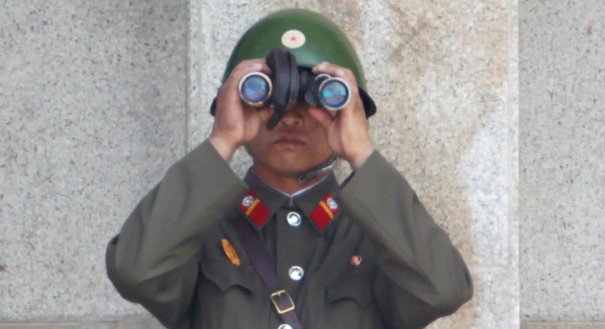
The recent UN Security Council statement, which condemns the attack on the South Korean patrol ship without naming a perpetrator, reflects the complicated reality of Beijing’s relations with North Korea.
Source: InoSMI

From the outset Beijing opposed any resolution that would condemn North Korea, regardless of any experts’ findings. It is no secret that on issues concerning North Korea, Russia usually takes China into consideration when determining what line to take in the UN. As for the United States, it preferred to maintain a common front with the countries with which it has been engaged together in talks with Pyongyang on the North Korean nuclear program over the last ten years. The situation looks on the surface like a concession to China, as it is Beijing that sets the lowest common denominator when it comes to Pyongyang.
But Beijing is actually in an unenviable situation. Pyongyang, its only formal ally, turns a deaf ear to any advice and warnings it tries to give. Attempts to transplant the Chinese market model to North Korean soil have been fruitless. Kim Jong Il’s recent visit to China at the height of discussion on the torpedo incident brought Pyongyang political dividends, but left Beijing looking somewhat helpless.
At the same time, to Beijing’s displeasure, the Yellow Sea incident incited South Korea to continue to harden its line towards Pyongyang. After distancing itself from the United States under the previous administration in Seoul, South Korea is now pursuing a new rapprochement with Washington. The symbol of these relations was the first ever joint meeting of a committee of the two countries’ foreign and defense ministers. Large-scale American-South Korean military exercises are underway. This show of force, which was to take place in the Yellow Sea but was moved at the last moment to the Sea of Japan (called the Eastern Sea in Korea), poses no direct threat to China, but clearly irritates that country’s military and political leaders.
At the strategic level, Beijing is very worried about the future of the North Korean regime. There is insufficient information on what is really going on in Kim Jong Il’s entourage. Kim himself has earned a reputation as a false and insincere man among his allies. But the Chinese authorities are fully aware that amputations are carried out without anaesthetic in North Korea and there are also stories about North Korean generals sent to China on business eating enough for three in restaurants. Hospitals without anaesthetics and a hungry army are food for thought.
The North Korean regime is unlikely to collapse overnight. If it does not undergo transformation – and there are no signs of this yet – its agony could continue for quite some time to come. This could have serious consequences. War, including nuclear conflict, remains a real possibility on the Korean Peninsula. If war does break out, it would not only cause great death and destruction, but would see North Korea defeated by American and South Korean troops, putting U.S. troops right on China’s borders. Such direct contact with the armed forces of China’s main global rival would be completely unacceptable for Beijing, and particularly for its military command, who would inevitably ask themselves why hundreds of thousands of People’s Liberation Army volunteers sacrificed their lives in the 1950-1953 Korean War.
What to do in this situation?
Attempting to “manage” the situation inside North Korea is an extremely difficult endeavour. The North Korean leadership readily accepts Chinese aid, but without opening up at all. They are mistrustful and stubborn.
Striking a deal with South Korea and the United States on joint action against China’s ally, North Korea, would represent an obvious betrayal in the eyes of China’s military command and part of its political elite. What’s more, beyond the current status quo, Chinese and U.S. geopolitical interests on the Korean Peninsula are fundamentally different.
This leaves only the tried and tested option of calling for a resumption of the six-party talks with North Korea, and blocking a UN resolution condemning North Korea’s actions in order to encourage Pyongyang not to refuse negotiations altogether. Meanwhile, in Beijing, Washington, Moscow, and other capitals, people are perfectly aware that North Korea made a nuclear device while these very six-party talks were going on.
Former Director, Carnegie Moscow Center
Trenin was director of the Carnegie Moscow Center from 2008 to early 2022.
Recent Work
Dmitri Trenin
Dmitri Trenin
Carnegie does not take institutional positions on public policy issues; the views represented herein are those of the author(s) and do not necessarily reflect the views of Carnegie, its staff, or its trustees.

The European far right might fail to steer EU policy in the direction Russia wants, but they will create enough chaos inside Europe to benefit the Kremlin.

Dimitar Bechev

With the growth in points of friction between the great powers, organizations like the SCO will continue to play a role in the strategic adaptation of the smaller powers caught between them.

Temur Umarov

Two divergent trends—Putin’s hardline vision of how to prosecute the war in Ukraine, and a growing desire for change in Russia—could tear the regime apart.

Tatiana Stanovaya

Andrey Melnichenko’s essay offers no answer to the fundamental question of how, under any kind of negotiated settlement, Europe can protect itself from the Russian ressentiment that is inevitable in all scenarios except for an outright victory for Putin.

Leonid Bershidsky
The recent damage inflicted by Ukrainian drones and missiles on Russia has made Belarus aware of its own vulnerabilities—and surprisingly amenable to Kyiv’s demands.

Artyom Shraibman