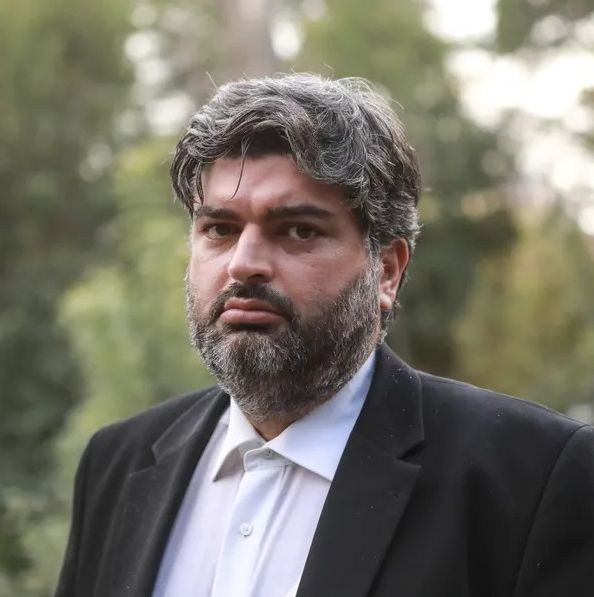
{
  "authors": [
    "Amr Hamzawy"
  ],
  "type": "legacyinthemedia",
  "centerAffiliationAll": "",
  "centers": [
    "Carnegie Endowment for International Peace",
    "Malcolm H. Kerr Carnegie Middle East Center"
  ],
  "collections": [],
  "englishNewsletterAll": "",
  "nonEnglishNewsletterAll": "",
  "primaryCenter": "Carnegie Endowment for International Peace",
  "programAffiliation": "",
  "programs": [],
  "projects": [],
  "regions": [
    "North Africa",
    "Egypt"
  ],
  "topics": [
    "Political Reform"
  ]
}
Source: Getty
In The Media
The Case for Boycotting Egypt's Elections
An opposition-wide general boycott is the most effective means for combating the Egyptian regime's authoritarian tendencies and realizing Egyptians' hopes for much-needed political change.
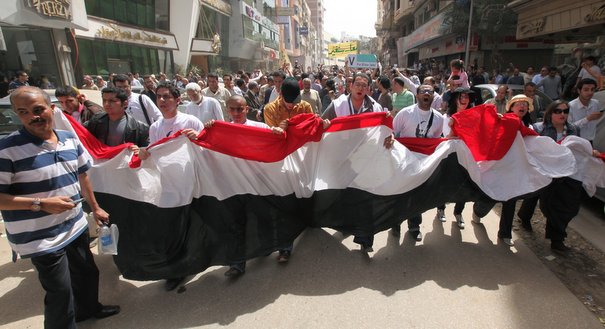
The Case for Boycotting Egypt's ElectionsAs Egypt approaches parliamentary elections in November and presidential elections next year, there is a great deal of talk - both in and out of the country - about reform, change, democracy, stability and the future of the regime. But amid all the talk, another critical debate is brewing. Anticipating unfair elections, many party leaders and opposition figures are strongly considering boycotting the elections altogether. Under the present conditions, an opposition boycott is the least bad option available.
As the opposition deliberates its strategy, leaders are asking themselves who ultimately benefits from a boycott, what the opposition has to lose by boycotting and what it could realistically gain by participating in elections. Key opposition party leaders - from the Ghad, Democratic Front, Kefaya and National Assembly for Change - have already called for a general boycott of the parliamentary elections. They contend that participation merely legitimizes the regime's undemocratic control with no real gain to the opposition.
Other actors from the Muslim Brotherhood, New Wafd and Tajammu', however, still support participation in the 2010 elections and will decide whether or not to contest the presidential elections next year. In their eyes, electoral boycotts are strategically disadvantageous because they simply hand an automatic victory to the ruling National Democratic Party (NDP) and forfeit the opposition's only active presence - however small it may be - in Egypt's parliament.
In Egypt, the political opposition functions within a highly restrictive multiparty environment under an authoritarian regime; one which is unwilling to introduce significant democratic reforms. The very nature of the Egyptian political system presents tremendous challenges and few opportunities for opposition actors at this time. And in the face of this reality, a boycott is justified.
While opposition parties have been participating in elections for Egypt's legislative bodies since 1976, they have not been able to influence legislation or even increase their modest representation to a meaningful presence. There are two factors responsible for the opposition's inconsequential role in Egyptian politics - the ruling party permeates all governmental institutions and the regime employs authoritarian policies at the expense of an open political system which allows power to be shared.
Despite the ruling party's rhetoric in favor of reform, promises to transition towards democracy and constitutional amendments passed in 2005 which allowed Egypt's first ever competitive presidential elections, the regime regularly acts against its own words. The Egyptian government systematically represses the opposition.
Parliamentary elections, which the NDP has always easily won, are rife with reported violations. The NDP manipulates the presidential race to exclude leading opposition candidates. In all elections, the establishment goes to great lengths to control domestic and international supervision, finagle results and use security forces to intervene in the election process to secure a favorable outcome.
Due to these legal and political charades, the opposition's previous engagement has ultimately supplied the regime with the trappings of a legitimate democracy. Participation in Egypt's false pluralism and unfair elections only secures the opposition an ineffective and essentially token presence in the government. Neither opposition parties nor independent members of parliament have been able to shape or even affect outcomes of the legislative process. Even with the opposition's representation in parliament at an all-time high from 2005-2010 - it claimed over 20 percent of the People's Assembly seats, thanks primarily to the Muslim Brotherhood - the NDP succeeded in passing all of its bills and draft policies.
By guaranteeing a majority in parliament with each election cycle, maintaining the power of the purse and skillfully manipulating the constitution, the NDP has successfully blocked any concerted effort by the opposition to affect genuine change.
Despite the lack of minimum guarantees for integrity and transparency before the 2005 presidential and parliamentary elections, I supported the opposition's participation. At that time, there was hope that the opposition could pressure the regime into introducing democratic reform and capitalize on the international and regional calls for democracy in the Arab world.
But today, the favorable international and regional environment has faded and Egypt's domestic political environment has only gotten worse. Democracy and democracy promotion are no longer central to U.S. or European policies in the Arab world, and since 2005, the Egyptian regime has managed to tighten its authoritarian grip on the political game by abusing the constitutional amendments of 2007. It has once again successfully suppressed the opposition's momentum - mostly coming from the Muslim Brotherhood - and contained what little influence the remaining parties possess.
Continuing the trend, the political and legal framework for upcoming parliamentary and presidential elections fails to provide the minimum standards necessary to ensure integrity, transparency, competition and fair play. With these obstacles to democracy in place, boycotting the upcoming elections is a sound choice. If the opposition is able to coordinate across a diverse group of actors, an opposition-wide general boycott is the most effective means for combating the regime's authoritarian tendencies and realizing Egyptians' hopes for much-needed political change.
Amr Hamzawy is a senior fellow and the director of the Carnegie Middle East Program. His research and writings focus on Egypt’s and other middle powers’ involvement in regional security in the Middle East, particularly through collective diplomacy and multilateral conflict resolution
Carnegie does not take institutional positions on public policy issues; the views represented herein are those of the author(s) and do not necessarily reflect the views of Carnegie, its staff, or its trustees.
The return of parliamentary politics reflects a broader shift from earlier expectations of a settlement and elections toward the reality of a prolonged war.
It’s true that many Armenians would vote for anyone just to be rid of Pashinyan, whom they blame for the loss of Nagorno-Karabakh, but the pro-Russia opposition is unlikely to be able to channel that frustration into an electoral victory.
The front-runner to succeed Ilia II, Metropolitan Shio, is prone to harsh anti-Western rhetoric and frequent criticism of “liberal ideologies” that he claims threaten the Georgian state. This raises fears that under his leadership the Georgian Orthodox Church will lose its unifying role and become an instrument of ultraconservative ideology.