

In The Media
Lahcen Achy
{
  "authors": [
    "Lahcen Achy"
  ],
  "type": "legacyinthemedia",
  "centerAffiliationAll": "",
  "centers": [
    "Carnegie Endowment for International Peace",
    "Malcolm H. Kerr Carnegie Middle East Center"
  ],
  "collections": [],
  "englishNewsletterAll": "",
  "nonEnglishNewsletterAll": "",
  "primaryCenter": "Malcolm H. Kerr Carnegie Middle East Center",
  "programAffiliation": "",
  "programs": [],
  "projects": [],
  "regions": [
    "Egypt",
    "Gulf",
    "Levant",
    "Maghreb"
  ],
  "topics": [
    "Economy"
  ]
}
Source: Getty
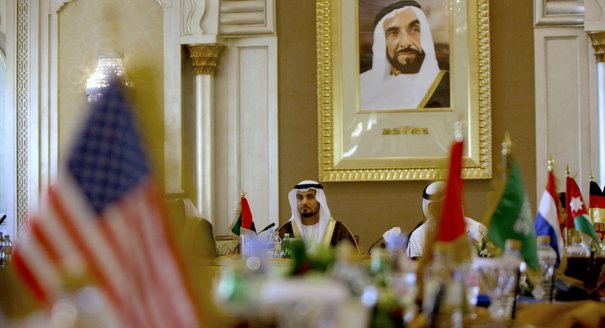
As Arab countries are the first victims of global price fluctuations of food commodities, they have a strong interest in the adoption of international mechanisms to bridge the emerging gap between the demand and supply in international markets.
Source: The Los Angeles Times

Arab countries are the primary importers of cereal — a wheat product — in the world. In fact, around 60 million tons are imported annually to Arab countries totaling 335 million people, while other Asian countries, home to more than 2 billion people, import fewer than 50 million tons of cereal.
The limited number of suppliers on the global cereal market increases dangers faced by importing countries in the Arab region. Furthermore, the demand for cereal in Arab countries is expected to increase along with an annual population growth of more than 2%, while global population rises only 1.1%.
Given the important role wheat plays in the diet of many Arab households, several governments have sought to sustain or subsidize local prices. These measures aim to protect household purchasing power from any sudden rise in wheat prices, which might drag them toward poverty.
Regardless of whether short-term policies can help manage the sudden rise in wheat prices, strategic questions about food security remind Arab decision makers that the reasons behind the rising price of wheat and other staple foods are not temporary. Structural factors — namely increasing demographics and improving living conditions — fuel the global demand for staple foods. Moreover, urban development, rural migration, and repetitive droughts have led to a reduction in the amount of arable land and a decrease in the global wheat supply.
Facing this situation, Arab policy makers should adopt a medium- and long-term strategy taking into account the following pillars:
Reorganizing priorities: In most Arab countries, per capita water consumption does not exceed 1,000 cubic meters. Supporting irrigation projects is costly and might encourage farmers to waste the scarce water available. Hence, cereal production is not the perfect solution to the food crisis due to its low economic return compared with its water consumption. Choosing to farm high value-added crops such as fruits and vegetables instead would contribute to job growth in rural areas and improve living conditions.
Improving production systems: The United Nations Food and Agricultural Organization (FAO) estimates that Arab countries would yield just half the average return per hectare of cereals compared with the global average. This is due mainly to limited investment in agricultural research. Less than 1% of the value of agricultural production is allocated to scientific research in Arab nations, compared with 2.4% in developed countries and 1.7% in Brazil, which is a model for agricultural development. The number of agricultural researchers in Arab countries is relatively high; however, they lack proper resources and basic equipment, which has led many of them to take up other employment.
Managing external supply is crucial to achieving self-sufficiency. In fact, Arab countries will be able to mitigate the effect of acute price fluctuations and avoid costly imports by granting local importers more freedom to choose the timing of imports, the provisions of import contracts, the ability to rely on modern financial techniques to manage risks in the commodities markets, and the diversification of import sources and countries.
Supporting joint regional projects is important for directing investment capital to countries with arable land and necessary water resources. Several initiatives have focused only on developing short-term revenue in the region. Additionally, the trend of Gulf countries acquiring fertile arable land in Asia and Africa raises a number of political, legal and security questions. In fact, major doubts exist about whether external investment can sustain food security without affecting account development objectives and the interests of host-country residents.

Former Nonresident Senior Associate, Middle East Center
Achy is an economist with expertise in development, institutional economics, trade, and labor and a focus on the Middle East and North Africa.
Recent Work
Lahcen Achy
Lahcen Achy

A much-discussed disagreement over internet restrictions in Russia was never an existential threat for Putin: It was about elite groups protecting their interests.

Alexandra Prokopenko

The demands of the Kremlin’s war in Ukraine, demographic problems, and public hostility toward Central Asians mean Russia does not have enough workers.

Salavat Abylkalikov

Minsk’s faith in the future of its larger neighbor’s economy is fading as Belarusian firms in Russia see record losses.

Olga Loiko

The cost of air defense has become an unregistered tax on revenue for businesses. While military rents are consolidated in the federal budget, the costs of defense are being spread across the balance sheets of companies and regional governments.
Alexandra Prokopenko

Powerful lobbyists and inertia led to Russia’s coal-mining sector missing an excellent opportunity to solve its structural problems.
Alexey Gusev