

In The Media
Minxin Pei
{
  "authors": [
    "Minxin Pei"
  ],
  "type": "legacyinthemedia",
  "centerAffiliationAll": "dc",
  "centers": [
    "Carnegie Endowment for International Peace"
  ],
  "collections": [],
  "englishNewsletterAll": "asia",
  "nonEnglishNewsletterAll": "",
  "primaryCenter": "Carnegie Endowment for International Peace",
  "programAffiliation": "AP",
  "programs": [
    "Asia"
  ],
  "projects": [],
  "regions": [
    "East Asia",
    "China"
  ],
  "topics": [
    "Political Reform",
    "Economy",
    "Trade"
  ]
}
Source: Getty
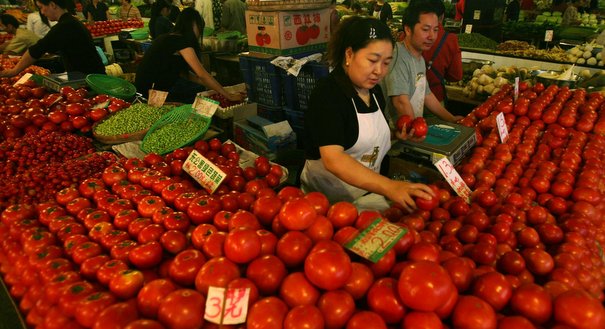
Beijing's attempts to manage rising inflation may depress domestic and global growth and will likely be insufficient to address the deeper structural imbalances in China’s economy.
Source: Financial Times

Official Chinese data show that rising prices of food, commodities, and housing fuelled the inflation spiral. Some Chinese analysts even blamed recent natural disasters for reducing harvests and adding to price increases. But China’s inflation scare is being driven by more fundamental and powerful forces than unco-operative weather.
First and foremost is the loose monetary policy the Chinese government has been pursuing for the last seven years. M2, a measure of the money supply, has risen more than three times in this period. This combination of negative interest rates and massive credit increase is the most direct contributor to China’s frothy property sector and broad inflationary pressures. Excess liquidity aside, rising labour costs (driven largely by demographics) and commodities prices are the other powerful long-term variables driving China’s higher inflation equation.
On the surface investors seem to have overreacted. The October inflation data were bad, but China is a long way from runaway price rises. But what investors rightly fear most is the fallout of the policy measures now being taken by Beijing to combat inflation.
Obviously, Chinese growth will fall as rising interest rates and administrative tightening of credit emissions cool down the economy. But most analysts already expect Chinese growth to decelerate. Even the most bullish China boosters project an annual growth rate that will fall from 10 per cent now to 7-8 per cent in the coming decade.
More worrying are policies designed to prick the real estate bubble. The credit boom in China in the last few years has led to an unsustainable increase in property prices, rapid expansion of industrial capacity, and excess leverage taken on by local governments. If Beijing is serious about fighting inflation, it will need to go far beyond imposing a few price controls.
This, in turn, will mean China raising interest rates further, and cutting down bank lending. And one can only imagine what such measures will do to an inflated property sector and over-extended state-owned enterprises and local governments.
That said, this may not even be the worst of what is to come. Even if policy is changed to damp down price rises, the persistence of the real estate bubble flows from much deeper structural imbalances in China’s economy. Even as Chinese leaders prevaricate and take half-measures to address the underlying causes of inflation, these problems are not being dealt with.
In all this politics will definitely get in the way. As the Communist party prepares to select a new generation of leaders in the next two years, Beijing is likely to become extremely risk-averse, and keen to postpone painful but necessary reforms to rebalance the economy. In the end, of course, they will have to clean up the mess. But delay means the price will then be much higher.
Former Adjunct Senior Associate, Asia Program
Pei is Tom and Margot Pritzker ‘72 Professor of Government and the director of the Keck Center for International and Strategic Studies at Claremont McKenna College.
Recent Work
Minxin Pei
Minxin Pei
Carnegie does not take institutional positions on public policy issues; the views represented herein are those of the author(s) and do not necessarily reflect the views of Carnegie, its staff, or its trustees.

Ultimately, Zelensky sided neither with the reform camp nor with the military establishment as such, but with political control.

Balázs Jarábik
Tokayev’s predecessor, Nursultan Nazarbayev, outlined arrangements for a power transition too soon and in too much detail, ultimately losing control over the process. Tokayev is determined not to meet the same fate.

Temur Umarov

Despite unhappiness on the ground, Moscow is determined to use both carrot and stick to ensure there is record support for United Russia in occupied Ukraine.

Konstantin Skorkin

Whether PAS can refocus on the unfinished business of state-building may ultimately prove more consequential for Moldova’s European future than the pace of its accession negotiations.
Balázs Jarábik
Medvedev’s defeat in the battle for the position of speaker appears to signal that the long process of his marginalization in Russian politics has passed the point of no return.

Andrey Pertsev