

Research
- +10
Rosa Balfour, Frances Z. Brown, Yasmine Farouk, …
{
  "authors": [
    "Moisés Naím"
  ],
  "type": "legacyinthemedia",
  "centerAffiliationAll": "",
  "centers": [
    "Carnegie Endowment for International Peace"
  ],
  "collections": [],
  "englishNewsletterAll": "",
  "nonEnglishNewsletterAll": "",
  "primaryCenter": "Carnegie Endowment for International Peace",
  "programAffiliation": "",
  "programs": [],
  "projects": [],
  "regions": [
    "North America"
  ],
  "topics": [
    "Economy"
  ]
}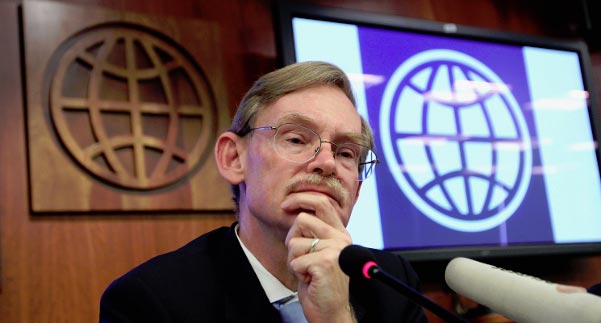
Source: Getty
The apparent demise of protests against the IMF and World Bank is a reflection of broader transformations in the international economy, transformations that have rendered these global financial institutions both less fearsome and less relevant.
Source: Washington Post

The springtime protests were prompted by the semi-annual meetings of the International Monetary Fund (IMF) and the World Bank, regularly held in early April. The marchers — many traveling to Washington from faraway places — came to voice their fury against free markets, world poverty, environmental decay or U.S. foreign policy. They often had specific demands: Stop imposing unpopular economic reforms (fiscal austerity, privatization, trade liberalization, deregulation) on poor countries in exchange for IMF and World Bank funding. Cancel the debts poor countries owe to international banks. Stop free-trade agreements. Protect the environment. Boost aid to Africa. In general, stop pushing policies that, according to the protesters, promoted savage capitalism and heartless globalization.
Now, though a few vigils and rallies will probably pop up surrounding next week’s meetings, they will be nothing like the multitudinous, riotous and tear-gas-filled affairs of years past. Where have all the protesters gone?
The apparent demise of the anti-IMF/World Bank protests is a reflection of broader transformations in the international economy, transformations that have rendered these global financial institutions less fearsome and less relevant.
First off, the economic policies and loan conditions that the two agencies once imposed on poor nations are no longer so controversial. Many developing countries have embraced pro-market reforms on their own, while the IMF and the World Bank have become less dogmatic. At this year’s meeting, for example, the IMF is adopting a far more flexible posture concerning the controls on international capital movements that some countries impose — controls it used to adamantly condemn. Similarly, global negotiations over free-trade agreements, long a sore point for activist groups, have been going nowhere for more than a decade.
In addition, the new realities of the global economy have forced a fundamental change in the roles and agendas of the international financial institutions as well as their critics. Since the late 1980s and for most of the following decade, developing countries would come to the meetings of the IMF/World Bank (one session in the spring and another in the fall) to obtain new loans and negotiate the policy changes they would have to enact to get the money. Top U.S. and European economic policymakers would lecture them about the importance of swallowing the bitter medicine of unpopular reforms and offer foreign aid to soften the blow. Private bankers would sit in posh hotels while a parade of central bank presidents and economic ministers made their pitches, extolling their countries’ attractiveness to foreign investors.
That world is gone. Many poor countries now sit atop coffers full of money, while many rich nations have become international mendicants. The countries that used to give the lectures are now the ones that must get their fiscal houses in order and carry out tough reforms. Consider this: Since 2000, the economies of developing countries have grown by an average of 6.1 percent every year; in contrast, the advanced economies have grown by a meager 1.8 percent on average. As a result, while in 2000 developing nations accounted for one-fifth of the global economy, today their share has grown to more than a third of the world’s total output.
Economists agree that these trends will continue and that fast-growing emerging markets such as China and India have already surpassed or will soon surpass the traditional economic powerhouses. This dizzyingly fast growth has lifted millions out of poverty and is rapidly expanding these nations’ middle classes.
Moreover, emerging markets such as China, India, Brazil and Indonesia weathered the recent financial crash much better than the rich countries. They are not mired in a long and deep recession like Spain; they have not been forced to bail out their banking systems like the United States; they do not plead for international help like Ireland or Portugal; and they have not made draconian cuts in their public expenditures like the United Kingdom. Investment bankers are now lining up in the corridors of central banks and finance ministries in Beijing, Brasilia and New Delhi.
This new world is hard to square with the world that so energized the protesters who used to migrate to Washington in the spring.
Finally, after every global financial crash — such as the Mexican peso crisis of 1994 and the Asian financial crisis of the late 1990s — world leaders would gather at summits and pledge to drastically reform the international financial system to ensure that no more crises would occur. The need for “a new international financial architecture” became a frequent mantra. Typically, however, once the sense of emergency passed and struggling economies began to recover, the costs and complications of overhauling the international financial system became apparent — and the political will to undertake major reforms evaporated.
In recognition of this reality, calls for a new financial architecture following the great recession of 2008 have been replaced with more modest promises to modernize the “plumbing” of the financial system: to tighten banking regulations, revise accounting standards, examine the role of hedge funds and credit rating agencies, and other such measures.
These things are very important — but also very boring. Recruiting idealistic young activists to march against Basel III (as the new global regulatory standards for banks’ capital adequacy, adopted by the Basel Committee on Banking Supervision, are known) is surely far more difficult than finding college kids willing to march in favor of debt relief for poor countries.
That’s one more reason why, this spring, Washington will once again see blossoming cherry trees, international bankers and bureaucrats — but few protesters clashing with riot police.

Distinguished Fellow
Moisés Naím is a distinguished fellow at the Carnegie Endowment for International Peace, a best-selling author, and an internationally syndicated columnist.
Recent Work



Rosa Balfour, Frances Z. Brown, Yasmine Farouk, …
Moisés Naím
Carnegie does not take institutional positions on public policy issues; the views represented herein are those of the author(s) and do not necessarily reflect the views of Carnegie, its staff, or its trustees.
A much-discussed disagreement over internet restrictions in Russia was never an existential threat for Putin: It was about elite groups protecting their interests.

Alexandra Prokopenko

The demands of the Kremlin’s war in Ukraine, demographic problems, and public hostility toward Central Asians mean Russia does not have enough workers.
Salavat Abylkalikov
Minsk’s faith in the future of its larger neighbor’s economy is fading as Belarusian firms in Russia see record losses.

Olga Loiko
The cost of air defense has become an unregistered tax on revenue for businesses. While military rents are consolidated in the federal budget, the costs of defense are being spread across the balance sheets of companies and regional governments.
Alexandra Prokopenko

Powerful lobbyists and inertia led to Russia’s coal-mining sector missing an excellent opportunity to solve its structural problems.
Alexey Gusev