

Paper
Adam Baczko, Gilles Dorronsoro, Arthur Quesnay
{
  "authors": [
    "Gilles Dorronsoro"
  ],
  "type": "legacyinthemedia",
  "centerAffiliationAll": "dc",
  "centers": [
    "Carnegie Endowment for International Peace",
    "Carnegie Russia Eurasia Center",
    "Carnegie China"
  ],
  "collections": [],
  "englishNewsletterAll": "ctw",
  "nonEnglishNewsletterAll": "",
  "primaryCenter": "Carnegie Endowment for International Peace",
  "programAffiliation": "SAP",
  "programs": [
    "South Asia"
  ],
  "projects": [
    "Eurasia in Transition"
  ],
  "regions": [
    "South Asia",
    "Afghanistan",
    "Pakistan"
  ],
  "topics": [
    "Security",
    "Military",
    "Foreign Policy"
  ]
}
Source: Getty
The death of Osama bin Laden offers President Obama an opportunity to emphasize negotiations with the Taliban and facilitate a withdrawal from Afghanistan, even if its impact on global terrorism will be limited.
Source: Bloomberg

Almost 10 years ago, when 3,000 people were killed on Sept. 11, Osama bin Laden set a snare for the U.S. His death on Sunday may not resolve all of the security challenges for the U.S., but it does offer a way out of the trap that is Afghanistan.
Any euphoria should be tempered by understanding that the impact on global terror will be limited and the U.S. is still under threat from transnational jihadist groups.
Here are four early lessons that must be taken into account:
Al-Qaeda hasn’t been significantly weakened.
Bin Laden wasn’t playing an active leadership role in the day-to-day operations of al-Qaeda and the group will probably transition smoothly and avoid any internal political struggles with Ayman al-Zawahiri as the obvious choice to assume command.
It is also important to remember that al-Qaeda is a decentralized outfit and there are new opportunities emerging in Yemen, Iraq and other countries to recruit fresh militants. Sure, al-Qaeda is under constant pressure and the threat is low, but there are many other important players to keep in mind. The Pakistani group Lashkar-e-Taiba, for instance, is more powerful than ever and also has a global agenda.
The impact might only be psychological, but there is no way to know if bin Laden’s demise will translate into more or less anti-American feelings in the Muslim world. Even with the Arab Spring, a change in the paradigm of Muslim public opinion in the Middle East and around the world seems unlikely for now.
Bin Laden’s death is of little importance to the war in Afghanistan.
Al-Qaeda has never been a major military force, especially compared with a local insurgency that has been able to mobilize tens of thousands of fighters. And contrary to what was expected in Washington, the surge of U.S. troops didn’t produce solid results. The Taliban is stronger than last year and more aggressive in pushing its advantage.
The number of attacks is historically high and the pressure is growing on the North Atlantic Treaty Organization coalition. Without conducting any major new offensive, the coalition is dealing with the same level of casualties this year as it was last year. With a diminishing presence in Afghanistan, the U.S. and its allies won’t be able to contain the insurgency or plan a transfer to the Afghan security forces.
Even more important, the transition process, which in principle should see the Afghan national army in charge of security by 2014, is unrealistic. Afghan units have low morale, aren’t autonomous and need air support and technology to cope with improvised explosive devices. The regime of Hamid Karzai is more corrupt and unpopular than ever and U.S. leverage on him is nil when it comes to governance.
The jihadist movements are back, especially in Nuristan and Kunar provinces, where the control of the coalition is nominal. Counterterrorism efforts alone are insufficient to deter these groups from using the Afghan border as a sanctuary.
Pakistan won’t make major changes, though Washington enjoys greater sway.
The real surprise in bin Laden’s death was the location --a two-hour drive from Islamabad, the capital, in Abbottabad, a military city. It’s unlikely that al-Qaeda, given the fact that it has repeatedly targeted the Pakistani military, was protected by Pakistani generals. But questions should be asked about lower-level complicity in Pakistan’s spy service, Inter-Services Intelligence, or ISI.
The successful operation on bin Laden’s mansion does give President Barack Obama greater leverage to push Pakistan to take action on militant groups inside its borders. But the support given by Pakistan to the Afghan Taliban isn’t going to stop. Nor does bin Laden’s death alter plans by the Pakistani generals who envision a strategy of pushing out the U.S. -- while keeping India off-balance -- and turning Afghanistan into Pakistan’s own backyard.
Obama has a chance to push for negotiations with the Taliban.
While bin Laden’s death doesn’t win the U.S. a military advantage on the ground in Afghanistan, it makes a negotiated settlement easier. Obama -- at least for a short time -- will be free of Republican criticism on issues of national security and able to take more risks on the diplomatic front without accusations of being weak.
Since the current strategy isn’t working and the public support for the war is vanishing, Obama now has an opportunity to put more emphasis on negotiations with the Taliban’s leadership. The elimination of bin Laden as a symbolic figure will facilitate the negotiations on both sides, since he has been criticized by nationalist Taliban leaders in the past as a danger for the survival of their movement.
Nothing guarantees that negotiations will work because this will depend largely on the attitude of the Pakistani military, which enjoys control over the Taliban’s leadership. But the alternative is a strategic dead end and it will become obvious next year that the coalition finds it can’t withdraw without a rapid disintegration of the Karzai regime and a military victory for the Taliban.
Bin Laden’s death gives the U.S. the unique opportunity to get out of the Afghan trap. Let’s hope the Obama administration doesn’t miss the chance.
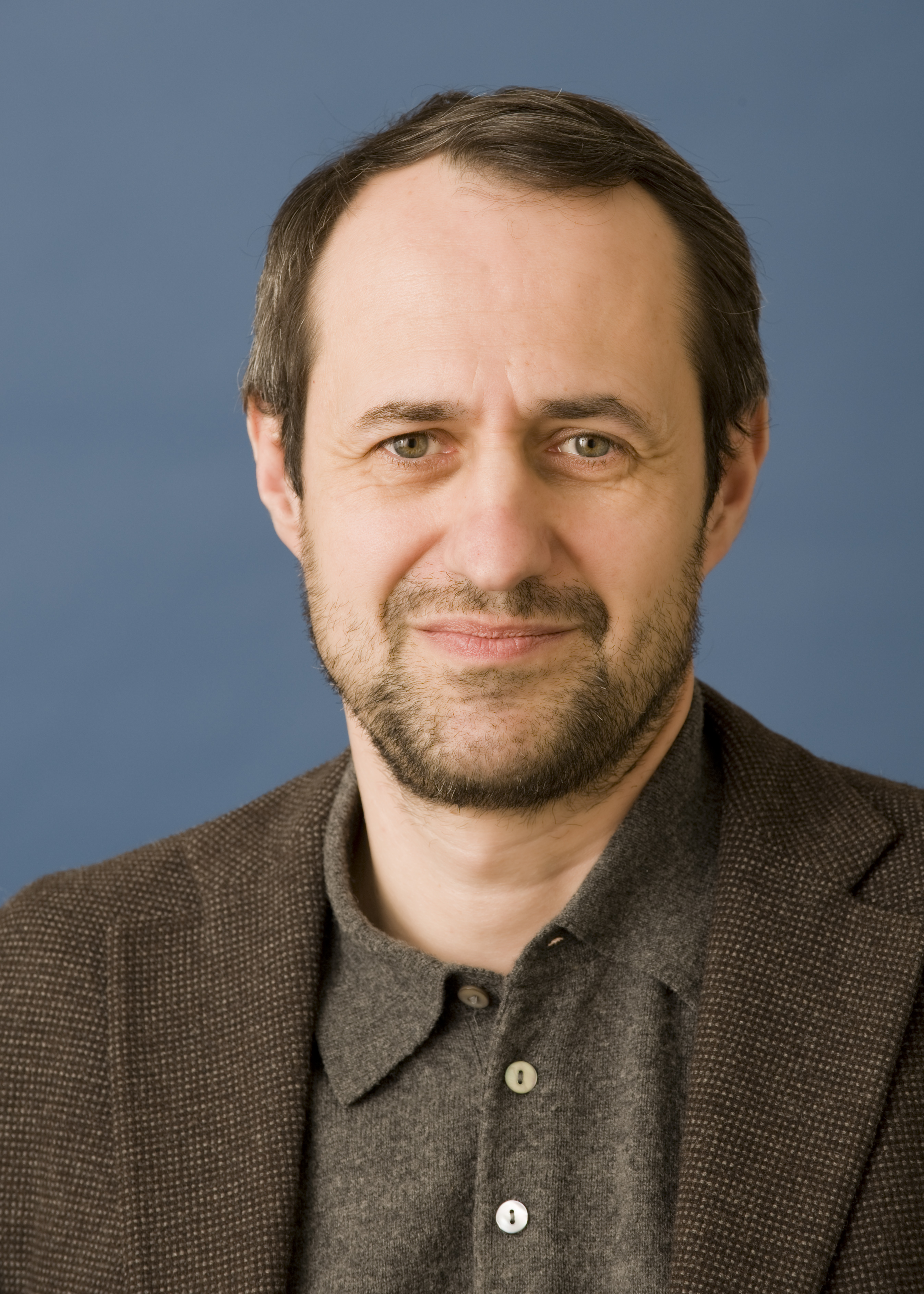
Former Nonresident Scholar, South Asia Program
Dorronsoro’s research focuses on security and political development in Afghanistan. He was a professor of political science at the Sorbonne in Paris and the Institute of Political Studies of Rennes.
Recent Work
Adam Baczko, Gilles Dorronsoro, Arthur Quesnay
Gilles Dorronsoro
Carnegie does not take institutional positions on public policy issues; the views represented herein are those of the author(s) and do not necessarily reflect the views of Carnegie, its staff, or its trustees.

Japan’s long-term security policy is driven by concerns about China, and there is little appetite for (or interest in) pursuing a confrontation with Moscow.

James D.J. Brown

The truth of the strategic situation is that Europe and Russia are extremely unlikely to be able to “turn the page” on their confrontation within the next two decades.

Arkady Moshes

Russia’s AI-driven propaganda campaigns operate in a fragmented, chaotic, and often illogical manner. That’s not necessarily a problem for the Kremlin, though: It’s much easier to mimic genuine public debate that way.

Ilya Klishin

Without a ceasefire with Ukraine on attacking each other’s energy infrastructure—to which the Kremlin is unlikely to agree—the diesel agreement between Putin and Trump is largely for show, rather than representing a genuine increase in the volumes of Russian diesel on the global market.

Sergey Vakulenko

Russian strikes are weakening the economy sustaining Ukraine’s war effort. Closing the growing funding gap will require more European support and politically contentious reforms in Kyiv.

Balázs Jarábik