

Commentary
Muhammad Faour
{
  "authors": [
    "Muhammad Faour"
  ],
  "type": "legacyinthemedia",
  "centerAffiliationAll": "",
  "centers": [
    "Carnegie Endowment for International Peace",
    "Malcolm H. Kerr Carnegie Middle East Center"
  ],
  "collections": [],
  "englishNewsletterAll": "",
  "nonEnglishNewsletterAll": "",
  "primaryCenter": "Malcolm H. Kerr Carnegie Middle East Center",
  "programAffiliation": "",
  "programs": [],
  "projects": [],
  "regions": [
    "Egypt",
    "Gulf",
    "Levant",
    "Maghreb"
  ],
  "topics": [
    "Political Reform",
    "Education"
  ]
}
Source: Getty
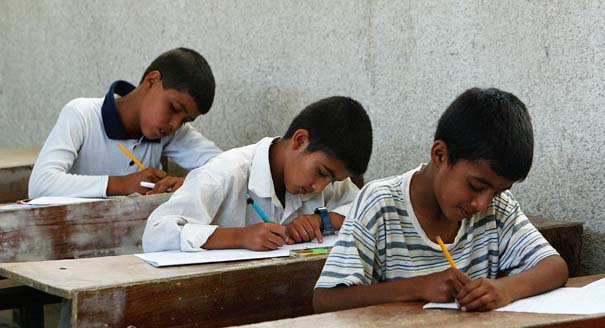
New democracies in the Arab world will have to commit to comprehensive education reform, since educated citizens are necessary for the successful consolidation of political democracy and economic liberalization.
Source: Los Angeles Times

Consolidation of political democracy and economic liberalization requires citizens who have appropriate knowledge, skills and values. As states democratize, good governance will promote quality education, an objective that most Arab education systems have failed to achieve.
Despite the rapid expansion in primary and secondary education, Arab schools continue to have high dropout and repetition rates, with graduates lacking the required skills and knowledge to compete successfully in the global job market or to pursue quality higher education.
Curriculum in most Arab states tends to be didactic, teacher-directed, and does little to foster critical thinking skills and creativity.
Shortages of qualified teachers, low levels of learning achievement as demonstrated by test scores, weaknesses in national learning assessments, and a lack of public accountability also plague many Arab education systems.
Students' academic performance is generally low, as demonstrated by the results of international tests. Students in the fourth and eighth grades who participated in the TIMSS international tests in mathematics and science in 2003 and 2007 scored, on average, significantly below average.
Fourth-graders who participated in the PISA test on reading, mathematics, and science in 2003 and 2009 performed at a similar level. Fifteen-year-old students from the Arab states who took the PIRLS international test on reading achievement in 2006 also scored well below average.
Arab states currently undergoing popular unrest have shown a weak political commitment to produce independent, creative, responsible students, as such citizens may be more likely to challenge authority — be it political, religious, or traditional. Such education systems are generally unwilling to promote social values that flourish in democratic societies. As a result, teachers do not give voice to diverse opinions, dulling attempts at informed debate and limiting citizens’ capacity to reform their governments.
Political reform in the emerging Arab democracies needs citizens who have mastered 21st century skills in their ways of thinking (innovation, critical thinking, problem-solving, decision-making, and life-long learning); ways of working (communication and collaboration); tools for working (information literacy and information and communication technology, or ICT literacy); and ways of living in the world (local and global citizenship, and personal and social responsibility, including cultural awareness). The concepts of citizenship, empowerment, and community engagement are emerging as educational priorities for democracies.
Education for citizenship is an essential component of education reform. It encompasses knowledge and understanding of civics and the opportunities for participation in civil society, as well as ways in which the citizen may interact with and shape his or her own community and society. A responsible citizen may be defined as one who knows his or her legal rights and duties and how to contribute to the common good, and who can apply this knowledge to evaluate or justify the government’s policies and practices. Responsible citizenship, along with other civic values and attitudes, is first taught by parents, then by schools, starting in preschool or in primary grades.
Educating young Arabs for citizenship requires much more fundamental reform than what has so far been undertaken in education reform plans. It requires getting past several serious shortcomings in the Arab education and political systems.
These shortcomings begin at the individual student level, including low learning achievement; lack of creative, independent, and critical thinking; and lack of problem-solving skills. They also include the home or family level, which is often guided by authoritarianism, obedience to authority figures, limited freedom of expression, and dependence on a family network for prospective employment.
The shortcomings extend to the school level, where students are hindered by a lack of school autonomy, ineffective and traditional management, teacher-directed curriculum, a focus on knowledge of facts and concepts rather than analysis and critical thinking, a shortage of qualified teachers and learning resources, the absence of open discussions in classrooms, and limited opportunities for participation in governance processes.
More broadly, education challenges exist in the local community, with the dominance of authoritarian values, limited opportunities for participation in governance processes and decision making, constraints on freedom of speech and belief, and strong loyalty to one’s ethnic and/or religious group. Finally, at the national level, problems include poor governance in the ministries of education, nondemocratic regimes, a prevalence of corruption and lack of public accountability, constraints on freedom of speech and belief, fear of repression, substantial percentages of public workers who depend on the state for their livelihoods, and high rates of illiteracy and school dropouts in several countries.
To overcome those shortcomings, new democracies in the Arab world should be committed to comprehensive education reform, but particularly to citizenship education. Their governments should work with highly motivated educational practitioners from these countries and elicit support from community stakeholders at the school, local, and district levels, and from society at large.
Former Senior Associate , Middle East Center
Faour was a senior associate at the Carnegie Middle East Center, where his research focused on education reform in Arab countries with an emphasis on citizenship education.
Recent Work
Muhammad Faour
Muhammad Faour

The ruling elites in contemporary Russia are not a political class, but a community of managers who are not subject to competition or public accountability. The state is becoming an operating apparatus without any internal autonomy.

Alexandra Prokopenko
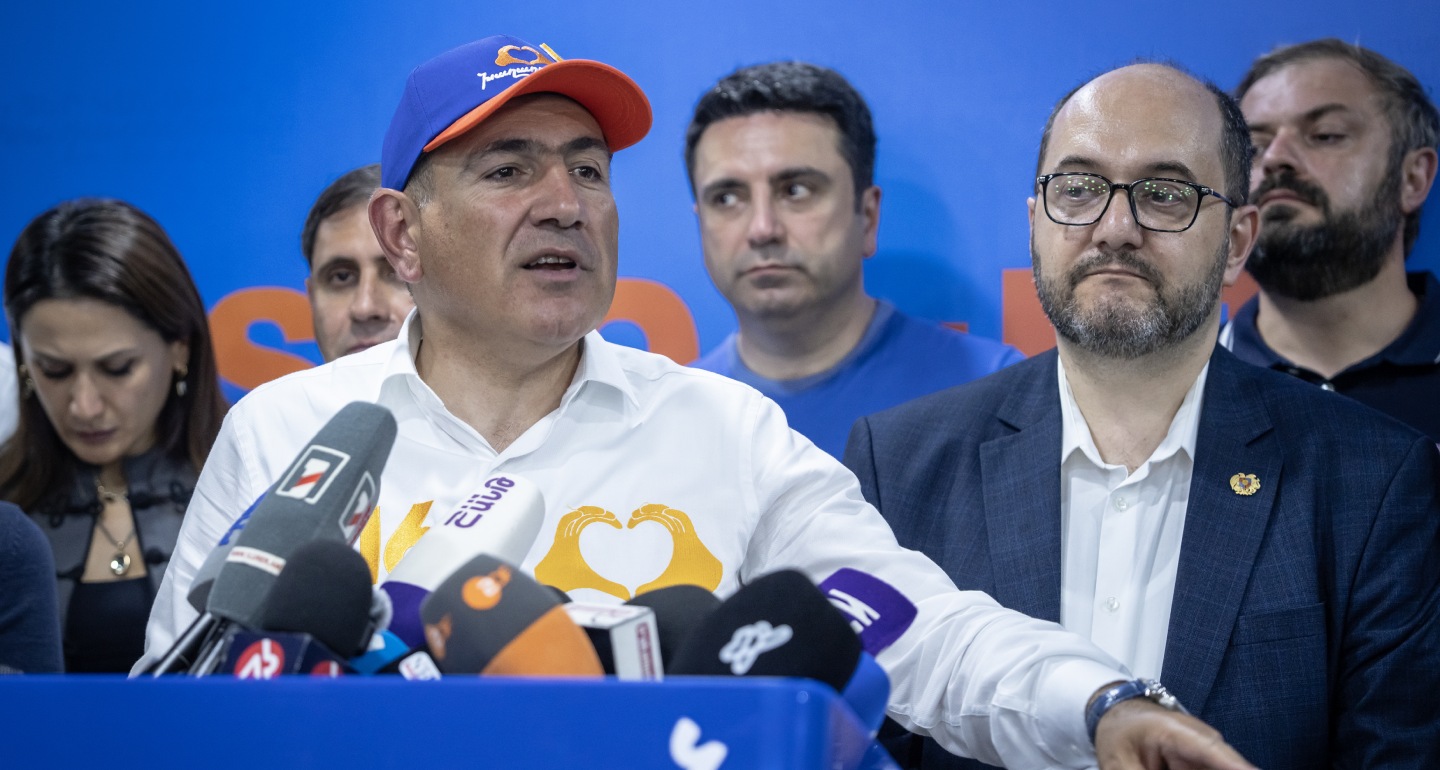
Pashinyan’s pro-European party has been re-elected with a decisive victory. But the pro-Russian opposition could still slow Armenia’s progress toward peace with Azerbaijan and rapprochement with Europe.
Mikayel Zolyan

How did Putin co-opt Russia’s political and economic elites, ensuring no more than fitful resistance to the regime’s war on Ukraine?
Alexandra Prokopenko
For all the menacing rhetoric, the Armenian prime minister remains a leader with whom Putin is prepared to interact: not as an ally, but as a partner, albeit a problematic one.

Alexander Atasuntsev
By fueling the arguments of both supporters and opponents of Armenian Prime Minister Nikol Pashinyan, Azerbaijan wants to ensure he is re-elected with a weaker mandate.

Bashir Kitachaev