• Research
  • Politika
  • About
Carnegie Russia Eurasia center logoCarnegie lettermark logo
  • Donate
{
  "authors": [
    "Karim Sadjadpour"
  ],
  "type": "legacyinthemedia",
  "centerAffiliationAll": "dc",
  "centers": [
    "Carnegie Endowment for International Peace"
  ],
  "collections": [
    "Arab Awakening"
  ],
  "englishNewsletterAll": "menaTransitions",
  "nonEnglishNewsletterAll": "",
  "primaryCenter": "Carnegie Endowment for International Peace",
  "programAffiliation": "MEP",
  "programs": [
    "Middle East"
  ],
  "projects": [],
  "regions": [
    "Middle East",
    "North Africa"
  ],
  "topics": []
}
Source: Getty

In The Media

The Cynical Dairy Farmer's Guide to the New Middle East

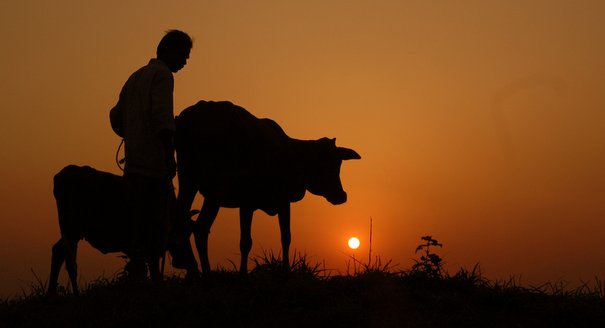
Political satire can sometimes play a role in simplifying the essence of Middle Eastern and North African governments to explain the dynamics of the region to the wider international community.

Link Copied
By Karim Sadjadpour
Published on Jun 15, 2011

Source: Foreign Policy

The Cynical Dairy Farmer's Guide to the New MiddleIn the early years of the Cold War, in an effort to simplify -- and parody -- various political ideologies and philosophies, irreverent wits, in the spirit of George Orwell, went back to the farm. No one really knows how the two-cow joke known as "Parable of the Isms" came about, but most students of Political Science 101 have likely come across some variation of the following definitions: 

Socialism: You have two cows. The government takes one of them and gives it to your neighbor.

Communism: You have two cows. The government takes them both and provides you with milk.

Nazism: You have two cows. The government shoots you and takes the cows.

Capitalism: You have two cows. You sell one and buy a bull.

Over the years, the parables gradually expanded, using the two-cow joke to explain everything from French unions (You have two cows. You go on strike because you want three cows.) to the Republican Party (You have two cows. Your neighbor has none. So what?). While in its original iteration the cows were a metaphor for currency, capital, and property, they later began to take on different meanings.
 
Today, the Middle East has replaced the Cold War as America's primary foreign-policy preoccupation. As opposed to the seemingly ideologically homogenous communist bloc, however, the 22 diverse countries that compose the modern Middle East are still confusing to most Americans. Why can't the Israeli and Palestinians stop fighting already? What's the difference between Libya and Lebanon again?
 
Herewith then is a satirical effort to simplify the essence of Middle Eastern governments so that, in the immortal words of George W. Bush, "the boys in Lubbock" can read it. And, rather than symbolizing property, the cows here symbolize people, which -- funny enough -- is how most Middle Eastern regimes have traditionally viewed their populations.
 
Saudi Arabia
You have two cows with endless reserves of milk. Gorge them with grass, prevent them from interacting with bulls, and import South Asians to milk them.
 
Iran
You have two cows. You interrogate them until they concede they are Zionist agents. You send their milk to southern Lebanon and Gaza, or render it into highly enriched cream. International sanctions prevent your milk from being bought on the open market.
 
Syria
You have five cows, one of whom is an Alawite. Feed the Alawite cow well; beat the non-Alawite cows. Use the milk to finance your wife's shopping sprees in London.
 
Lebanon
You have two cows. Syria claims ownership over them. You take them abroad and start successful cattle farms in Africa, Australia, and Latin America. You send the proceeds back home so your relatives can afford cosmetic surgery and Mercedes-Benzes.
 
Hezbollah
You have no cows. During breaks from milking on the teat of the Iranian cow you call for Israel's annihilation.
 
Iraq
You have three cows: one Sunni, one Shiite, and one Kurd. The first is milked by Saudi Arabia, the second by Iran, and the third smuggles its milk abroad. The United States picks up the manure.
 
Bahrain
You have three cows: two Shiites and one Sunni. Invite Saudi Arabia to come kill a Shiite cow and import another Sunni cow.
 
Yemen
You have two cows. Feed them khat instead of grass and neglect to milk them. Watch them fight each other.
 
Hosni Mubarak's Egypt
You have 10 cows. Neglect to tend to them, but prevent them from fighting Israel in order to get milk from America.
 
Post-Mubarak Egypt
You have 10 cows who think they now own the farm. There's still no milk.
 
Zine el-Abidine Ben Ali's Tunisia
You have two cows. Beat them regularly and use the milk money for your wife's shopping sprees in Paris. When the cows revolt, retire to Saudi Arabia.
 
Post-Ben Ali Tunisia
See post-Mubarak Egypt.
 
Libya
You have two cows. You wish they were camels. Feed them only your words of wisdom and kill them if they dare moo.
 
Turkey
You have two cows and one sheep. You claim that the sheep is really a "mountain cow."
 
Qatar
You have one cow that has hundreds of udders. You use the limitless milk money to set up a television channel that broadcasts the other cows in the region being milked (except Saudi Arabia's).
 
United Arab Emirates
You have two cows. You bring in Filipino nannies, South Asian laborers, and Russian prostitutes to make sure they're well taken care of. Sell the milk to build the world's biggest shopping mall.
 
Jordan
You have one cow, surrounded by wolves. Pretend that it's a magic cow that has the power to pacify wild animals, and then ask America for milk.
 
Palestine
You had two cows that were lost decades ago. Lament them.
 
Israel
You have two bulls. Pretend they are helpless calves. 

About the Author

Karim Sadjadpour

Senior Fellow, Middle East Program

Karim Sadjadpour is a senior fellow at the Carnegie Endowment for International Peace, where he focuses on Iran and U.S. foreign policy toward the Middle East.

    Recent Work

  • Q&A
    What’s Keeping the Iranian Regime in Power—for Now

      Aaron David Miller, Karim Sadjadpour, Robin Wright

  • Q&A
    How Washington and Tehran Are Assessing Their Next Steps

      Aaron David Miller, David Petraeus, Karim Sadjadpour

Karim Sadjadpour
Senior Fellow, Middle East Program
Karim Sadjadpour
Middle EastNorth Africa

Carnegie does not take institutional positions on public policy issues; the views represented herein are those of the author(s) and do not necessarily reflect the views of Carnegie, its staff, or its trustees.
More Work from Carnegie Russia Eurasia Center

  • Commentary
    Carnegie Politika
    Once Neutral on the Ukraine War, Arab States Increasingly Favor Moscow

    Disillusioned with the West over Gaza, Arab countries are not only trading more with Russia; they are also more willing to criticize Kyiv.  

      Ruslan Suleymanov

  • Commentary
    Carnegie Politika
    Baku Proceeds With Caution as Ethnic Azeris Join Protests in Neighboring Iran

    Baku may allow radical nationalists to publicly discuss “reunification” with Azeri Iranians, but the president and key officials prefer not to comment publicly on the protests in Iran.

      Bashir Kitachaev

  • Commentary
    Carnegie Politika
    What Russia Will—and Won’t—Do for Its Embattled Ally Iran

    It’s one thing to export Russian helicopters to Iran to fight the insurgency, and it’s easy to imagine Moscow becoming a haven for fleeing Iranian leaders. But it’s very difficult to imagine Russian troops defending the Iranian regime on the ground.

      Nikita Smagin

  • Commentary
    Carnegie Politika
    Trump’s Gaza Deal Belies the Kremlin’s Theory of a New Global Order

    The U.S. president’s successful imposition of a ceasefire on notorious sworn enemies who have both agreed to make concessions only highlights Putin’s intransigence and his lack of competence and reason.

      Alexander Baunov

  • Commentary
    Carnegie Politika
    What Does the New Reality in the Middle East Mean for Russia?

    Trump’s Egypt summit may have thwarted the Kremlin’s attempts to get Middle Eastern leaders to congregate in Moscow, but Middle Eastern states are less and less convinced that the West can be relied upon, which is inevitably pushing them toward deals with Russia.

      Nikita Smagin

Get more news and analysis from
Carnegie Russia Eurasia Center
Carnegie Russia Eurasia logo, white
  • Research
  • Politika
  • About
  • Experts
  • Events
  • Contact
  • Privacy
Get more news and analysis from
Carnegie Russia Eurasia Center
© 2026 Carnegie Endowment for International Peace. All rights reserved.