

Commentary
Trump has promised Belarus a massive potash deal. But Minsk is seeking something greater: restored Western transit and greater room for maneuver from Russia.
Balázs Jarábik
{
  "authors": [
    "Bill Bradley",
    "Tom Ridge",
    "David Walker"
  ],
  "type": "legacyinthemedia",
  "centerAffiliationAll": "dc",
  "centers": [
    "Carnegie Endowment for International Peace"
  ],
  "collections": [],
  "englishNewsletterAll": "ctw",
  "nonEnglishNewsletterAll": "",
  "primaryCenter": "Carnegie Endowment for International Peace",
  "programAffiliation": "SCP",
  "programs": [
    "Sustainability, Climate, and Geopolitics"
  ],
  "projects": [],
  "regions": [
    "North America",
    "United States"
  ],
  "topics": [
    "Economy",
    "Climate Change"
  ]
}
Source: Getty
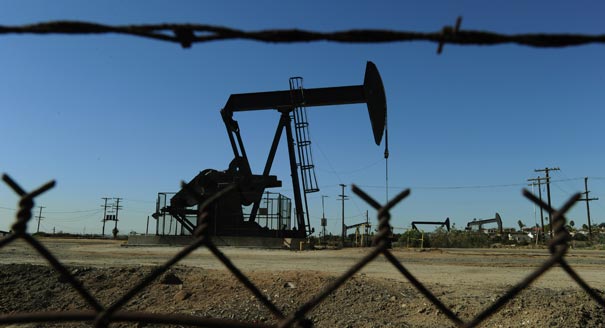
The United States needs an innovative transportation revenue mechanism that will help to stabilize gas prices, restore solvency to a broke and broken program, and help America rebuild its infrastructure and economy.
Source: Bloomberg

At the same time, the 55-year-old Interstate Highway System is crumbling and needs to be rebuilt, at an estimated cost of $2.5 trillion to $3 trillion during the next 20 years.
We have no choice but to find new revenue. The way to do it is with a revamped federal gas tax. The gas tax, last raised to 18 cents a gallon in 1993, now has a buying power of 11 cents. In the same period, our real gross domestic product has grown 55 percent and our driving has increased 31 percent. The president’s fiscal commission -- widely cited as a bipartisan road map for tax reform-- recommended an immediate gas-levy increase of 15 cents.
But simply raising the gas tax won’t address a serious threat to our economic well-being -- wild swings in pump prices due to spikes and crashes in world oil prices. Europe, with gas taxes averaging more than $4 a gallon, faces this same risk. Gas taxes that increase with the price of oil can just make matters worse. Any plan for transportation solvency must include a price-stabilization mechanism so that rising oil costs don’t crush household budgets or the economy.
To accomplish this, we propose establishing a value-added oil-security fee at the refinery or point of importation. This fee would be a fixed percentage based on the price of a barrel of oil. In addition to the levy, there would be a varying retail tax on gas. When oil prices increase, the gas tax is reduced. When they decline, the gas tax would rise, thus offsetting diminished oil-security fees due to lower oil prices.
For example, if a 5 percent oil-security levy were assessed when oil costs $100 a barrel, the fee would be $5 a barrel and yield, at present levels of oil consumption, about $28.3 billion a year. At $115 a barrel the gas tax per gallon could be abated by 5 cents (assuming abatement at 1 cent for every $3 increase in oil price) but the oil fee would rise to $5.75 a barrel, offsetting the lost gas-tax revenue. If the price of oil fell to $90 a barrel, the oil fee would also drop 50 cents a barrel, but the gas tax would rise by 10 cents a gallon, more than offsetting the lost oil-fee revenue. Thus, oil companies pay more when their profits increase, and consumers would bear more cost when oil prices -- and prices at the pump -- fall.
This share-the-burden strategy would raise the revenue needed to restore transportation solvency and the infrastructure investments that would help the economy grow. This plan would also assist consumers by encouraging gas-price stabilization. Conceptually, this shifts responsibility for transportation funding from a straight “user pays” approach (gasoline consumers) to a “beneficiaries pay” system (both producers and consumers). Because both oil companies and consumers benefit from transportation investments, this is fair.
We understand that this plan wouldn’t stop large price swings in energy markets. Oil and gasoline values will continue to fluctuate for many reasons, including some that have nothing to do with underlying oil supply and demand. But this countercyclical pricing plan would help trim price peaks and troughs while sending a signal that public policy would be used to fight price manipulation by the hedging or hoarding that exploit bottlenecks in oil markets.
It would also allow us to rebuild our infrastructure and our economy. We need to invest in new, intelligent and integrated transportation systems; build smart, low-carbon cities; revolutionize freight logistics; and develop systems that efficiently move products through our ports, rail yards and airport gateways. We have an opportunity to address our infrastructure problems. The longer we wait, the more future generations will pay for our neglect.
Bill Bradley
Tom Ridge
David Walker
Carnegie does not take institutional positions on public policy issues; the views represented herein are those of the author(s) and do not necessarily reflect the views of Carnegie, its staff, or its trustees.

Trump has promised Belarus a massive potash deal. But Minsk is seeking something greater: restored Western transit and greater room for maneuver from Russia.

Balázs Jarábik

Minsk clearly expected the dialogue with Washington to yield more results, in particular the lifting of EU sanctions and permission to export potash.

Artyom Shraibman

Depleted financial reserves and a shrinking tax base mean it is no longer possible to simultaneously deliver high defense spending, price stability, and economic growth.

Alexandra Prokopenko

When faced with fuel shortages in the past, Central Asian governments could always count on additional supplies from Moscow. That safety net no longer exists.

Galiya Ibragimova
Official discussions about mini oil refineries are unlikely to come to anything—but the mere fact they’re happening reveals the regime is failing to deliver a functioning economy.

Sergey Vakulenko