• Research
  • Politika
  • About
Carnegie Russia Eurasia center logoCarnegie lettermark logo
  • Donate
{
  "authors": [
    "Christopher Boucek"
  ],
  "type": "legacyinthemedia",
  "centerAffiliationAll": "dc",
  "centers": [
    "Carnegie Endowment for International Peace",
    "Malcolm H. Kerr Carnegie Middle East Center"
  ],
  "collections": [
    "Arab Awakening"
  ],
  "englishNewsletterAll": "menaTransitions",
  "nonEnglishNewsletterAll": "",
  "primaryCenter": "Carnegie Endowment for International Peace",
  "programAffiliation": "MEP",
  "programs": [
    "Middle East"
  ],
  "projects": [],
  "regions": [
    "Middle East",
    "Yemen",
    "Gulf"
  ],
  "topics": [
    "Political Reform",
    "Security"
  ]
}
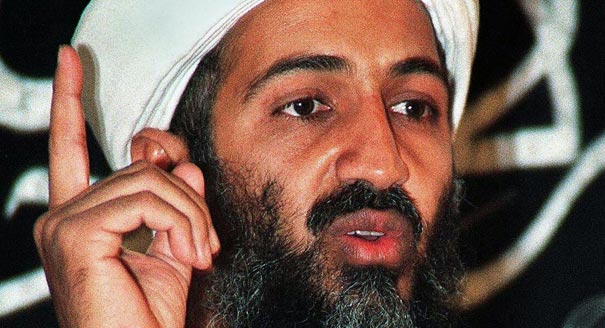
Source: Getty

In The Media

Evolution of al-Qaeda in the Arabian Peninsula

In order to improve security and stability in Yemen, U.S. policy should focus on addressing the systemic sources of instability in the country.

Link Copied
By Christopher Boucek
Published on Nov 1, 2011

Source: Orient IV

Evolution of al-Qaeda in the Arabian PeninsulaSince its creation in January 2009, the Yemen-based al-Qaeda in the Arabian Peninsula (AQAP) has eclipsed ‘core al-Qaeda’ as the primary terrorist threat to US national security. Since last year, numerous senior US security officials have commented that AQAP has emerged as the organization most likely to kill American nationals and to attack U.S. interests. In an address at the Carnegie Endowment in December 2010, Assistant to the President for Homeland Security and Counterterrorism John Brennan termed AQAP “the most operationally active node of the al-Qaida network.” In Congressional testimony in early 2011, then National Counterterrorism Center Director Michael Leiter referred to AQAP as the most significant risk to the US homeland. 

Without a doubt, Yemen presents a complex challenge for policy makers. Numerous governments have grappled with implementing an integrated policy toward Yemen. There is near unanimity on what the international community wants to avoid in Yemen: the collapse of the state and greater operational space for al-Qaeda to plan and launch attacks against western and allied interests. A key obstacle, however, is that no one can very well articulate what a ‘failed’ Yemen looks like, much less the triggers that might lead to state failure. It has therefore been extremely difficult for policy makers to design a policy when they do not know what they want to avoid and do not know how it might happen. Rather than concentrating on state failure in Yemen, a more useful approach may be to focus on the notion of ‘regime failure’. 
 
In large part, US policy toward Yemen has focused almost exclusively on the issues of terrorism, counter-terrorism, and al-Qaeda. To be sure, terrorism and security are major issues with regards to Yemen; however, the United States should not allow these issues to dominate the relationship. Terrorism and al- Qaeda may be the current issues of most concern for Washington (and London, Brussels, and Riyadh), but they are not the greatest threats to Yemeni stability. 
 
In order to improve security and stability in Yemen, US policy should be focused on addressing the systemic sources of instability in the country. These include a collapsing economy, rampant corruption, widespread unemployment, rapid resource depletion, and a series of political and socio-economic challenges that have manifested themselves as security challenges for the current government. A policy centered on counter-terrorism to the near exclusion of other issues will ultimately prove counterproductive. While initial gains may be seen, they could be short lived. Improvement in American and allied security will come when conditions in Yemen for all Yemenis improve.
 

About the Author

Christopher Boucek

Former Associate, Middle East Program

Boucek was an associate in the Carnegie Middle East Program where his research focused on security challenges in the Arabian Peninsula and Northern Africa.

    Recent Work

  • Q&A
    Yemen After Saleh’s Return and Awlaki’s Exit

      Christopher Boucek

  • Q&A
    Rivals—Iran vs. Saudi Arabia

      Christopher Boucek, Karim Sadjadpour

Christopher Boucek
Former Associate, Middle East Program
Christopher Boucek
Political ReformSecurityMiddle EastYemenGulf

Carnegie does not take institutional positions on public policy issues; the views represented herein are those of the author(s) and do not necessarily reflect the views of Carnegie, its staff, or its trustees.

More Work from Carnegie Russia Eurasia Center

  • Commentary
    Carnegie Politika
    The Afghanistan–Pakistan War Poses Awkward Questions for Russia

    Not only does the fighting jeopardize regional security, it undermines Russian attempts to promote alternatives to the Western-dominated world order.

      Ruslan Suleymanov

  • Commentary
    Carnegie Politika
    After Ilia II: What Will a New Patriarch Mean for Georgia?

    The front-runner to succeed Ilia II, Metropolitan Shio, is prone to harsh anti-Western rhetoric and frequent criticism of “liberal ideologies” that he claims threaten the Georgian state. This raises fears that under his leadership the Georgian Orthodox Church will lose its unifying role and become an instrument of ultraconservative ideology.

      Bashir Kitachaev

  • Commentary
    Carnegie Politika
    Tokayev’s New Constitution Is a Bet on Stability—At Freedom’s Expense

    Kazakhstan’s new constitution is an embodiment of the ruling elite’s fears and a self-serving attempt to preserve the status quo while they still can.

      Serik Beysembaev

  • Commentary
    Carnegie Politika
    Why Has Kazakhstan Started Deporting Political Activists?

    The current U.S. indifference to human rights means Astana no longer has any incentive to refuse extradition requests from its authoritarian neighbors—including Russia.

      Temur Umarov

  • Commentary
    Carnegie Politika
    Why Are China and Russia Not Rushing to Help Iran?

    Most of Moscow’s military resources are tied up in Ukraine, while Beijing’s foreign policy prioritizes economic ties and avoids direct conflict.   

      • Alexander Gabuev

      Alexander Gabuev, Temur Umarov

Get more news and analysis from
Carnegie Russia Eurasia Center
Carnegie Russia Eurasia logo, white
  • Research
  • Politika
  • About
  • Experts
  • Events
  • Contact
  • Privacy
  • For Media
Get more news and analysis from
Carnegie Russia Eurasia Center
© 2026 Carnegie Endowment for International Peace. All rights reserved.