• Research
  • Politika
  • About
Carnegie Russia Eurasia center logoCarnegie lettermark logo
  • Donate
{
  "authors": [
    "Matthew Rojansky"
  ],
  "type": "legacyinthemedia",
  "centerAffiliationAll": "dc",
  "centers": [
    "Carnegie Endowment for International Peace"
  ],
  "collections": [],
  "englishNewsletterAll": "ctw",
  "nonEnglishNewsletterAll": "",
  "primaryCenter": "Carnegie Endowment for International Peace",
  "programAffiliation": "russia",
  "programs": [
    "Russia and Eurasia"
  ],
  "projects": [],
  "regions": [
    "Caucasus",
    "Russia"
  ],
  "topics": [
    "Political Reform"
  ]
}
Source: Getty

In The Media

Putin and the Duma Elections

With the March 2012 presidential elections just around the corner, Putin is likely to try to distance himself from an increasingly unpopular United Russia party.

Link Copied
By Matthew Rojansky
Published on Dec 2, 2011

Source: BBC World News

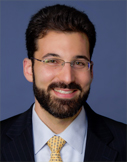
In an interview with BBC World News, Carnegie’s Matthew Rojansky argued that Putin still has a generally positive image despite reports of electoral fraud and the relatively weak victory for the United Russia party in the recent Duma elections. As both the chairman and a non-member of United Russia, Putin will likely “seek to disassociate himself somewhat from the United Russia party” when he believes it might help him in his presidential campaign.Rojansky added that Putin has little time to act before the March 2012 presidential elections, but he could still potentially introduce several “big ticket initiatives” such as tax or pension reforms.

About the Author

Matthew Rojansky

Former Deputy Director, Russia and Eurasia Program

Rojansky, formerly executive director of the Partnership for a Secure America, is an expert on U.S. and Russian national security and nuclear-weapon policies.

    Recent Work

  • Paper
    An Opportunity for Ambition: Ukraine’s OSCE Chairmanship

      Matthew Rojansky

  • In The Media
    Presiding Over the OSCE: Challenges and Opportunities

      Matthew Rojansky

Matthew Rojansky
Former Deputy Director, Russia and Eurasia Program
Matthew Rojansky
Political ReformCaucasusRussia

Carnegie does not take institutional positions on public policy issues; the views represented herein are those of the author(s) and do not necessarily reflect the views of Carnegie, its staff, or its trustees.
More Work from Carnegie Russia Eurasia Center

  • Commentary
    Carnegie Politika
    Russia Is Not Even a Contender in the Global AI Race

    When political power is concentrated in the hands of a small circle of people, a country invariably ends up with technological stagnation.
      Aleksei Kiselev

  • Commentary
    Carnegie Politika
    Russia Is Approaching a Political Crossroads

    Two divergent trends—Putin’s hardline vision of how to prosecute the war in Ukraine, and a growing desire for change in Russia—could tear the regime apart. 

      Tatiana Stanovaya

  • Commentary
    Carnegie Politika
    Control Above Reform: What’s Behind Ukraine’s Government and Security Reshuffle?

    Ultimately, Zelensky sided neither with the reform camp nor with the military establishment as such, but with political control.

      Balázs Jarábik

  • Commentary
    Carnegie Politika
    Where Are President Tokayev’s Political Reforms Leading Kazakhstan?

    Tokayev’s predecessor, Nursultan Nazarbayev, outlined arrangements for a power transition too soon and in too much detail, ultimately losing control over the process. Tokayev is determined not to meet the same fate.

      Temur Umarov

  • Commentary
    Carnegie Politika
    Building Mini-Refineries Will Not Solve Russia’s Gasoline Crisis

    Official discussions about mini oil refineries are unlikely to come to anything—but the mere fact they’re happening reveals the regime is failing to deliver a functioning economy.  

      • Sergey Vakulenko

      Sergey Vakulenko

Get more news and analysis from
Carnegie Russia Eurasia Center
Carnegie Russia Eurasia logo, white
  • Research
  • Politika
  • About
  • Experts
  • Events
  • Contact
  • Privacy
  • For Media
Get more news and analysis from
Carnegie Russia Eurasia Center
© 2026 Carnegie Endowment for International Peace. All rights reserved.