

Commentary
Leonid Bershidsky
{
  "authors": [
    "Leonid Bershidsky"
  ],
  "type": "commentary",
  "blog": "Carnegie Politika",
  "centerAffiliationAll": "",
  "centers": [
    "Carnegie Endowment for International Peace",
    "Carnegie Russia Eurasia Center"
  ],
  "englishNewsletterAll": "",
  "nonEnglishNewsletterAll": "",
  "primaryCenter": "Carnegie Russia Eurasia Center",
  "programAffiliation": "",
  "regions": [
    "Russia"
  ],
  "topics": [
    "Domestic Politics",
    "Civil Society"
  ]
}
Source: Getty
While the Nazis rushed ahead in a revolutionary fervor, Russia’s modern crusaders against enemies of the state work methodically, giving their targets time to adjust to restrictions before closing the loopholes.
For seven weeks of my life, I was rich.
From the proceeds of a play I acquired
A house set in extensive grounds. I had
Gazed at it for more weeks than I lived in it.
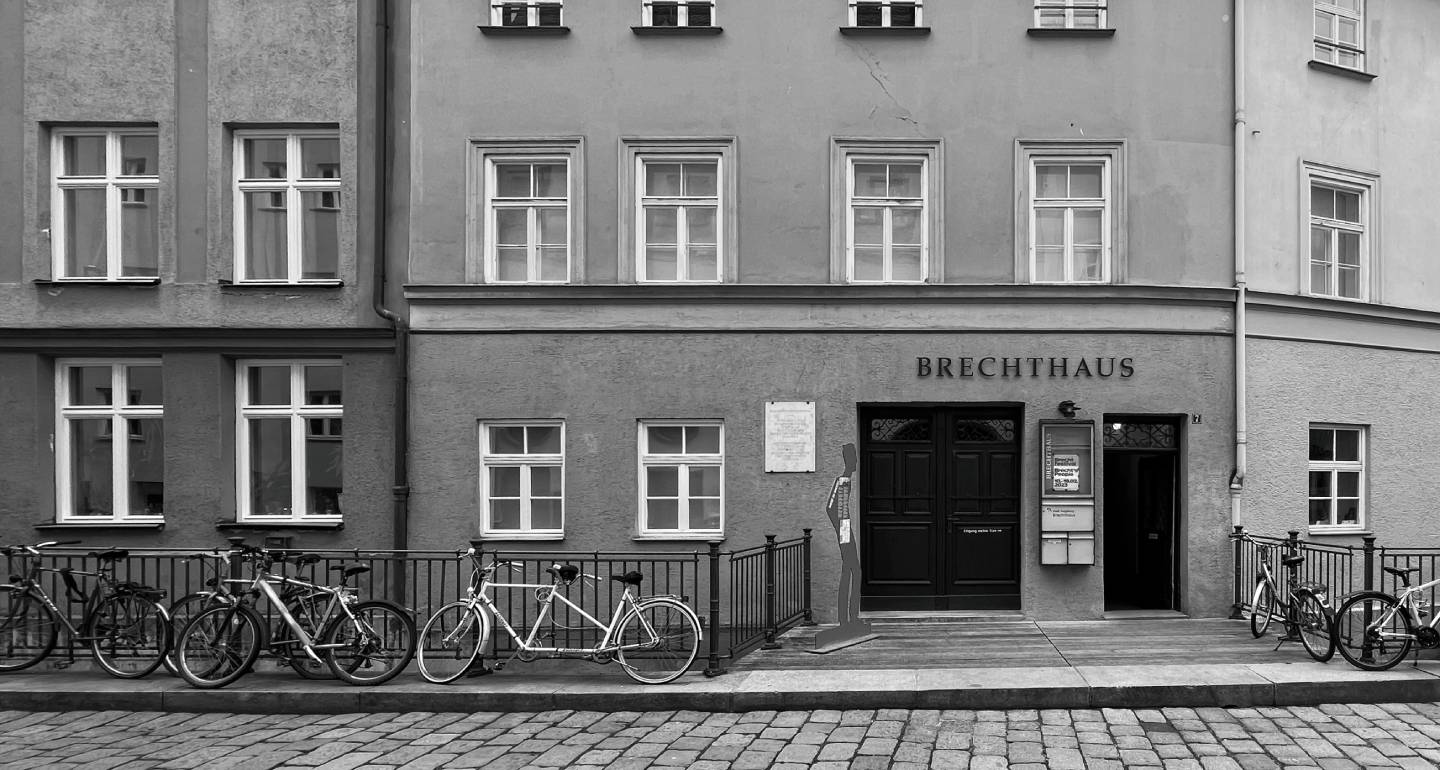
So begins a 1934 poem by the German playwright Bertolt Brecht about purchasing a house in Bavaria two years earlier, shortly before having to flee the country.
Brecht left Germany in 1933 immediately after the Reichstag fire, when it became clear that anti-fascists would fare badly under the chancellorship of Adolf Hitler. The day after the fire, President Paul von Hindenburg signed a decree for the “Protection of People and State” that scrapped parts of the Weimar-era constitution, including those guaranteeing property rights. Soon after that, the Gestapo issued an order confiscating all Brecht’s bank accounts and property. In 1935, he was stripped of his German citizenship.
The seizure of property in 1930s Germany is usually discussed in relation to the persecution of Jews. However, Brecht—like a significant number of other anti-Nazi emigrants deprived of their citizenship—was not Jewish. The interior minister at the time, Wilhelm Frick, said Brecht’s work “insults German soldiers on the front lines, which is the utmost baseness.”
Ninety-one years later, the speaker of Russia’s State Duma, Vyacheslav Volodin, explained the need for a new bill depriving Russian political émigrés of a whole series of rights (including property rights) in eerily similar terms: “We’re talking here about extremists, traitors to our motherland, who have spent years trying to destroy our state, insult our soldiers and officers, and evade punishment by living in other countries.”
Not for a minute am I trying to draw a parallel between Nazi laws and practices and the laws and practices of contemporary Russia. The latter are far more sophisticated.
Russian political emigrants, for example, do not now face the prospect of being stripped of their citizenship. Instead, they can simply be banned from renewing their passports and accessing other consular services. In other words, Russian embassies will stop treating them as Russian citizens. At the same time, host countries will continue to view them as Russian citizens: suspicious immigrants from a heavily sanctioned aggressor state. Good luck convincing anyone that Russia will not let you renounce your citizenship.
Nor is the Russian regime intending to confiscate property and bank accounts in one fell swoop. Instead, it apparently wants to freeze them so they can be seized in slow motion via the imposition of endless fines and penalties.
After the defeat of the Nazi regime, the occupation authorities announced a process of restitution for unlawfully confiscated property. But it dragged on for many years and often failed to produce favorable outcomes. Some families that had lost mansions and major businesses ended up with tiny compensation packages. Should such a process of restitution ever take place in Russia (which seems unlikely), the necessity of recovering assets and funds seized piecemeal on the basis of dozens of judicial and administrative rulings means proceedings would inevitably be long and drawn-out. Just settlements would be rare.
Ultimately, the Brecht family managed to keep their house in Bavaria. They were initially protected because the mortgage was in the name of Brecht’s father. When he died, Brecht’s other relatives spent years embroiled in a legal battle. Eventually, the property ended up in the hands of Brecht’s daughter Hanne.
Could legal maneuvering save the relatives of Russian political emigrants from being targeted by the regime in the future? The answer depends on your assessment of the regime’s adherence to the rule of law. I am pessimistic. If there’s one thing that Russian lawmakers do well, it’s learning from the experience of others. We have been told endlessly by Russian officials, up to and including President Vladimir Putin, that Russia’s law on “foreign agents” has multiple Western precedents, in apparent justification of their actions. Yet the experience of Russian “foreign agents” is far more repressive than anything Westerners could imagine.
The bureaucrats tasked today with countering enemies of the Russian state are creative, and conduct their business with ingenuity and passion. While the Nazis rushed ahead in a revolutionary fervor, Russia’s modern crusaders work methodically, giving their targets time to adjust to restrictions before closing the loopholes.
This difference in approach means it is challenging to draw any real comparisons—indeed, I wouldn’t dream of it—but there is one generalization that is difficult to escape. There are a number of states—not just totalitarian and authoritarian—that see their citizens as perpetually in debt. Some force emigrants to submit tax declarations even though they pay taxes where they live. Some demand political loyalty, and occasionally like to show just how far their reach extends. And some believe that property within that state really belongs to them, and is owned conditionally. In other words, they see citizens’ rights as privileges to be earned.
Such an approach means that the citizens of those states risk experiencing limits on their freedom and other unpleasantness. Those who have nothing to lose find themselves in the most advantageous position. The twenty-four-year-old Willy Brandt, for example, was stripped of his German citizenship in 1938, but he did not have assets that could be confiscated—only firm convictions and the skills of a political activist. In exile, he lived first as a stateless person, then as a Norwegian citizen, before eventually managing not only to return to Germany, but to become the country’s first left-wing chancellor.
Can a state ever erect effective barriers against “enemies” like Brandt and Brecht? Was the only reason the two men managed to go back to Germany the result of meddling by foreign powers? I suspect the answer to both questions is “no.” All that remains now is to find the Brandts and Brechts in today’s Russian émigré community.

Journalist
Recent Work
Leonid Bershidsky
Leonid Bershidsky
Carnegie does not take institutional positions on public policy issues; the views represented herein are those of the author(s) and do not necessarily reflect the views of Carnegie, its staff, or its trustees.

Japan’s long-term security policy is driven by concerns about China, and there is little appetite for (or interest in) pursuing a confrontation with Moscow.

James D.J. Brown

The truth of the strategic situation is that Europe and Russia are extremely unlikely to be able to “turn the page” on their confrontation within the next two decades.

Arkady Moshes

Russia spent years building a “sovereign internet,” concentrating web infrastructure exclusively within Russian territory. Ukrainian drone attacks have shown how vulnerable that approach has left the Russian internet.

Maria Kolomychenko

Putin’s conservative staffing policies and search for ever greater control have cemented parliament’s transformation into a bureaucratic appendage of the executive branch.

Andrey Pertsev

Russia’s AI-driven propaganda campaigns operate in a fragmented, chaotic, and often illogical manner. That’s not necessarily a problem for the Kremlin, though: It’s much easier to mimic genuine public debate that way.

Ilya Klishin