• Research
  • Politika
  • About
Carnegie Russia Eurasia center logoCarnegie lettermark logo
  • Donate
{
  "authors": [
    "Hans Timmer",
    "Uri Dadush"
  ],
  "type": "other",
  "centerAffiliationAll": "",
  "centers": [
    "Carnegie Endowment for International Peace"
  ],
  "collections": [],
  "englishNewsletterAll": "",
  "nonEnglishNewsletterAll": "",
  "primaryCenter": "Carnegie Endowment for International Peace",
  "programAffiliation": "",
  "programs": [],
  "projects": [],
  "regions": [
    "North America",
    "United States",
    "Western Europe"
  ],
  "topics": [
    "Economy"
  ]
}
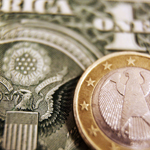
Source: Getty

Other

The Biggest Global Economic Concern

While the global economic crisis runs deeper than the euro, the inadequate institutional set up of the European Monetary Union greatly complicates matters.

Link Copied
By Hans Timmer and Uri Dadush
Published on Dec 20, 2011
What is the biggest global economic concern today?
Hans Timmer
The biggest global economic concern today is the health of financial institutions. The health of the banking sector is incredibly difficult to control given the global nature of the sector and huge size of institutions. And we all know that the consequences for the real economy are enormous.

We don’t have the oversight and institutions to respond to these problems and to a certain extent we’ve made it worse over the last decade. Governments, to some degree, have reinforced the problem and are not strong enough to react, especially in Europe. This is a sign that there is not enough Europe, instead of a sign that there is too much Europe.

Read more

Uri Dadush
There is a lot more going on than the euro, of course, but the big difference now versus ten years ago is that major European countries at risk had more instruments at their disposal. They could devalue their currency and print money. These were important safety valves that countries in the eurozone no longer enjoy—and this greatly exacerbates the worries in the markets.

So while the problem runs deeper than the euro, the inadequate institutional set up of the European Monetary Union greatly complicates matters.
 
Hans Timmer

I don’t buy the argument that there wouldn’t have been a problem if European countries had flexible exchange rates and I also don’t buy the argument that a flexible exchange rate is needed to accommodate the structural differences across European countries. I agree more with the thinking that many of the countries were too small or the economies were too integrated to have independent currencies and monetary policies.

This would have been messy anyhow. The real problem is not that the countries don’t have the tools to react, but what happened in the boom period that led to this crisis. For all kinds of reasons, there was over-borrowing and an underpricing of risk. We are seeing the nasty consequences today.  MORE►

————————
Hans Timmer is the director of the World Bank's development prospects group.

About the Authors

Hans Timmer

Uri Dadush

Former Senior Associate, International Economics Program

Dadush was a senior associate at the Carnegie Endowment for International Peace. He focuses on trends in the global economy and is currently tracking developments in the eurozone crisis.

Authors

Hans Timmer
Uri Dadush
Former Senior Associate, International Economics Program
Uri Dadush
EconomyNorth AmericaUnited StatesWestern Europe

Carnegie does not take institutional positions on public policy issues; the views represented herein are those of the author(s) and do not necessarily reflect the views of Carnegie, its staff, or its trustees.

More Work from Carnegie Russia Eurasia Center

  • Commentary
    Carnegie Politika
    How Far Can Russian Arms Help Iran?

    Arms supplies from Russia to Iran will not only continue, but could grow significantly if Russia gets the opportunity.

      Nikita Smagin

  • Commentary
    Carnegie Politika
    Does Russia Have Enough Soldiers to Keep Waging War Against Ukraine?

    The Russian army is not currently struggling to recruit new contract soldiers, though the number of people willing to go to war for money is dwindling.

      Dmitry Kuznets

  • Commentary
    Carnegie Politika
    Is There Really a Threat From China and Russia in Greenland?

    The supposed threats from China and Russia pose far less of a danger to both Greenland and the Arctic than the prospect of an unscrupulous takeover of the island.

      Andrei Dagaev

  • Commentary
    Carnegie Politika
    Ukrainian Villages Are a Bigger Prize for Putin Than a Deal With Trump

    Western negotiators often believe territory is just a bargaining chip when it comes to peace in Ukraine, but Putin is obsessed with empire-building. 

      Andrey Pertsev

  • Commentary
    Carnegie Politika
    Has Trump the Destroyer Eclipsed Putin the Destroyer?

    Unexpectedly, Trump’s America appears to have replaced Putin’s Russia’s as the world’s biggest disruptor.

      Alexander Baunov

Get more news and analysis from
Carnegie Russia Eurasia Center
Carnegie Russia Eurasia logo, white
  • Research
  • Politika
  • About
  • Experts
  • Events
  • Contact
  • Privacy
Get more news and analysis from
Carnegie Russia Eurasia Center
© 2026 Carnegie Endowment for International Peace. All rights reserved.