

Commentary
Uri Dadush
{
  "authors": [
    "Uri Dadush"
  ],
  "type": "legacyinthemedia",
  "centerAffiliationAll": "",
  "centers": [
    "Carnegie Endowment for International Peace",
    "Carnegie Europe",
    "Carnegie Russia Eurasia Center"
  ],
  "collections": [
    "Transatlantic Cooperation"
  ],
  "englishNewsletterAll": "",
  "nonEnglishNewsletterAll": "",
  "primaryCenter": "Carnegie Endowment for International Peace",
  "programAffiliation": "",
  "programs": [],
  "projects": [
    "Eurasia in Transition"
  ],
  "regions": [
    "East Asia",
    "China",
    "Western Europe",
    "France",
    "Asia",
    "Europe",
    "North America",
    "United States"
  ],
  "topics": [
    "Economy",
    "EU",
    "Foreign Policy"
  ]
}
Source: Getty
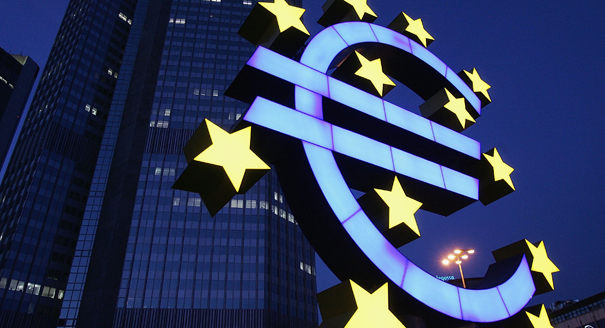
French President Sarkozy’s request for Chinese money in support of the euro rescue symbolized three historic shifts in great power relations: the fragility and endangerment of the European project, the ascendance of China, and the beginning of the end of the American era.
Source: L'Espresso

It is tempting to read this chain of circumstances as an aberration, the result of a giant financial crisis that happened to hit the United States and Europe especially hard but will eventually fade. That complacent interpretation, however, ignores the deep fault lines exposed by the crisis in the United States and its allies, and China’s steady and remarkable progress over the last 30 years.
On the other hand, the power shift symbolized by Sarkozy's call is not cataclysmic. It does not, for example, signal the end of the United States as the world's military superpower. Moreover, shifts in great power relations are not new, nor have they invariably been the harbinger of disastrous conflicts. But Sarkozy’s call does mark a rapid decline in America's and Europe's ability to shape world events. And history has repeatedly shown that, even when they are peaceful, such transitions are resisted, breed miscalculations, and can spawn enormous tensions.
In the case of the historic power shift towards China, there are three specific reasons why Sarkozy's call to Hu Jintao should worry everyone, beginning with the Chinese.
First, there is no precedent for a great power to advance as quickly as China has. China's GDP has grown by a factor of about ten in 30 years, a feat that had taken previous emerging powers a century or two. The pace of the transition is compounded by the suddenness, severity, and protracted nature of the financial and sovereign debt crisis that has hit the United States and its traditional allies. Mind-sets, politics, and institutions react with a long lag to economic shifts. There is no ready mechanism for China to help Europe, for example, without upsetting the power balance at the IMF.
Second, China is the country least ready for the transition. For the first time in history, the world's largest economy (China’s GDP is set to overtake the United States in a few years) will be a poor country, one whose per capita income is today about one-eighth that of the United States. This means that China will remain more focused on its own development than on providing global public goods, so the priority it gives to setting carbon emission targets, achieving currency convertibility, privatizing its banks, and bailing out its neighbors (especially the rich ones) will not be what many would wish.
Third, there is the dissonance of values. With all the large liberal democracies in deep trouble, the United States increasingly withdrawn, and China a spectacularly successful one-party state and command economy, which model should countries follow? And in a world where—from Japan to Brazil to Latvia—liberal democracy has become the norm, how could China lay claim to be a leader?
Internationally, the leadership vacuum and the confusion of values will make the reconciliation of disputes more difficult and may tempt the strongest to take risks they would not otherwise take. Domestically, the tenets of economic policy, so long guided by the Washington consensus, will also be challenged, including in China. Its Communist Party has for many years cautiously and steadily steered the economy towards markets, but, with social tensions and inequality surging in China as they are in many other countries, staying the course of reform may become more difficult.
Sarkozy’s appeal for help from China illustrates that there is more at stake in the vehement economic policy disputes in Brussels and Washington than most people realize. The United States and Europe are wounded giants, and their internal unity and return to health is vital for preserving the current international order—to assure peace as well as prosperity. Even the Chinese, in whose direction the power pendulum is swinging, know this.
This article originally appeared in L'Espresso.

Former Senior Associate, International Economics Program
Dadush was a senior associate at the Carnegie Endowment for International Peace. He focuses on trends in the global economy and is currently tracking developments in the eurozone crisis.
Recent Work
Uri Dadush
Uri Dadush
Carnegie does not take institutional positions on public policy issues; the views represented herein are those of the author(s) and do not necessarily reflect the views of Carnegie, its staff, or its trustees.

Depleted financial reserves and a shrinking tax base mean it is no longer possible to simultaneously deliver high defense spending, price stability, and economic growth.

Alexandra Prokopenko

With the growth in points of friction between the great powers, organizations like the SCO will continue to play a role in the strategic adaptation of the smaller powers caught between them.

Temur Umarov

When faced with fuel shortages in the past, Central Asian governments could always count on additional supplies from Moscow. That safety net no longer exists.

Galiya Ibragimova

Andrey Melnichenko’s essay offers no answer to the fundamental question of how, under any kind of negotiated settlement, Europe can protect itself from the Russian ressentiment that is inevitable in all scenarios except for an outright victory for Putin.

Leonid Bershidsky

Despite unhappiness on the ground, Moscow is determined to use both carrot and stick to ensure there is record support for United Russia in occupied Ukraine.

Konstantin Skorkin