

Research
- +10
Rosa Balfour, Frances Z. Brown, Yasmine Farouk, …
{
  "authors": [
    "Moisés Naím"
  ],
  "type": "legacyinthemedia",
  "centerAffiliationAll": "",
  "centers": [
    "Carnegie Endowment for International Peace"
  ],
  "collections": [],
  "englishNewsletterAll": "",
  "nonEnglishNewsletterAll": "",
  "primaryCenter": "Carnegie Endowment for International Peace",
  "programAffiliation": "",
  "programs": [],
  "projects": [],
  "regions": [
    "North America",
    "United States"
  ],
  "topics": [
    "Economy",
    "Climate Change"
  ]
}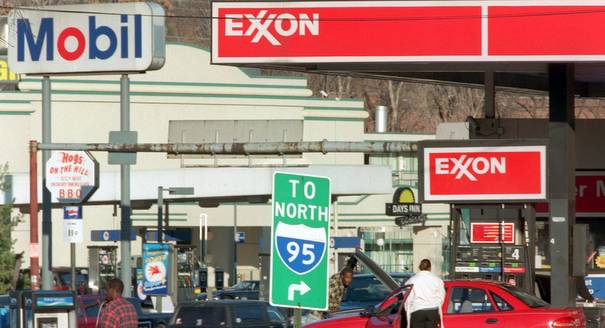
Source: Getty
ExxonMobil has managed to thrive in an industry fraught with risk and to thwart those who might oppose its interests at nearly every turn.
Source: El País

Coll specializes in prying open closed institutions. His two previous books scrutinized the conduct of the CIA in Afghanistan, and the Bin Laden family. “Reporting on Exxon was not only more difficult than reporting on the Bin Ladens, it was harder than reporting on the CIA,” he says. “They have a culture of intimidation […]; they make people nervous and afraid.” Exxon Mobil has met its match in a tenacious, intelligent reporter who isn’t easily scared. Coll traveled the world, met more than 400 people, obtained secret documents and seems to have read everything available in libraries, archives, courts and news media on the company and the institutions with which it interacts. This effort has produced a thriller-like story that reveals a fascinating interplay of power, money and politics at the highest international levels, where the stakes are stratospheric.
The essence of the story is that the business of ExxonMobil – the finding, extraction and sale of oil and gas – is hugely expensive and risky. It requires immense investments that bear fruit only in the long term. “Exxon’s investments in a particular oil field could be premised on a production life span of 40 or more years,” Coll writes. “During that time the United States might change its president and its foreign and energy policies at least half a dozen times. Overseas it is even worse: coups d’état, revolutions and violence cause more frequent and drastic changes. Its enormous expenditures and long recovery period make its investments highly vulnerable to such volatility.”In the heady 1990s the world market was transformed. After the fall of the Soviet Union, many previously closed countries opened their doors to foreign investment. Asia, and China and India in particular, began an upsurge that spurred on the global economy. At the same time, the world became aware of the environmental damage produced by fossil fuels, while terrorism and wars proliferated alongside all sorts of political and financial convulsions.
How can a powerful company elude and control this volatility, and even profit from it? ExxonMobil did so, and with great success, in the hands of a charismatic leader, Lee “Iron Ass” Raymond, the CEO who led the company from 1993 to 2005. The book documents the exceptional capacities this firm developed for minimizing the impact of changing times, and in blocking initiatives by governments, rival firms and organizations that threatened its interests.
The oil giant has, for example, been very effective in limiting the success of the scientists and activists who are fighting to diminish the carbon emissions that cause global warming. It has contended with guerrillas in Indonesia; with Arab sheikhs and with strongmen like Vladimir Putin, Hugo Chávez and Teodoro Obiang. But above all, it knows how to handle the US government, especially its Congress.
“The corporation’s lobbyists bent and shaped American foreign policy,” writes Coll, “as well as economic, climate, chemical and environmental regulations.” As the company internationalized, its links with the US got weaker. “Exxon’s far-flung interests were at times different from Washington’s. Raymond did not manage the corporation as a subordinate instrument of US foreign policy; his was a private empire.” Raymond himself put it more bluntly: “I am not a US company, and I don’t make decisions based on what is good for the US.” “Compromise was not Exxon’s way,” Coll wryly remarks at one point.
In an interview, Coll offers one of his most revealing opinions: “ExxonMobil does follow the law, I think. I’m really persuaded that they always stay inside the lines.” Though he doesn’t say it in so many words, his book shows how easy it can be for a company to stay inside the lines, when it draws them itself.

Distinguished Fellow
Moisés Naím is a distinguished fellow at the Carnegie Endowment for International Peace, a best-selling author, and an internationally syndicated columnist.
Recent Work



Rosa Balfour, Frances Z. Brown, Yasmine Farouk, …
Moisés Naím
Carnegie does not take institutional positions on public policy issues; the views represented herein are those of the author(s) and do not necessarily reflect the views of Carnegie, its staff, or its trustees.

Trump has promised Belarus a massive potash deal. But Minsk is seeking something greater: restored Western transit and greater room for maneuver from Russia.

Balázs Jarábik

Minsk clearly expected the dialogue with Washington to yield more results, in particular the lifting of EU sanctions and permission to export potash.

Artyom Shraibman

Depleted financial reserves and a shrinking tax base mean it is no longer possible to simultaneously deliver high defense spending, price stability, and economic growth.

Alexandra Prokopenko

When faced with fuel shortages in the past, Central Asian governments could always count on additional supplies from Moscow. That safety net no longer exists.

Galiya Ibragimova
Official discussions about mini oil refineries are unlikely to come to anything—but the mere fact they’re happening reveals the regime is failing to deliver a functioning economy.

Sergey Vakulenko