

Commentary
Russian strikes are weakening the economy sustaining Ukraine’s war effort. Closing the growing funding gap will require more European support and politically contentious reforms in Kyiv.
Balázs Jarábik
{
  "authors": [
    "Vladislav Pashchenko"
  ],
  "type": "commentary",
  "blog": "Carnegie Politika",
  "centerAffiliationAll": "",
  "centers": [
    "Carnegie Endowment for International Peace",
    "Carnegie Russia Eurasia Center"
  ],
  "englishNewsletterAll": "",
  "nonEnglishNewsletterAll": "",
  "primaryCenter": "Carnegie Russia Eurasia Center",
  "programAffiliation": "",
  "regions": [
    "Russia",
    "Japan",
    "East Asia"
  ],
  "topics": [
    "Energy",
    "Climate Change",
    "Trade",
    "Foreign Policy"
  ]
}
Source: Getty
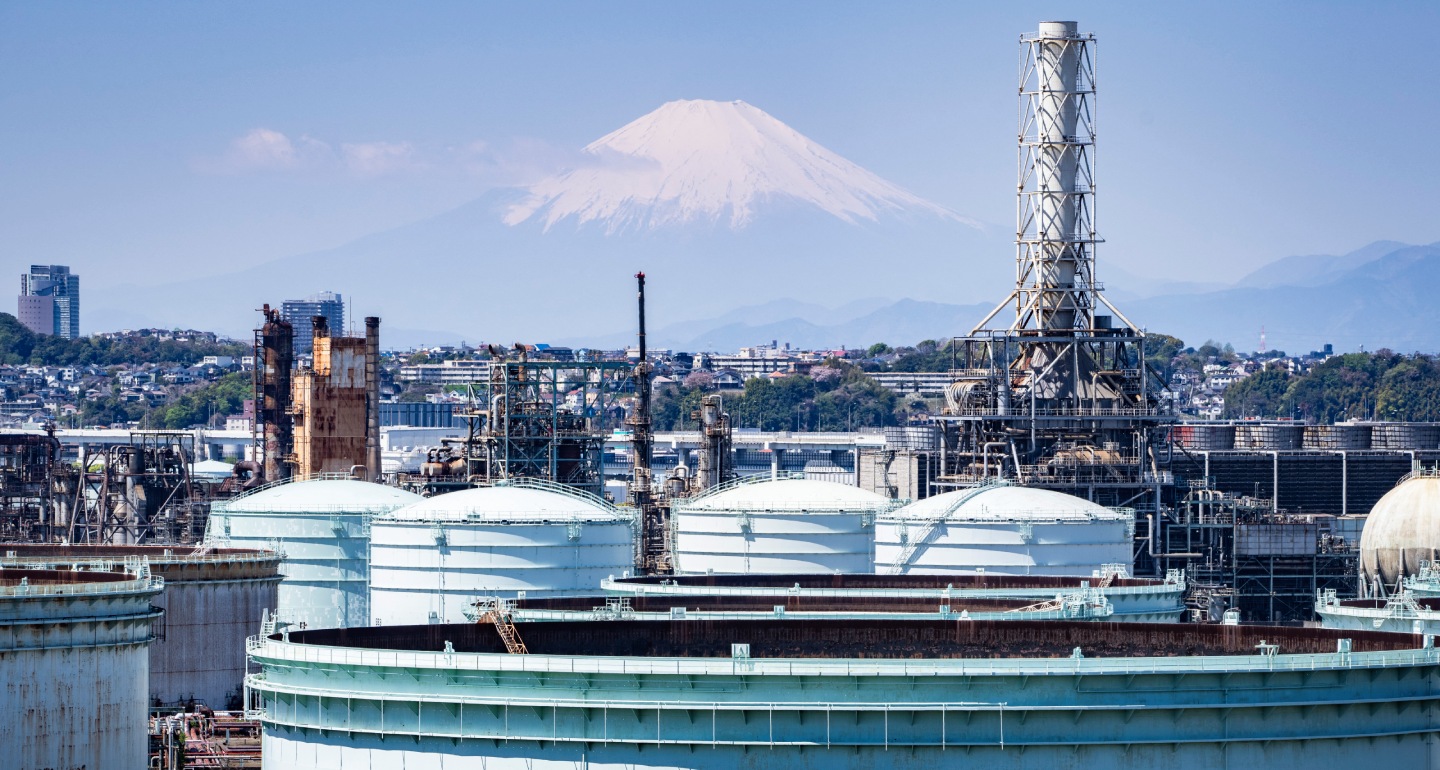
Tokyo would have to surmount a lot of obstacles—not least Western sanctions—if it wanted to return Russian oil imports to even modest pre-2022 volumes.
About once a year, Japan’s foreign policy establishment discusses an apparently imminent turnaround in relations with Moscow. The triggers vary: a vague statement by the prime minister, or an interview given by a second-tier politician. Most recently it was reports of an upcoming visit to Russia by a group of Japanese industrialists (swiftly denied by the Japanese government), followed by the news that Japan is to receive a shipment of Russian oil for the first time in almost a year. Coming amid ongoing disruption to energy supplies from the Middle East, these developments prompt the question of whether Tokyo is ready to bring relations with Moscow out of the deep freeze.
Indeed, whenever global conditions threaten Japan’s economic security, Tokyo is forced to look to its large northern neighbor. One of the first topics at talks with the nascent Soviet government in the late 1920s was oil concessions on the island of Sakhalin. Japan even continued producing oil in the Soviet Union during World War II—right up until 1944, when the military situation made it impossible.
Despite difficult relations with Moscow in the postwar period, Tokyo remained interested in Russia’s raw materials. Japanese companies took part in the construction of an oil refinery in Western Siberia at the end of the 1970s. Still, cooperation remained limited, and the politics of the Cold War meant that many major ventures never got past the stage of talks.
After the collapse of the Soviet Union, Japan stepped up its involvement—for example, through stakes in the Sakhalin 2 oil and gas project, and the oil pipeline from eastern Siberia to the port of Kozmino on the Sea of Japan. However, the Chinese market soon began to eclipse the Japanese market for Moscow. Even under the second premiership of Shinzo Abe (2012–2020), who had close ties to President Vladimir Putin, Russia provided no more than 6 percent of Japan’s oil imports (90–95 percent came from the Middle East).
Accordingly, Japan did not have to think long before joining Western sanctions against Russia after the full-scale invasion of Ukraine in 2022. While Tokyo reduced the amount of Russian oil it purchased to 1 percent of its total oil imports, Japanese companies secured a U.S. sanctions waiver, which allowed them not to quit the Sakhalin 2 project for fear their holdings would pass to the Chinese.
The international attention the new oil shipment has attracted is understandable given the circumstances. The U.S.-Israeli war with Iran has disrupted deliveries from the Gulf, leaving Russia as one of few reliable major oil exporters. U.S. President Donald Trump has eased restrictions on Russian energy products amid the sharp rise in oil prices caused by the war in Iran. South Korea has already taken advantage of that easing, recently purchasing 27,000 tons of naphtha from Russia.
Still, it’s unlikely that Japan could successfully compete with China for Russian oil. First, given the ongoing confrontation with the West, the Kremlin will not abandon its strategic focus on China and India. Second, if Japan were to increase its purchases of Russian oil or embark on new joint projects inside Russia, it would still face a lot of obstacles—not least Western sanctions.
Japan has continued importing small quantities of Russian oil about once a year since the full-scale invasion of Ukraine in 2022 thanks to the exemption from sanctions granted by Washington to the Sakhalin 2 project, with the most recent delivery made in the summer of 2025. But Japanese companies find it hard to get insurance for these exempted shipments. The insurance provided currently (by the Japanese government and the Japan P&I Club) would not be able to cover a full resumption of oil trade without the lifting of sanctions.
Another tricky issue would be paying for Russian oil when the SWIFT international payment service does not work in Russia. The U.S. exemption for Sakhalin 2 could be scrapped at any moment. In addition, Sakhalin 2’s dependence on Japanese technology means any capacity upgrades would require Japan to provide Russia with the equipment, which is also banned under sanctions.
After all but ending its imports of Russian oil in 2023, Japan went to great lengths to prepare for a new crisis, increasing its strategic reserves and seeking to convince businesses of the reliability of its energy supply system. Although stock markets fell after the U.S. and Israeli attacks on Iran, generally the business community seems to have faith in the government.
While Japanese Prime Minister Sanae Takaichi is trying to preserve her reputation as a loyal Trump ally, Tokyo maintains contact with Iran (the foreign ministers of Japan and Iran had a phone call on March 17, and Takaichi spoke to Iranian President Masoud Pezeshkian on April 8). These contacts have been fruitful: Japanese tankers are among those Iran has allowed to transit the Strait of Hormuz.
Takaichi’s government has responded to the Iran war by releasing a record amount of oil from the country’s reserves. If the crisis continues, there might be a push to establish alternative supply routes from the Middle East, or to buy oil from other suppliers in places such as South America or Canada. Increasing oil imports from Russia beyond prewar levels is perhaps the least realistic of all the options open to Tokyo.
On paper, an end to the fighting in Ukraine might make it easier for Japan to buy more Russian oil, but a ceasefire remains a distant prospect. Furthermore, the death of Shinzo Abe and the diminished influence of the pro-Russia lobby in Japanese politics means it’s unclear who exactly would be pushing for a dialogue with Moscow.
It’s possible that there are still people in the Japanese business community who would like to use the current crisis to return to greater energy cooperation with Russia. The April media leak about an upcoming visit to Russia by a group of Japanese industrialists was mostly likely an attempt to test reactions to the possibility of improving ties between the two countries. But the government’s swift and emphatic denial was telling. There are too many obstacles—on both sides—to a resumption of the former energy relationship.

Vladislav Pashchenko
Researcher at Waseda University, Japan
Carnegie does not take institutional positions on public policy issues; the views represented herein are those of the author(s) and do not necessarily reflect the views of Carnegie, its staff, or its trustees.

Russian strikes are weakening the economy sustaining Ukraine’s war effort. Closing the growing funding gap will require more European support and politically contentious reforms in Kyiv.

Balázs Jarábik

Despite a new textbook, an influx of Russian teachers and managers, and an end to the teaching of Ukrainian, the Kremlin is unlikely to have “reprogrammed” locals.

Konstantin Skorkin

For every ruble allocated to social policy, health, and education in 2027, double that amount is earmarked for the army, the police, and the security services.

Alexandra Prokopenko

Cargo traffic through Russia’s Northern Sea Route has increased because of the disruption caused by the conflict in the Middle East, the Ukraine war, and U.S.-China tensions.

Mikhail Korostikov
An analysis of traffic accident data suggests that Ukrainian drone attacks caused a material but not disastrous fall in Russian gasoline consumption over the summer.

Sergey Vakulenko