

In The Media
Lahcen Achy
{
  "authors": [
    "Lahcen Achy"
  ],
  "type": "legacyinthemedia",
  "centerAffiliationAll": "",
  "centers": [
    "Carnegie Endowment for International Peace",
    "Carnegie Europe",
    "Malcolm H. Kerr Carnegie Middle East Center"
  ],
  "collections": [],
  "englishNewsletterAll": "",
  "nonEnglishNewsletterAll": "",
  "primaryCenter": "Malcolm H. Kerr Carnegie Middle East Center",
  "programAffiliation": "",
  "programs": [],
  "projects": [],
  "regions": [
    "Maghreb",
    "Middle East"
  ],
  "topics": [
    "Economy"
  ]
}
Source: Getty
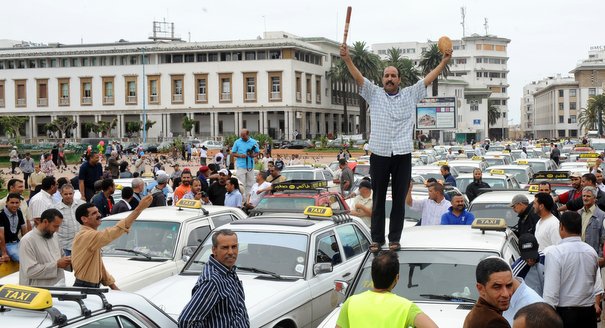
Morocco, a country that imports 95 percent of its oil, implemented a fuel-subsidy system to combat high prices. This system, however, is riddled with problems that may lead to unrest in the country.
Source: Al Monitor

Government spending on fuel subsidies witnessed a dramatic rise in Morocco in recent years due to record-high global oil prices and the stability of domestic prices. The fuel-subsidy budget has increased tenfold over the last decade, exceeding total government expenditures by 20% last year, equivalent to 6% of GDP. Fuel subsidies continue to absorb the bulk of government resources, competing with other key sectors such as health, education and basic infrastructure.
The fuel-subsidy system is a popular one, but it poses three basic problems:
First, the system limits benefits for the poor. Studies available in many countries conclude that fuel subsidies primarily benefit the rich. This is confirmed by a 2008 study conducted by Morocco’s High Commissioner for Planning, which concluded that 20% of wealthy households receive three-quarters of the government-allocated support for diesel and gasoline, which were covered by the recent increase. Meanwhile, 40% of needy families receive only 5%.
Second, economic incentives are weakened by over-consumption. By artificially reducing oil prices in a way that does not reflect the real prices in global markets, the subsidy system encourages over-consumption and requires the state to adopt technologies based on the heavy use of fuel. This exacerbates energy dependency in Morocco, which already imports nearly 95% of its consumer needs.
Third, the fluctuation of the budget renders the government unable to control its deficit. Due to the gap between the price that the government adopted to prepare the budget at the beginning of the fiscal year and the changing prices of oil during the year, the burden of fuel subsidies on the budget is extremely inconsistent. In the midst of a sharp decline in oil prices in 2009, for example, subsidy costs dropped by 60%, then rose by 105%, only to drop again by 80% in 2010 and 2011.
No one disputes Morocco’s need to convert scarce financial resources from fuel subsidies into public investment, especially in sectors with high social returns, such as health, education and reinforcing social-safety networks. Almost everyone agrees on the need to replace fuel-price support by setting a target with the capacity to achieve its objectives at the lowest cost. The government should have managed the reform process with caution and benefited from successful experiences in other countries that abolished fuel subsidies. The government did not make the necessary preparations for public opinion. Its decision came as a surprise, only weeks after the Finance Act of 2012 came into effect. The government should have mobilized popular support for fuel-subsidy reform by highlighting the shortcomings of the current system, its excessive strain on the budget, and the distorted distribution which disadvantages the poor.
Secondly, the government raised the fuel prices in order to rectify the deteriorating condition of the support fund at a time when oil prices were spiraling downward due to slow global growth. It is not clear whether the government intends to reduce the price of fuel again if world prices continue to decline. On the other hand, developing a new mechanism for fuel pricing in which global oil prices would automatically reflect onto domestic prices seems to be more efficient and transparent. This is especially so given that, through such a mechanism, consumers would benefit from any decline in prices, which would make them more willing to accept reform.
Thirdly, the increase came as a separate measure, and not as part of a reform package that took into account the effects that canceling subsidies would have on disadvantaged groups and the economy in general. Successful experiments in countries like Brazil, Chile, Indonesia and Turkey indicate that a partial or complete abolition of fuel subsidies are usually accompanied by funds, both conditional and unconditional, to support the vulnerable and poor segments of society and to mitigate any damage that may affect them. It seems strange that the government did not link the “social cohesion fund” adopted under the 2012 appropriation bill draft and the reallocation of saved resources resulting from spending cuts in order to finance this fund. Notably, the “social cohesion fund” does not have any resources so far.
The role of the government should not be limited to implementing temporary technical measures to ease the burden posed by the fuel-subsidy system on the government budget. The government is required to develop a comprehensive plan for a reform process that would be inclusive, hierarchical, harmonious and one that is based, first and foremost, on communicating with the public. Without these conditions, the increase in fuel prices that has been witnessed in Morocco over the past few days may be mere window dressing.
Former Nonresident Senior Associate, Middle East Center
Achy is an economist with expertise in development, institutional economics, trade, and labor and a focus on the Middle East and North Africa.
Recent Work
Lahcen Achy
Lahcen Achy
Carnegie does not take institutional positions on public policy issues; the views represented herein are those of the author(s) and do not necessarily reflect the views of Carnegie, its staff, or its trustees.

Russian strikes are weakening the economy sustaining Ukraine’s war effort. Closing the growing funding gap will require more European support and politically contentious reforms in Kyiv.

Balázs Jarábik

For every ruble allocated to social policy, health, and education in 2027, double that amount is earmarked for the army, the police, and the security services.

Alexandra Prokopenko

Depleted financial reserves and a shrinking tax base mean it is no longer possible to simultaneously deliver high defense spending, price stability, and economic growth.
Alexandra Prokopenko
This year’s wars have made alternative routes to transit through Russia no less risky for Central Asian countries.

Galiya Ibragimova

A much-discussed disagreement over internet restrictions in Russia was never an existential threat for Putin: It was about elite groups protecting their interests.
Alexandra Prokopenko