

Paper
Matthew Rojansky
{
  "authors": [
    "Matthew Rojansky"
  ],
  "type": "legacyinthemedia",
  "centerAffiliationAll": "dc",
  "centers": [
    "Carnegie Endowment for International Peace",
    "Malcolm H. Kerr Carnegie Middle East Center",
    "Carnegie Russia Eurasia Center"
  ],
  "collections": [
    "Arab Awakening"
  ],
  "englishNewsletterAll": "ctw",
  "nonEnglishNewsletterAll": "",
  "primaryCenter": "Carnegie Endowment for International Peace",
  "programAffiliation": "russia",
  "programs": [
    "Russia and Eurasia"
  ],
  "projects": [
    "Eurasia in Transition"
  ],
  "regions": [
    "North America",
    "United States",
    "Caucasus",
    "Egypt",
    "Gulf",
    "Levant",
    "Maghreb"
  ],
  "topics": [
    "Political Reform",
    "Foreign Policy"
  ]
}
Source: Getty
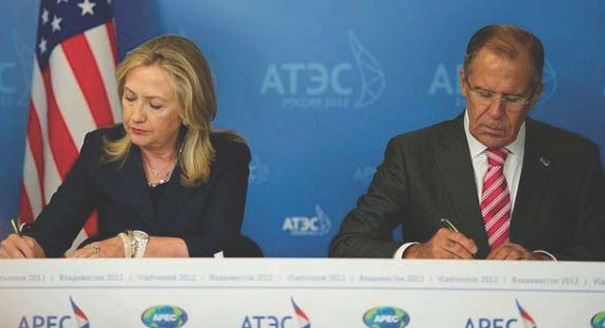
Despite high-profile disagreements on Syria and the broader changes brought in the wake of the Arab Spring, the United States and Russia continue to share similar interests in the region.
Source: World Politics Review

Finger-wagging aside, Russia’s main message during the so-called Arab Spring has not been about the United States. Rather, it has been about the Middle Eastern societies undergoing intense political change. And herein lies perhaps the biggest fundamental difference between Washington and Moscow in the “new” Middle East: whether the changes sweeping the region should be eagerly supported or warily monitored. Moscow’s experience as a patron of various regional strongmen and militant groups during the Cold War and afterward has taught Russian policymakers to approach political transitions with extreme caution, all the more so when they involve nationalist or Islamist ideologies and heavily armed private militias. From its own history, too, Russia has reason to trust the maxim that revolutions devour their children and are not especially kind to meddling foreigners.
To read the rest of the article, follow this link to the website of the World Politics Review:
http://www.worldpoliticsreview.com/articles/12343/for-u-s-russia-interests-trump-rhetoric-in-middle-east

Former Deputy Director, Russia and Eurasia Program
Rojansky, formerly executive director of the Partnership for a Secure America, is an expert on U.S. and Russian national security and nuclear-weapon policies.
Recent Work
Matthew Rojansky
Matthew Rojansky
Carnegie does not take institutional positions on public policy issues; the views represented herein are those of the author(s) and do not necessarily reflect the views of Carnegie, its staff, or its trustees.

Russia’s ruling party would have benefited from Putin appearing as its distant patron, but as an active frontman imposing his views on the public, he has done nothing but harm both the party’s election campaign and the ruling system overall.

Andrey Pertsev

In the tenth year of his presidency, President Mirziyoyev’s system is becoming even more personalized than that of his predecessor Karimov.

Galiya Ibragimova

With the growth in points of friction between the great powers, organizations like the SCO will continue to play a role in the strategic adaptation of the smaller powers caught between them.

Temur Umarov

The greater threat to Zelensky comes not from Fedorov alone, but from the convergence between the former defense minister’s political campaign and the anti-corruption investigations moving ever closer to the presidential administration.

Balázs Jarábik
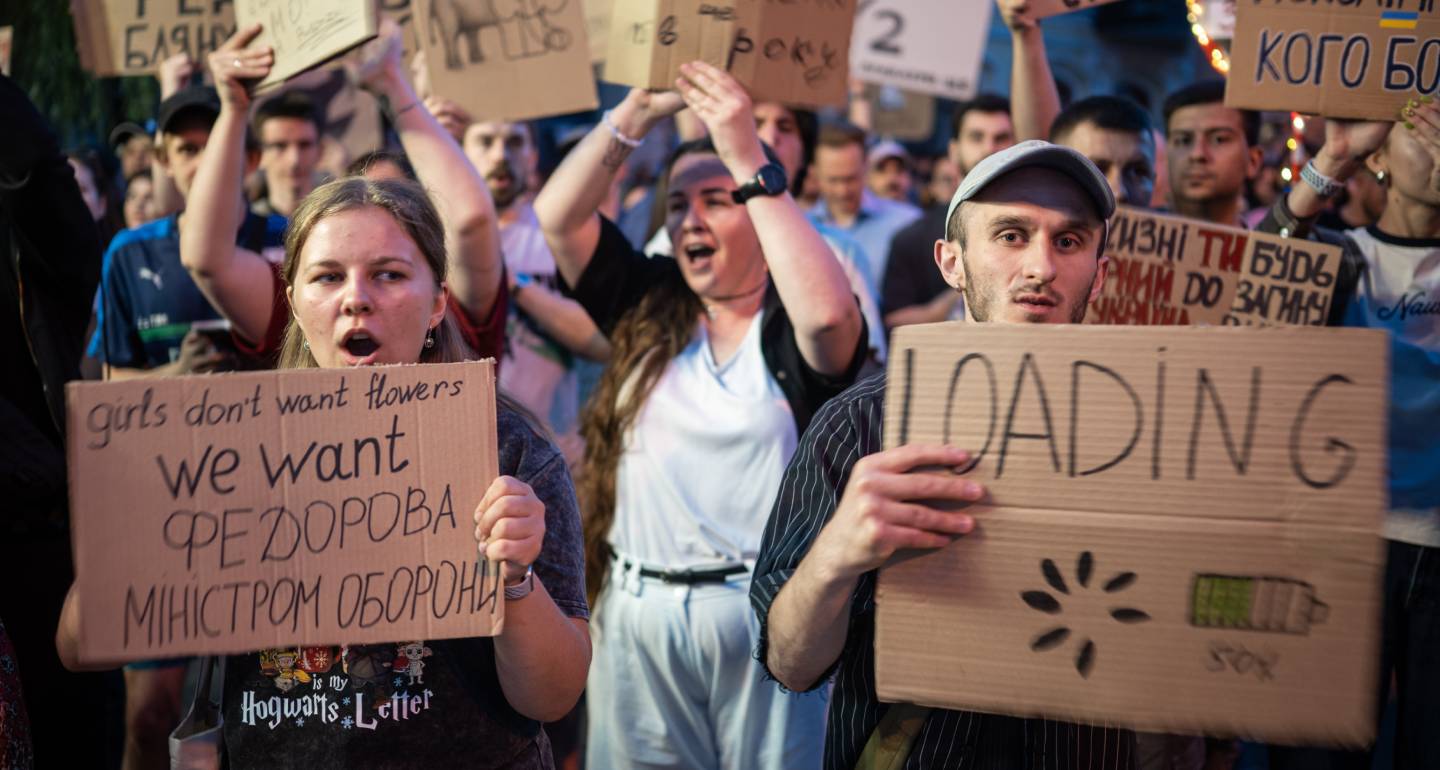
With his public call for new elections in Ukraine, ex-defense minister Mykhailo Fedorov has opened Pandora’s box.

Konstantin Skorkin