

Commentary
Russia’s AI-driven propaganda campaigns operate in a fragmented, chaotic, and often illogical manner. That’s not necessarily a problem for the Kremlin, though: It’s much easier to mimic genuine public debate that way.
Ilya Klishin
{
  "authors": [
    "James M. Acton",
    "Mark Hibbs"
  ],
  "type": "other",
  "centerAffiliationAll": "dc",
  "centers": [
    "Carnegie Endowment for International Peace",
    "Carnegie China"
  ],
  "collections": [],
  "englishNewsletterAll": "ctw",
  "nonEnglishNewsletterAll": "",
  "primaryCenter": "Carnegie Endowment for International Peace",
  "programAffiliation": "NPP",
  "programs": [
    "Nuclear Policy"
  ],
  "projects": [],
  "regions": [
    "East Asia",
    "Japan"
  ],
  "topics": [
    "Nuclear Policy",
    "Nuclear Energy",
    "Security"
  ]
}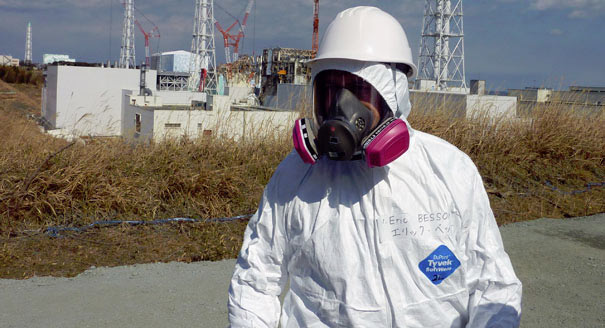
Source: Getty
After the release of Carnegie's study, entitled "Why Fukushima Was Preventable," TEPCO responded to some of the claims made in the report.
Source: October 22

TEPCO: There are some comments on your report regarding the Carnegie paper “Why Fukushima was Preventable” that we would like you to revise. The reader will likely misunderstand the report as it is written; therefore, we would like you to make the following correction. If you have any counter-comments, please let us know. We appreciate your kind consideration.
Acton and Hibbs reply: We are grateful to TEPCO for taking the time to comment on our report. Whether the accident at Fukushima Daiichi was reasonably foreseeable is a profoundly important question, especially for the public acceptance of nuclear power generation in future. We remain convinced that, had international best standards and best practices “been heeded and applied, the risks to the Fukushima Daiichi Nuclear Power Plant would likely have been recognized and effective steps to prevent a major accident could have been taken.” Some details in the presentation of our argument would change in light of information that has only become available since our report was published, including information communicated to us privately by TEPCO, but our overall conclusions would not be significantly altered. Indeed in some cases our conclusions have been strengthened by this new information.
Acton and Hibbs wrote: Had international standards and best practices been followed, the scale of the natural disaster on March 11, 2011, might have been predicted, giving TEPCO the opportunity to enhance plant defenses. We say “might” rather than “would” because while it is often possible after the fact to point to indicators of an impending disaster, we also recognize that, in practice, hazard prediction is challenging. In any case, the accident sequence dramatically demonstrated that the plant was not equipped to cope with the events of March 11. (p.15)
Had the plant’s owner, TEPCO, and the Japanese regulator, NISA, heeded timely warnings and good practices elsewhere about the dangers discussed above, they might have realized that the tsunami threat to Fukushima Daiichi had been underestimated and that they could have defended the plant against the natural forces that fatally crippled three reactors at the site without such advance preparations. (p.30)
TEPCO: When in fact, we are collecting international operating experiences through the WANO network and evaluating them. If necessary, we modified and improved the equipments in TEPCO Nuclear Power Plants (NPPs). In the WANO Peer Review and the IAEA OSART, our evaluation and measures were reviewed and conducted necessary correction.
Acton and Hibbs reply: WANO peer reviews and IAEA OSART missions are, as a general rule, concerned almost exclusively with operational safety practices, not with the role of plant design in protecting against severe accidents. We have seen no evidence that WANO or OSART reviewers prior to the Fukushima Daiichi accident significantly engaged with plant owners over plant design issues related to hazard protection, which is the main subject of our report.
Elsewhere—and in Europe in particular—safety systems that were of great significance during the accident sequence at Fukushima Daiichi are significantly more robust and redundant than at Fukushima Daiichi. Most notably, emergency power generators appear to be better protected. During the past three decades, European nuclear power plant owners, hand in hand with national regulators, have upgraded plant design and the configuration of safety equipment to improve protection against flooding and loss of power significantly. Ultimately, any measures taken by TEPCO before the accident related to the design of the plant and safety system configurations did not protect the plant from a severe accident with considerable off-site consequences.
Acton and Hibbs wrote: Following a flooding incident at Blayais Nuclear Power Plant in France in 1999, European countries significantly enhanced their plants’ defenses against extreme external events. Japanese operators were aware of this experience, and TEPCO could and should have upgraded Fukushima Daiichi (p.1)
By contrast, Japan has been much slower to appreciate the potential danger of some other external events, especially tsunamis (p. 26)
TEPCO: When in fact, we received this information from the WANO and reviewed in a timely manner. In the design of flood protection barrier at the Blayais site, they took account of the maximum tidal level, but not the additional effect of wave height. We confirmed that TEPCO NPPs were designed in accordance with the regulatory requirements which NPP design had to reflect the appropriate consideration of the most severe of the natural phenomena including wave height that have been historically reported for the site and surrounding area. Therefore, we made decision not to improve any facility. Thereafter, we reevaluated the tsunami height according to 2002 JSCE tsunami Assessment method, 2002. Therefore, we revised tsunami height and implemented the countermeasures such as raising the electric pump motors and flooding prevention measures of the building penetrations.
Acton and Hibbs reply: One of the central lessons of Blayais is the need to be conservative in plant design. This is especially true where flooding is concerned because of “cliff-edge” effects where a small increase in flood height can have large adverse safety impacts. After Blayais, several European regulators insisted that safety margins at nuclear power plants be widened, and ordered that the plants withstand conditions exceeding then-current design requirements. Merely ensuring that plants are capable of withstanding a design-basis flooding event—as TEPCO did—misses this key lesson of Blayais.
Acton and Hibbs wrote: Second, there appear to have been deficiencies in tsunami modeling procedures, resulting in an insufficient margin of safety at Fukushima Daiichi. A nuclear power plant built on a slope by the sea must be designed so that it is not damaged as a tsunami runs up the slope. In 2002, the Japan Society of Civil Engineers developed a detailed methodology for determining the maximum run-up of a tsunami. This methodology prompted TEPCO, voluntarily, to revise the design-basis tsunami at Fukushima Daiichi from 3.1 meters to 5.7 meters. However, in at least one important respect, TEPCO does not appear to have implemented the relevant procedures in full. (p.12)
TEPCO: When in fact, we evaluate run-up with the latest JSCE tsunami Assessment method. In the past assessment result, we didn’t have to consider countermeasures because it was estimated that tsunami didn’t run up to the ground level of Unit 1 to 4 main building.
Please refer to JSCE “Tsunami Assessment Method for Nuclear Power Plants in Japan” http://committees.jsce.or.jp/ceofnp/system/files/JSCE_Tsunami_060519.pdf
And please refer to page 6 to 12 of “Supplementary Volume of TEPCO interim report” for your understanding the detail story of TEPCO tsunami assessment. TEPCO Accident Interim Report, Supplementary Volume, http://www.tepco.co.jp/en/press/corp-com/release/betu11_e/images/111202e16.pdf
Acton and Hibbs reply: In our report, we cite from the JSCE methodology and we note that it requires “computer modeling based on site specific data.” We go on to note, however, that according to the IAEA “[i]t seems also that [TEPCO's] calculation of the run-up have not considered the specific and detailed arrangements of plant layout.” TEPCO have subsequently informed us that, contrary to what the IAEA mission was told, they did conduct such modeling. We believe that further engagement between TEPCO and the IAEA would be useful to clarify this point further.
Acton and Hibbs wrote: The methods used by TEPCO and NISA to assess the risk from tsunamis lagged behind international standards in at least three important respects: (p.1)
TEPCO: When in fact, JSCE tsunami assessment method was quoted by Annex II in the latest IAEA standard “Meteorological and Hydrological Hazards in Site Evaluation for Nuclear Installations”. This means TEPCO evaluated expected tsunami with the state-of-the-art tsunami assessment method, which IAEA accepted. You can find IAEA standard “Metrological and Hydrological Hazards in Site Evaluation for Nuclear Installations” on the following website. http://www-pub.iaea.org/books/iaeabooks/8635/Meteorological-and-Hydrological-Hazards-in-Site-Evaluation-for-Nuclear-Installations
As a result from this, we reported the simulation results to NISA in August, 2009. Please refer to page 10 of “Supplementary Volume of TEPCO Interim Report” for your understanding the detail story of TEPCO tsunami assessment. TEPCO Accident Interim Report, Supplementary Volume, http://www.tepco.co.jp/en/press/corp-com/release/betu11_e/images/111202e16.pdf
Acton and Hibbs reply: The fact that the JSCE methodology appears in an Annex to an IAEA report (which, incidentally, we cite in our study) does not imply it is endorsed by the IAEA. More importantly, as we note, the JSCE methodology does not consider a number of the factors, such as hydrodynamic forces and the effect of debris, which are highlighted both by the IAEA safety guide that was operative at the time of the accident (NS-G-3.5) and by its replacement (SSG-18). Page 10 of TEPCO's interim report (which discusses only tsunami height and run-up) merely confirms this. The importance of considering hydrodynamic forces is illustrated by the Fukushima accident. For instance, because the doors to the intake buildings opened inward rather than outward they were swept open by the oncoming tsunami. As we state explicitly in our report, however, we do not blame TEPCO for the absence of appropriate tools for tsunami assessment; NISA must take responsibility for failing to foster the development of a methodology compliant with IAEA standards.
Acton and Hibbs wrote: First, there appears to have been insufficient attention given by TEPCO and NISA to historical evidence of large earthquakes and tsunamis. (p.11)
These simulations assumed a repeat of the 869 AD earthquake. Because this event was larger than the earthquake on which previous simulations were based, the resulting tsunami was predicted to be higher. Given the new simulations were based on an actual historical earthquake, they should have been followed up on immediately. Had the results been verified, TEPCO may have been able to take corrective action in time to avert the disaster of March 11, 2011. (p.13)
TEPCO: As you see in section 3 of our investigation report “Fukushima Nuclear Accident Analysis Report (TEPCO Interim Report) and its “Supplementary Volume” (P5 -13), it was impossible for us to know this return period before March 11, 2011 and had not identified any other short period of the significant earthquake in the past. A risk-informed analysis had also been prepared; however, it was impossible to conduct the analysis due to such uncertain conditions. After reviewing this accident, TEPCO should, at a minimum prepare some measures for the far beyond design basis. TEPCO Accident Interim Report, http://www.tepco.co.jp/en/press/corp-com/release/betu11_e/images/111202e14.pdf TEPCO Accident Interim Report, Supplementary Volume, http://www.tepco.co.jp/en/press/corp-com/release/betu11_e/images/111202e16.pdf
Acton and Hibbs reply: As we acknowledge in our report, hazard assessment is difficult. We do not claim that TEPCO knew for certain that the tsunami risks to Fukushima Daiichi had been underestimated. However, because of the need to take a conservative approach to nuclear safety, the relevant questions in assessing whether TEPCO had taken adequate steps to prepare for tsunamis are:
The earthquake was much larger than almost any seismologist had thought possible and it was spread over a much larger area than any model had previously predicted. It was not simply a repeat of the Jogan earthquake but a qualitatively and quantitatively different event. Nonetheless, had the warnings that had arisen over the course of a decade been heeded, actions to defend the plant could have been taken in advance of March 11. Ultimately, TEPCO took an insufficiently conservative approach to safety, effectively demanding proof of the danger before making changes. Their efforts to obtain this proof were far too slow, including a six-year hiatus between 2002 and 2008.
To be fair, as we make very clear in our report, TEPCO is not solely responsible. NISA must share a large part of the blame for insufficient oversight. And, we would not be surprised if serious shortcomings in other utilities’ approaches to hazard prediction were exposed, were they to be subjected to the scrutiny that TEPCO now is. None of this, however, alters our argument that the tsunami risk to Fukushima Daiichi could have been anticipated.
Ultimately, our question—was the accident at Fukushima Daiichi avoidable?—goes to the heart of the matter of whether the public will accept the risks associated with nuclear power generation. We argue that, had NISA and TEPCO taken prudent prophylactic actions to cope with the kind of threats which dramatically surfaced at Fukushima Daiichi last year, a severe accident with off-site consequences could have been prevented. If, industry and regulators now rest their defense on assertions that all regulatory requirements had been met before the accident, and that the accident sequence which transpired on March 11 2011 “had not been anticipated,” the public will surely and logically demand to know whether there are other, unknown or undisclosed vulnerabilities with nuclear power plants. Beyond that, the public will also ask whether those individuals and organizations responsible for assuring the safety of nuclear power can be trusted. Accordingly, we believe that it actually is in the long-term interests of nuclear industry to acknowledge where it has made mistakes.
Acton and Hibbs wrote: Another illustration of this excessive confidence is that, unlike nearly all other power reactor owners worldwide, Japanese utilities face unlimited liability in the event of an accident. This provision was apparently implemented at the request of plant owners, who wanted to demonstrate their confidence in the safety of their power plants to local populations. (p.28)
TEPCO: When in fact, Japanese utilities have to accept unlimited liability in order to protect the victims, and Japanese government can provide necessary support if government admits their demand in Japanese law.
Acton and Hibbs reply: TEPCO's answer is true but does not, in any way, contradict our argument that the utilities’ request to face unlimited liability in the event of an accident was an example of their over-confidence in nuclear safety.

Jessica T. Mathews Chair, Co-director, Nuclear Policy Program
Acton holds the Jessica T. Mathews Chair and is co-director of the Nuclear Policy Program at the Carnegie Endowment for International Peace.

Nonresident Senior Fellow, Nuclear Policy Program
Hibbs is a Germany-based nonresident senior fellow in Carnegie’s Nuclear Policy Program. His areas of expertise are nuclear verification and safeguards, multilateral nuclear trade policy, international nuclear cooperation, and nonproliferation arrangements.
Carnegie does not take institutional positions on public policy issues; the views represented herein are those of the author(s) and do not necessarily reflect the views of Carnegie, its staff, or its trustees.

Russia’s AI-driven propaganda campaigns operate in a fragmented, chaotic, and often illogical manner. That’s not necessarily a problem for the Kremlin, though: It’s much easier to mimic genuine public debate that way.

Ilya Klishin

Russian strikes are weakening the economy sustaining Ukraine’s war effort. Closing the growing funding gap will require more European support and politically contentious reforms in Kyiv.

Balázs Jarábik

The European far right might fail to steer EU policy in the direction Russia wants, but they will create enough chaos inside Europe to benefit the Kremlin.

Dimitar Bechev

With the growth in points of friction between the great powers, organizations like the SCO will continue to play a role in the strategic adaptation of the smaller powers caught between them.

Temur Umarov

Two divergent trends—Putin’s hardline vision of how to prosecute the war in Ukraine, and a growing desire for change in Russia—could tear the regime apart.

Tatiana Stanovaya