

Commentary
Judy Dempsey
{
  "authors": [
    "Judy Dempsey"
  ],
  "type": "legacyinthemedia",
  "centerAffiliationAll": "",
  "centers": [
    "Carnegie Endowment for International Peace",
    "Carnegie Europe"
  ],
  "collections": [],
  "englishNewsletterAll": "",
  "nonEnglishNewsletterAll": "",
  "primaryCenter": "Carnegie Europe",
  "programAffiliation": "",
  "programs": [],
  "projects": [],
  "regions": [
    "Europe"
  ],
  "topics": [
    "EU"
  ]
}
Source: Getty
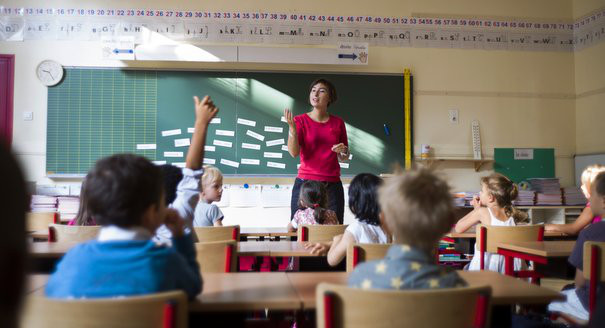
The Organization for Economic Cooperation and Development is calling for a restructuring of education that would put the emphasis on quality, not quantity, but instead European governments are chiseling away at their education budgets.
Source: New York Times

Students and teachers in Italy, Spain and Great Britain have been protesting against sharp cuts in funding.
In the case of Britain, the introduction of hefty tuition fees at universities means that would-be students will be forced either to take out loans in the hope that they get a well-paid job upon graduating or put off going to college until they can afford it.
A report from the Organization for Economic Cooperation and Development argues that now is the ideal time for governments to radically restructure the entire education sector.
But the O.E.C.D. calls for a restructuring that would invest with the emphasis on quality, not quantity. Secondary school teachers, for example, should be very well paid to attract the best, and universities should be run much more efficiently, the O.E.C.D. argues, noting the contrast with the approach in much of Asia.
Secondary school teachers in Asia are relatively well paid and enjoy a higher social standing than those in Europe, according to the O.E.C.D. Indeed, it is rare to find any Asian government cutting back on education, financial crisis or no financial crisis. Education is considered sacrosanct and the key to the region’s competitiveness.
Governments in Europe, in contrast, are chiseling away at education budgets instead of using the financial crisis to reallocate funds to education as part of an overhaul of the system.
Take the cases of Spain and Greece.
During the boom years, Spain’s regional governments went on a spending spree, building new universities and expanding campuses. This led to more young people achieving higher education. But the dropout rate and the quality of courses left much to be desired, according to the O.E.C.D. Better to focus on quality, not quantity, the O.E.C.D. recommends.
In the case of Greece, there were too many university courses that were poorly attended, and the recruitment of secondary school teachers was not rigorous enough to ensure good teaching, according to the O.E.C.D.
The case for reform in Greece is obvious. The country cannot afford to cut education resources radically, and there is one place where more money for better schools and universities could come from: the defense budget.
Greek defense spending still accounts for 2.1 percent of gross domestic product, according to NATO. After the United States, Greece is the second biggest defense spender among the 27 NATO countries in relation to its gross domestic product. That is astonishing for a country in a deep economic crisis and in need of investment in the crucial area of education.

Nonresident Senior Fellow, Carnegie Europe
Judy Dempsey is a nonresident senior fellow at Carnegie Europe
Recent Work
Judy Dempsey
Judy Dempsey
Andrey Melnichenko’s essay offers no answer to the fundamental question of how, under any kind of negotiated settlement, Europe can protect itself from the Russian ressentiment that is inevitable in all scenarios except for an outright victory for Putin.

Leonid Bershidsky
Whether PAS can refocus on the unfinished business of state-building may ultimately prove more consequential for Moldova’s European future than the pace of its accession negotiations.

Balázs Jarábik
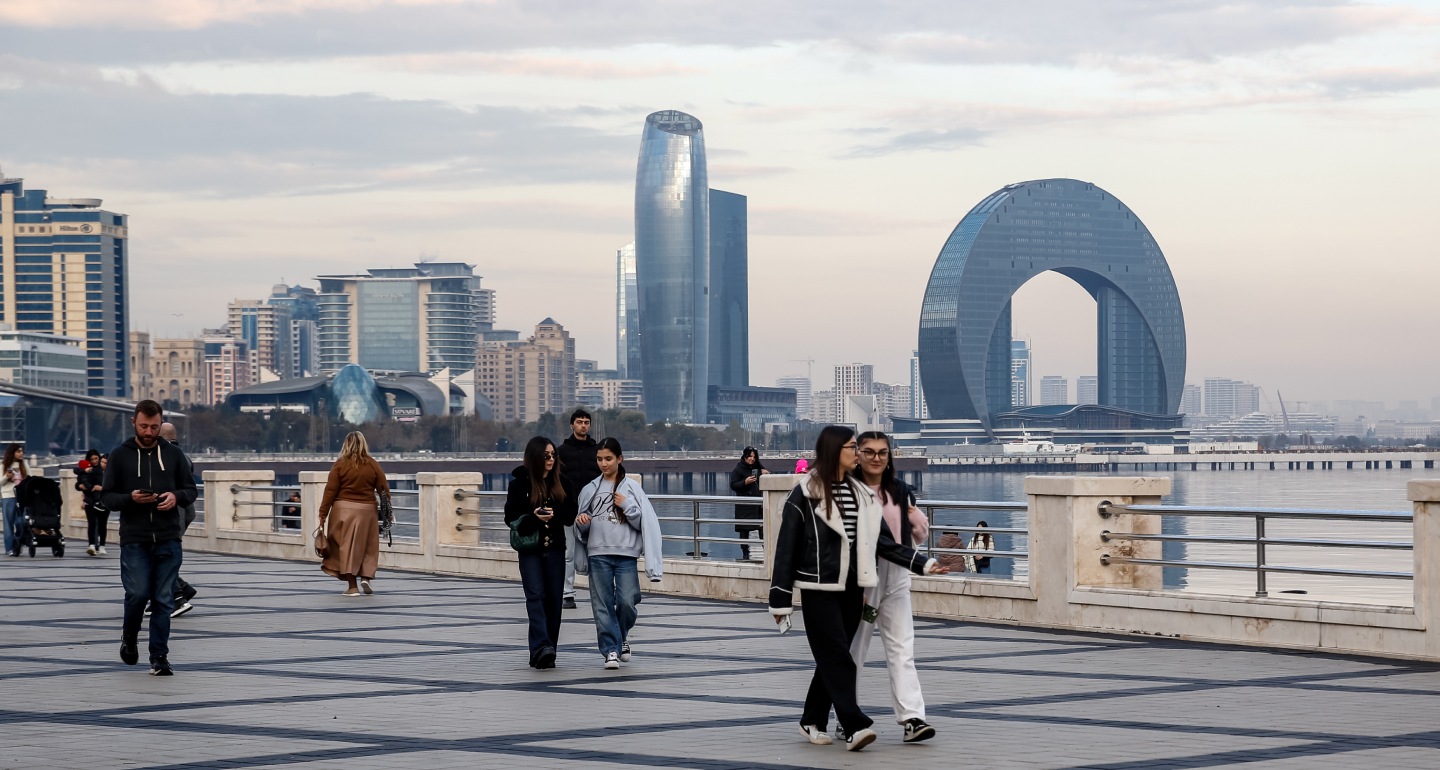
Azerbaijan’s relations with the EU appear to be going from strength to strength after several years in the deep freeze following the military escalation in Karabakh in 2023 and Azerbaijan’s bitter fallout with France and several other EU member states.
Shujaat Ahmadzada
For the Middle Corridor to fulfill its promises, one of these routes must become scalable. At present, neither is.
Friedrich Conradi
Orbán created an image for himself as virtually the only opponent of aid to Ukraine in the entire EU. But in reality, he was simply willing to use his veto to absorb all the backlash, allowing other opponents to remain in the shadows.
Maksim Samorukov