

Commentary
A much-discussed disagreement over internet restrictions in Russia was never an existential threat for Putin: It was about elite groups protecting their interests.
Alexandra Prokopenko
{
  "authors": [
    "Michael Pettis",
    "Andy Rothman"
  ],
  "type": "legacyinthemedia",
  "centerAffiliationAll": "dc",
  "centers": [
    "Carnegie Endowment for International Peace"
  ],
  "collections": [],
  "englishNewsletterAll": "asia",
  "nonEnglishNewsletterAll": "",
  "primaryCenter": "Carnegie Endowment for International Peace",
  "programAffiliation": "AP",
  "programs": [
    "Asia"
  ],
  "projects": [],
  "regions": [
    "East Asia",
    "China"
  ],
  "topics": [
    "Economy"
  ]
}
Source: Getty
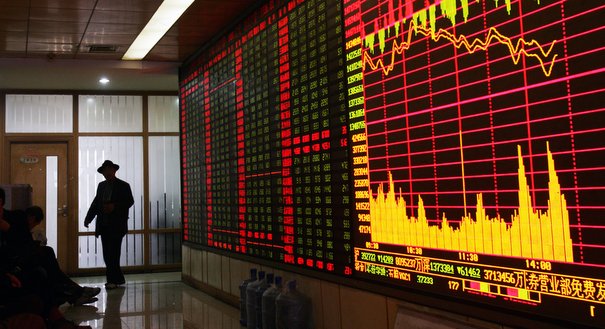
As a new generation of leaders emerges at China's 18th Congress, they will need to figure out how to keep the world's second largest economy on track.
Source: NPR

Just a couple days after next month's presidential election here in the U.S., China will start its own transition of power. A new generation of leaders is set to emerge at the country's 18th Congress and take control of the Chinese Communist Party for the next decade. One of the key challenges facing China's new leaders will be how to keep the world's second largest economy on track. Can China's economy keep growing despite recent slowdowns? And how will China's economic fortunes affect the fragile U.S. economic recovery?
For some answers, we turn now to a bull and a bear - the economic variety that is. We've invited two economists with two different takes on China's economic future over the next 10 years. Andy Rothman is a Shanghai-based economist for the brokerage firm CLSA. He's got a bullish outlook on China's economy and he joins us now from London. Welcome to the program, Andy.
ANDY ROTHMAN: Hi, Rachel.
MARTIN: And Michael Pettis teaches finance at Peking University in Beijing. He's also a senior associate at the Carnegie Endowment for International Peace. He brings us a bearish outlook on China. And he joins us now from his office in Beijing, which happens to be located above a night club so you may hear some music occasionally filtering through. Welcome to the program, Michael.
MICHAEL PETTIS: Hi. How are you?
MARTIN: Doing well.
So, Andy, we're going to start with you. China recently released its latest number for the GDP, which grew 7.4 percent from the year before. Which is very high compared to many countries, including the U.S., but it is a definite shift downwards compared to the double-digit growth that China had seen over the past three decades. So what makes you optimistic about China's economy over the next decade in light of that?
ROTHMAN: Well, actually one of the reasons why I'm bullish about China is because it is slowing down. It's very positive that the leadership of China has recognized that the two decades of 10 percent growth are no longer sustainable. And they've made a lot of adjustments to slow it down while still keeping income growth high. But it's always going to be slower, a little bit slower every year for the future.
MARTIN: Michael, I assume you're not as optimistic as Andy.
PETTIS: Well, China's economy has been driven primarily by very high investment. Every country that has had very high levels of investment for many years has run into the problems that, at some point, additional investment creates economic activity but it actually destroys wealth. The problem is if you bring investment levels down, you need something else to replace it. And that something else is normally consumption.
But it's extremely difficult consumption rates up quickly enough to replace declining investment rates. So we're going to see many years of much, much slower growth as China rebalances away from investment.
MARTIN: So, Andy, what does that mean for the Chinese government? I mean if you buy the conundrum that Michael has just outlined, what can the Chinese government do to replace this investment with higher levels of consumption?
ROTHMAN: Well, Michael's theory is very good. But the Chinese government also understands that theory and has actually been taking significant steps already. They've already built so much infrastructure, so many roads and bridges and rail, that it's time to cool that off. So they started cooling it off last year. And this is why the growth rate of GDP is going to slow roughly every year for the foreseeable future.
And the consumption part is still strong. This is, in China, the best consumption story in the world for everything from instant noodles to SUVs.
MARTIN: So what does all this mean, Andy, for the U.S. and global economies if China takes these steps?
ROTHMAN: For the United States in particular, what it means is as China gets richer and the economy gets more mature, it's able to buy more things that the United States is good at making, like high-end machinery and aircraft, because the economy is getting more sophisticated here. They're making better products rather than just shoes and toys.
MARTIN: Michael, what do you think? If we see the Chinese economy continue to slow down, what would that mean for the U.S. and the rest of the world?
PETTIS: Well, the key is the way the rebalancing takes place. In a perfect world, growth rates would probably drop to three percent economic growth rates over the next decade, but household income would grow more quickly; that's the definition of rebalancing. If that were to happen, then the world would benefit because Chinese excess supply would be reduced and the world would sell more to China.
And I think it's not a coincidence that this year, when we began to rebalancing process truly in earnest for the first time, has also been the first year where politics have suddenly become a huge problem in China.
MARTIN: Andy, your thoughts.
ROTHMAN: Maybe the biggest difference between the two of us is that my view is the rebalancing process is already well underway. For example, house income in Chinese cities, adjusted for inflation, is up 150 percent over the last 10 years. And when I first went to China 30 years ago, there were no private companies. Whereas today, 80 percent of urban workers are employed by entrepreneurial small profit firms. So I think they're well on their way.
MARTIN: Andy Rothman is an economist based in Shanghai for the brokerage firm CLSA. Michael Pettis is a professor of finance at Peking University in Beijing. Gentlemen, thanks so much for taking the time.
ROTHMAN: Thanks, Rachel.
PETTIS: Thank you.

Nonresident Senior Fellow, Carnegie China
Michael Pettis is a nonresident senior fellow at the Carnegie Endowment for International Peace. An expert on China’s economy, Pettis is professor of finance at Peking University’s Guanghua School of Management, where he specializes in Chinese financial markets.
Andy Rothman

A much-discussed disagreement over internet restrictions in Russia was never an existential threat for Putin: It was about elite groups protecting their interests.

Alexandra Prokopenko

The demands of the Kremlin’s war in Ukraine, demographic problems, and public hostility toward Central Asians mean Russia does not have enough workers.

Salavat Abylkalikov

Minsk’s faith in the future of its larger neighbor’s economy is fading as Belarusian firms in Russia see record losses.

Olga Loiko
With no key agreement signed on the Power of Siberia 2 gas pipeline, there is a risk that the window of opportunity for Russia will close if Chinese power generation becomes so green that new gas sources are no longer of any interest to Beijing.

Alexander Gabuev

The cost of air defense has become an unregistered tax on revenue for businesses. While military rents are consolidated in the federal budget, the costs of defense are being spread across the balance sheets of companies and regional governments.
Alexandra Prokopenko