

Commentary
A much-discussed disagreement over internet restrictions in Russia was never an existential threat for Putin: It was about elite groups protecting their interests.
Alexandra Prokopenko
{
  "authors": [
    "Yukon Huang",
    "Clare Lynch"
  ],
  "type": "legacyinthemedia",
  "centerAffiliationAll": "dc",
  "centers": [
    "Carnegie Endowment for International Peace",
    "Carnegie China"
  ],
  "collections": [],
  "englishNewsletterAll": "asia",
  "nonEnglishNewsletterAll": "",
  "primaryCenter": "Carnegie China",
  "programAffiliation": "AP",
  "programs": [
    "Asia"
  ],
  "projects": [],
  "regions": [
    "East Asia",
    "China"
  ],
  "topics": [
    "Economy"
  ]
}
Source: Getty
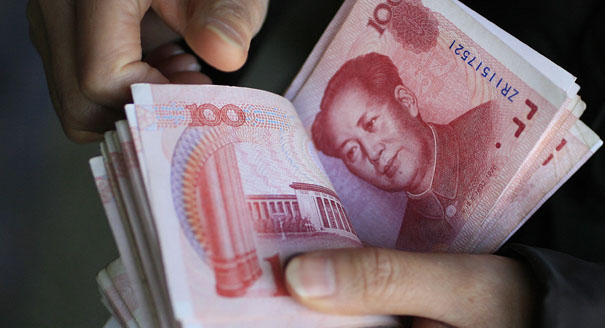
Beijing should focus more on individual market reforms and worry less about internationalizing the yuan.
Source: Wall Street Journal

Such talk is far from idle chatter. Amid the re-emergence of China as the world's second largest economy—not to mention fulcrum of the world's most dynamic trading region—Beijing has taken a series of steps to promote yuan internationalization. It has introduced currency swaps with some dozen countries, liberalized entry for foreign investors and use of yuan-denominated funds in Hong Kong, and permitted limited participation of foreign central banks in the domestic interbank market.
Surprisingly, though, the avalanche of discussion on the yuan has focused mostly on what China should do. Few ask why China is doing this at all.From Beijing's perspective, the benefits from internationalizing its currency are not obvious. China's pragmatic leadership has historically placed a high value on maintaining economic stability. But currency internationalization and accompanying financial liberalization will inevitably lead to greater volatility as policy makers relax controls over capital movements as well as over interest and exchange rates.
In turn, policy makers will be forced to sacrifice some control over monetary policy, because pressures to maintain the yuan's value and availability as a global currency may conflict with domestic needs. An international currency historically requires expanding its supply abroad by running large budget or current-account deficits—both of which are anathema to Beijing. These costs help explain why in the past, Japan and Germany both opposed internationalizing their currencies.
So why is China considering it? Some suggest that higher seigniorage—the profit made by selling one's currency—as well as the benefit of pricing imports in your own currency (and avoiding balance-of-payments crises) is attractive to China. But China has vehemently criticized the U.S. in the past for taking advantage of this "exorbitant privilege."
Others have suggested that the push to internationalize the yuan is a form of "reform by Trojan horse." To wit, China's reformers see currency internationalization not as an end goal, but as a pretext to push for more market reforms. There is logic in this argument, since internationalization demands improving China's rudimentary financial markets and gutting its capital controls.
Let's understand what these reforms really are. If we delve into them, we find that they are useful for their own sake, and not just as preconditions for yuan internationalization:
These initiatives will take time and energy. For the time being, Beijing should focus more on these individual reforms and worry less about internationalizing the yuan as a longer-term objective. There is one area, though, where some experiments in promoting yuan usage could generate near-term benefits and offer lessons for the future. And that's regional trade.
Nearly half of China's trade is processing-related—that is, trade comprising parts and components from other East Asian countries that are assembled in China for export to the West. Currencies of several Asian countries already track the yuan more closely than the dollar, which means the yuan could be used as a "reference currency" for the East Asian production-sharing network.
China and, more generally, Asia would benefit from greater use of the yuan to improve trade efficiency, lower transaction costs and reduce exchange-rate risk in intra-Asian trade. But there's a bigger lesson too.
China runs significant trade deficits with most of its Asian partners, which is to say the yuan is in demand across Asia. That means coordinating Asian currencies has near-term potential to increase use of the yuan as a settlement currency and even as a regional reserve currency, in much the same way that America's trade deficits help the dollar's status as the global reserve. In this way, the changing role of the yuan in the Asian trading bloc will provide a useful opportunity to preview the tangible effects of fuller yuan internationalization.
This article was originally published in the Wall Street Journal.

Senior Fellow, Asia Program
Huang is a senior fellow in the Carnegie Asia Program where his research focuses on China’s economy and its regional and global impact.
Clare Lynch
Former Junior Fellow, Asia Program

A much-discussed disagreement over internet restrictions in Russia was never an existential threat for Putin: It was about elite groups protecting their interests.

Alexandra Prokopenko

The demands of the Kremlin’s war in Ukraine, demographic problems, and public hostility toward Central Asians mean Russia does not have enough workers.

Salavat Abylkalikov

Minsk’s faith in the future of its larger neighbor’s economy is fading as Belarusian firms in Russia see record losses.

Olga Loiko
With no key agreement signed on the Power of Siberia 2 gas pipeline, there is a risk that the window of opportunity for Russia will close if Chinese power generation becomes so green that new gas sources are no longer of any interest to Beijing.

Alexander Gabuev

The cost of air defense has become an unregistered tax on revenue for businesses. While military rents are consolidated in the federal budget, the costs of defense are being spread across the balance sheets of companies and regional governments.
Alexandra Prokopenko