

Article
C. Raja Mohan, Darshana M. Baruah
{
  "authors": [
    "C. Raja Mohan"
  ],
  "type": "legacyinthemedia",
  "centerAffiliationAll": "dc",
  "centers": [
    "Carnegie Endowment for International Peace",
    "Carnegie China",
    "Carnegie India"
  ],
  "collections": [
    "China’s Foreign Relations"
  ],
  "englishNewsletterAll": "ctw",
  "nonEnglishNewsletterAll": "",
  "primaryCenter": "Carnegie India",
  "programAffiliation": "SAP",
  "programs": [
    "South Asia"
  ],
  "projects": [],
  "regions": [
    "South Asia",
    "India",
    "East Asia",
    "China",
    "Southeast Asia"
  ],
  "topics": [
    "Economy",
    "Security"
  ]
}
Source: Getty
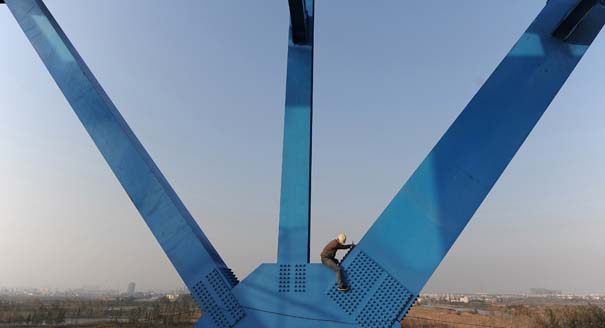
India and China have pursued contrasting policies in reaching out to their Southeast Asian neighbors, and China appears to be gaining the upper hand.
Source: Indian Express

Prime Minister Manmohan Singh and the South East Asian leaders showed up at a celebration in the national capital to mark the conclusion of the ASEAN-India car rally. The participants in the rally drove nearly 8000 km through South East Asia and eastern India to arrive in Delhi in time for the special summit.
If Delhi is good at declarations and symbolic gestures, Beijing has set a scorching pace for the construction of infrastructure projects and the promotion of connectivity between China and the nations across its borders.
This week alone a clutch of mega Chinese infrastructure initiatives have been reported from South East Asia.In the first a large Chinese iron and steel company in Cambodia has tied up with China Railway to build a 400 km rail line to connect a green field steel plant in the northern part of the country to a port on Koh Kong, the southern commercial island in the Gulf of Thailand.
The steel plant could cost up to $2 billion and the rail link will come at an estimated price tag of nearly $10 billion, according a report by the Reuters. Analysts following Cambodian economy say this could be the largest project ever in the nation.
Meanwhile another Chinese company Sinomach Perfect Machinery has tied up with Cambodian Petrochemical to build an oil refinery capable of processing five million metric tons of crude oil a year. The price tag is nearly $2.5 billion.
In the neighboring land-locked Laos, the New York Times reported, China has announced plans to build a high-speed train link between Kunming in the South Western Yunnan province and Vientiane, the capital of Laos.
The cost of the 400 km railway line estimated at $7 billion will be borne by Laos. Chinese banks will lend the money. Laos is said to be pledging its national mineral wealth as collateral.
Experts with the international development agencies have strongly criticized the deal as imposing massive future financial burden on Laos. The ruling communists in Vientiane appear to have taken a political decision in favor of the project.
While international development experts and a few voices in Laos and Cambodia fear that the two countries are being subject to China’s "neo-colonialism," there is no denying the dramatic expansion of Beijing’s influence in a critical region of South East Asia.
The scale of financing and scope of the projects that China can deliver has begun to eliminate the traditional dependence of small nations on multilateral lending agencies for large projects.
Japan and the United States, which once had the leadership of development initiatives, have lost much ground to China in recent years. While Washington and Tokyo are scrambling to respond the dramatic rise in Chinese influence in Indo China, Delhi is in the danger of becoming an outlier in the economic development of the region.
While the foreign office in Delhi sees the strategic significance of promoting connectivity, especially the East-West corridors linking the subcontinent to South East Asia, it is not clear if there is real competence in the rest of the government to make this happen. Most of India's plans for connectivity with South East Asia have remained on paper.
If the government is unable to move, much the same can be said about the Indian private sector. While the Indian FDI has grown rapidly in South East Asia, the Indian corporates remain invisible in the strategic sectors of the region.
Cambodia and Laos, along with Vietnam, were once known as “Indo-China”. This was where the Indian and Chinese civilizations met. But as Beijing integrates these bordering regions into its own economy and Delhi remains paralysed, "Indo-China" might soon be a misnomer.
Former Nonresident Senior Fellow, Carnegie India
A leading analyst of India’s foreign policy, Mohan is also an expert on South Asian security, great-power relations in Asia, and arms control.
Recent Work

C. Raja Mohan, Darshana M. Baruah


Alexander Gabuev, Paul Haenle, C. Raja Mohan, …
Carnegie does not take institutional positions on public policy issues; the views represented herein are those of the author(s) and do not necessarily reflect the views of Carnegie, its staff, or its trustees.

With the growth in points of friction between the great powers, organizations like the SCO will continue to play a role in the strategic adaptation of the smaller powers caught between them.

Temur Umarov

Two divergent trends—Putin’s hardline vision of how to prosecute the war in Ukraine, and a growing desire for change in Russia—could tear the regime apart.

Tatiana Stanovaya
Andrey Melnichenko’s essay offers no answer to the fundamental question of how, under any kind of negotiated settlement, Europe can protect itself from the Russian ressentiment that is inevitable in all scenarios except for an outright victory for Putin.

Leonid Bershidsky
The recent damage inflicted by Ukrainian drones and missiles on Russia has made Belarus aware of its own vulnerabilities—and surprisingly amenable to Kyiv’s demands.

Artyom Shraibman
It is not a phenomenon unique to Russia that the public of a country at war (even the aggressor) enduring airstrikes will not overturn its government but rather show solidarity with it and blame its woes on the enemy.

Vladislav Gorin