

Commentary
Judy Dempsey
{
  "authors": [
    "Judy Dempsey"
  ],
  "type": "legacyinthemedia",
  "centerAffiliationAll": "",
  "centers": [
    "Carnegie Endowment for International Peace",
    "Carnegie Europe"
  ],
  "collections": [],
  "englishNewsletterAll": "",
  "nonEnglishNewsletterAll": "",
  "primaryCenter": "Carnegie Europe",
  "programAffiliation": "",
  "programs": [],
  "projects": [],
  "regions": [
    "Europe",
    "Eastern Europe",
    "Ukraine",
    "Western Europe"
  ],
  "topics": [
    "EU",
    "Political Reform"
  ]
}
Source: Getty
What can be done to preserve the independence of the European media and ensure competition?
Source: New York Times

The media face similar economic difficulties in other countries. But media owners and journalists are coming under another kind of pressure too in Europe: political pressure.
In my latest Letter From Europe, I write about the threat that corruption poses to Europe, and the news media are not immune.The former French president Nicolas Sarkozy was accused of trying to rein in newspapers that criticized him. In Italy, Silvio Berlusconi’s media empire continues to exert an immense influence on public opinion.
In the Balkans, journalists regularly complain about the local business bosses threatening to withdraw advertising if papers criticize their companies or uncover corruption.
Interference is prevalent in Latvia and Ukraine, according to Thorbjorn Jagland, secretary general of the Council of Europe, the pan-European human rights organization.
In both countries, oligarchs, who are also parliamentarians, own the media, dictate the editorial line and do everything possible to prevent investigations into corruption.
Even if corruption cases are published, in Ukraine, the courts will not take action. ‘‘The judiciary is not independent enough,’’ Mr. Jagland said. That, he added, makes it even more difficult to deal with corruption, the subject of my latest Letter from Europe.
So what can be done to preserve the independence of the media and ensure competition?
The European Commission recently set up a panel to see how newspapers and media groups could be protected from political influence. It is also charged with finding ways to ensure that the media do not abuse their power.
Mr. Jagland believes the E.U. is taking the wrong path to reform. Self-regulation is preferable to control or bureaucratic oversight, he said, lest press freedom be undermined.
Self-regulation is easier said than done. It can work in strong democracies. But in Ukraine, Latvia and indeed, Italy, the power of the oligarchs or big media conglomerates negates self-regulation.

Nonresident Senior Fellow, Carnegie Europe
Judy Dempsey is a nonresident senior fellow at Carnegie Europe
Recent Work
Judy Dempsey
Judy Dempsey
Carnegie does not take institutional positions on public policy issues; the views represented herein are those of the author(s) and do not necessarily reflect the views of Carnegie, its staff, or its trustees.

If the Russian-speaking community in Latvia cannot articulate their interests without being seen as disloyal, they could end up embracing a pro-Kremlin agenda.

Sergejs Potapkins

Russia’s ruling party would have benefited from Putin appearing as its distant patron, but as an active frontman imposing his views on the public, he has done nothing but harm both the party’s election campaign and the ruling system overall.

Andrey Pertsev

In the tenth year of his presidency, President Mirziyoyev’s system is becoming even more personalized than that of his predecessor Karimov.

Galiya Ibragimova

The greater threat to Zelensky comes not from Fedorov alone, but from the convergence between the former defense minister’s political campaign and the anti-corruption investigations moving ever closer to the presidential administration.

Balázs Jarábik
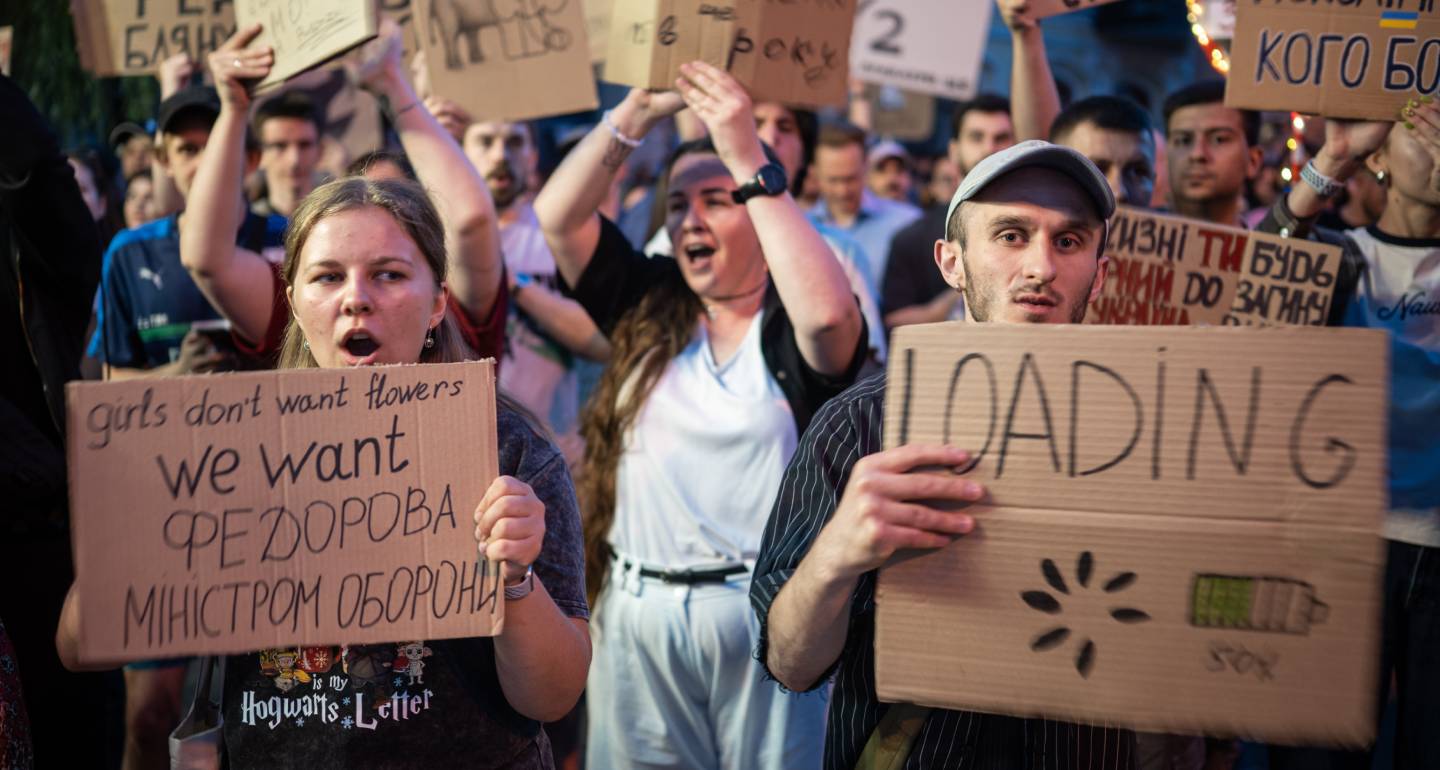
With his public call for new elections in Ukraine, ex-defense minister Mykhailo Fedorov has opened Pandora’s box.

Konstantin Skorkin