

Commentary
Nathalie Tocci, Jan Techau
{
  "authors": [
    "Jan Techau"
  ],
  "type": "other",
  "centerAffiliationAll": "",
  "centers": [
    "Carnegie Endowment for International Peace",
    "Carnegie Europe"
  ],
  "collections": [],
  "englishNewsletterAll": "",
  "nonEnglishNewsletterAll": "",
  "primaryCenter": "Carnegie Europe",
  "programAffiliation": "",
  "programs": [],
  "projects": [],
  "regions": [
    "Europe",
    "Eastern Europe",
    "Western Europe"
  ],
  "topics": [
    "Foreign Policy",
    "Security"
  ]
}
Source: Getty
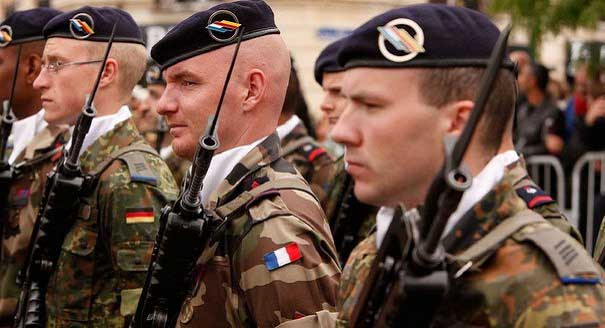
If member states want EU foreign policy to become more relevant, they cannot continue to dismiss hard power as a tool for the EU.
Source: Policy Paper
Europeans are not per se unwilling to use force to achieve political goals. They only seem to be unwilling to do so in the framework of the EU. The perceived absence of a shared threat, the differences in strategic culture, the institutional weaknesses, the lack of resources, the lack of ambition and trust, and the fact that, with NATO, a better alternative is at hand for the management of Europe’s hard power concerns, make it unlikely that the EU will become a relevant military operator any time soon. The structural, political impediments to more cohesive defense cooperation go so deep that economic pressure alone will not be enough of an incentive to unite their military activities within CSDP.
But if Member States want EU foreign policy to become more relevant, they can’t forever dismiss hard power as a tool for the EU. A serious conversation is needed at the highest level about shared threats, interests, goals and means.
This piece originally appeared in Notre Europe's Policy Paper, No. 65.
Director, Europe Team, Eurasia Group
Techau is director with Eurasia Group's Europe team, covering Germany and European security from Berlin. Previously, he was director of Carnegie Europe.
Recent Work

Nathalie Tocci, Jan Techau
Jan Techau
Carnegie does not take institutional positions on public policy issues; the views represented herein are those of the author(s) and do not necessarily reflect the views of Carnegie, its staff, or its trustees.

Minsk clearly expected the dialogue with Washington to yield more results, in particular the lifting of EU sanctions and permission to export potash.

Artyom Shraibman

If the Russian-speaking community in Latvia cannot articulate their interests without being seen as disloyal, they could end up embracing a pro-Kremlin agenda.

Sergejs Potapkins

With the growth in points of friction between the great powers, organizations like the SCO will continue to play a role in the strategic adaptation of the smaller powers caught between them.

Temur Umarov

When faced with fuel shortages in the past, Central Asian governments could always count on additional supplies from Moscow. That safety net no longer exists.

Galiya Ibragimova

Two divergent trends—Putin’s hardline vision of how to prosecute the war in Ukraine, and a growing desire for change in Russia—could tear the regime apart.

Tatiana Stanovaya